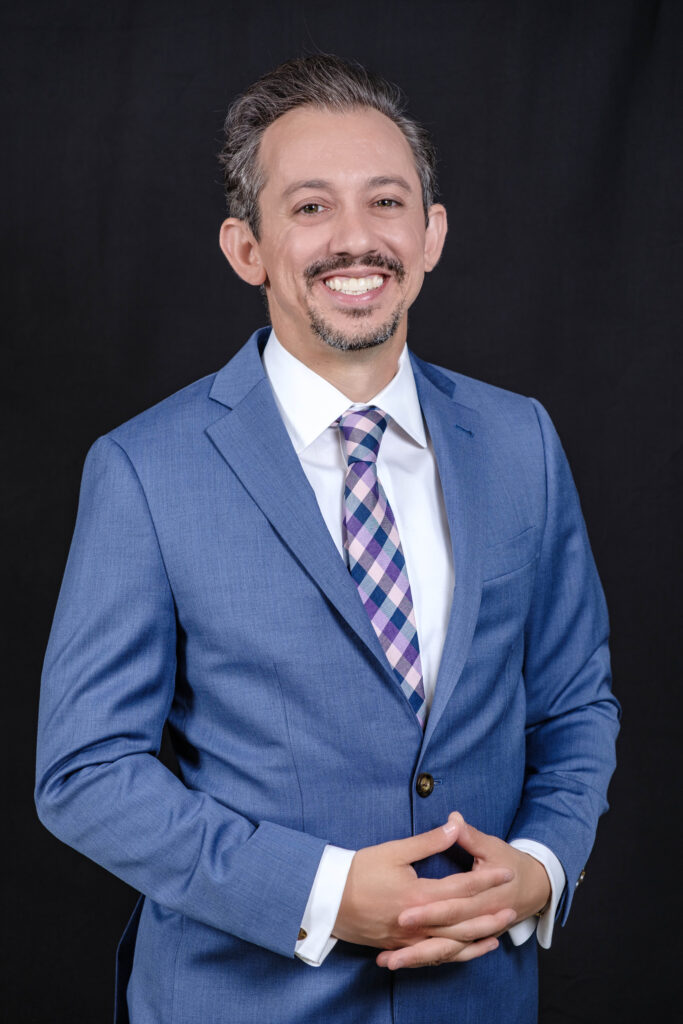
Joe Martucci, Certified Digital Meteorologist
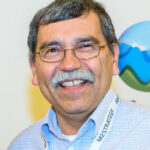
Joe Martucci is president and director of meteorology at Cup A Joe Weather and Drone, where he delivers hyperlocal Jersey Shore forecasts, digital content, and consulting services with a focus on community-centered weather communication. A dual AMS sealholder, Martucci made history as the first Certified Digital Meteorologist (CDM).
Since then, he has been an active leader within AMS, serving on the Board for Broadcast and Digital Meteorology and rising to chair of the Digital Meteorology Board in 2025. With a background rooted in digital media, he has played a key role in shaping the evolution and visibility of the CDM certification.
What led you to pursue AMS certification?
Professional satisfaction and networking were my primary motivations, with the added benefit of strengthening my credibility in the job market. Certification also gives the public and even towns I work with another reason to trust me as a source for weather information.
What does it mean to be a “digital meteorologist”?
A digital meteorologist regularly communicates weather information online. That doesn’t just mean forecasting—it can include data analysis, podcasting, or other forms of digital storytelling.
What does your certification mean to you professionally?
Professionally, certification has allowed me to become fully engaged with the AMS. I’ve had the opportunity to serve on the Board of Digital Meteorology and became chair in 2025. Given my background in daily online digitals (formerly newspapers) and my own digital media business, I’ve been able to bring a different perspective, helping expand the reach and relevance of the CDM seal both within AMS and to the public.
I also highlight my dual sealholder status in conversations with potential advertisers and municipalities I consult with. Being named the first CDM is a tremendous honor. I stand on the shoulders of early digital meteorologists like Jason Samenow and Steve DiMartino, who helped pave the way.
What’s one project or moment in your career that you’re especially proud of?
I’m especially proud of helping develop the CDM seal. With the support of Erica Grow Cei, I was entrusted with creating the grading rubric for the certification. While I still had to earn the seal myself, being awarded the very first CDM seal by AMS was incredibly meaningful.
I remember looking up the first CBM, CCM, and AMS television sealholders years ago and thinking how special that must have been. It’s surreal, and very humbling, to now be part of that history.
What’s the most challenging part of your work and how do you approach it?
The biggest challenge isn’t the meteorology, it’s running the business. When I started my own company, I quickly realized that forecasting and content creation are only half the job. The rest is being an IT manager, bookkeeper, sales director, and more.
It’s a heavy lift, but I wouldn’t trade it. I embrace the challenge because it allows me to build something that’s fully my own.
How do you stay current in such a rapidly evolving field?
I focus on both emerging technology and lessons from the past. The people who adapted early—whether from radio to podcasts or from writing to multimedia storytelling—have been the most successful.
Right now, artificial intelligence is front and center. No matter how you feel about it, it’s here to stay, so you might as well learn how to use it effectively. It’s become a regular part of my workflow.
How do you communicate complex science to non-expert audiences?
I think about how I would explain something to my Nonna. She immigrated from Italy and speaks good but not fluent English, so I ask myself: Would this make sense to her? That helps keep my communication clear and accessible.
I also use AI as a tool. For example, I might ask it to simplify a post to an eighth-grade reading level while keeping it concise and engaging. Of course, I always review and refine the output, because the quality depends on the input.
What advice would you give to early-career professionals considering certification?
Do it. My involvement with AMS and the opportunities that came with it increased dramatically after earning both my CBM and CDM seals. The connections alone make it worthwhile.
What does a typical day look like for you?
I start my day at 4:30 a.m., Tuesday through Saturday. By 7:15 a.m., I’ve produced my forecast, posted on social media, and published my daily video. Mornings also include radio hits and scheduling content.
From there, the business side kicks in with client meetings, community events, and managing operations. Evenings may include outreach or Chamber of Commerce events. I aim to be asleep by 9:30 p.m.
The beauty of owning a business is flexibility. I may not have long stretches off, but I can step away when I need to.
How does digital media change the way weather information is delivered and consumed?
Digital media is media now. In many cases, broadcast meteorologists get more engagement online than on television.
Two major shifts stand out. First, long-form content—without commercial constraints, meteorologists can go deeper, especially on topics like tropical systems or climate. Second, hyperlocal coverage—meteorologists can focus on smaller, specific regions. For me, that’s the Jersey Shore, and it allows for more meaningful community connection.
How do you combat misinformation online?
I follow a simple approach: report it, request community notes when possible, and avoid direct engagement. Social platforms often reward engagement over accuracy, so it’s important not to amplify misinformation.
I’ve also learned to stay in my lane and focus on what I can control.
How do analytics or audience feedback shape your work?
Analytics play a big role. For example, I’ve found that square (1:1) future radar videos perform especially well on Facebook, particularly for communicating lighter or scattered precipitation.
On my website, snow forecasts and long-range outlooks tend to get the most engagement, so I prioritize those when they’re in season. It’s all about learning what resonates and refining your approach.
What excites you most about the future of digital meteorology?
The next generation. Every generation reshapes how weather information is shared. Millennials had blogs and forums—future meteorologists will define new formats entirely.
My advice to students is simple: create the kind of weather content you would want to consume.