The 2026 AMS Washington Forum and Summer Community Meeting (AWF/SCM), to be held July 21–23, 2026, will bring together leaders, professionals at all levels, and students from across the weather, water, and climate enterprise to discuss key issues facing the community. Panelists and attendees will address important legislation, heat and fire weather risks, AI and data centers, and other matters that require problem-solving across geographic and disciplinary boundaries.
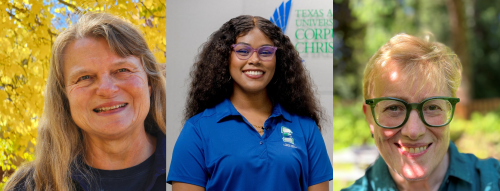
Interested? Here’s a sneak preview of the issues being addressed in the AWF/SCM session, “AI Ethics & Policy in the Weather, Water, and Climate Enterprise,” written by session cochairs Sue Ellen Haupt, Miranda C. White, and Ann Bostrom.
AI is being used everywhere, both for scientific advances and in our communications. But what are the ethical considerations, and what types of policies are organizations implementing around its use? How do we maintain our highest expectations for accuracy in the weather, water, and climate enterprise in this AI-dominated world?
Our AWF/SCM panel on AI Ethics & Policy in the Environmental Science Community will focus on a core tension: AI capabilities are accelerating faster than governance structures, evaluation standards, and shared norms. As we move from AI as a tool to AI as an agent with increasing autonomy, the stakes rise significantly, increasing the need for transparency (“show your work”), clear articulation of purpose (“why are we building this?”), and guardrails around deployment, especially in high-impact domains like weather warnings. To articulate purpose, achieve transparency, and design workable guardrails around deployment, users must be part of system design and evaluation.
Environmental science organizations should explicitly define what “good” looks like for each context, language, and application.
This panel, encompassing the public, private, and academic sectors, will emphasize the urgent need for rigorous validation frameworks tailored to AI systems in environmental science. Traditional quantitative metrics are often insufficient for evaluating LLM-style outputs, which require expert judgment, context-sensitive standards, and potentially synthetic test environments to assess system adaptation and failure under perturbation.
Underscoring that trust is not purely a statistical construct, the panel will explore how trust — as a relational and contextual concept — is tied to human expertise in the environmental sciences. To mitigate the risks of eroding domain expertise, particularly in student training, the panel will address how Human-AI teaming models can be codeveloped and deployed to enhance, rather than replace, human judgment, communication, and empathy. This requires a systems perspective: the relevant unit of evaluation is the combined human-AI system, not the model alone.
Finally, the panel will explore how incentives and governance can best serve as leverage points. Economic and legal incentives shape deployment behavior, and without coordinated global cooperation, safety guardrails may fail. While regulation may lag technological change, the community can and should establish best practices, document failures, raise awareness of risks, and articulate principled limits (“do it because you should, not because you can”).
Recognizing that policy in other domains has often followed accidents, the environmental science community has an opportunity to be more proactive with regard to AI policy. Ethical and responsible AI in our field requires that technical advancements be made with intentional design, documented evaluation, interdisciplinary collaboration, and shared responsibility.
To be part of these crucial conversations with leaders from across the United States, register now for the Washington Forum and Summer Community Meeting, July 21–23, 2026 in Washington, DC, and online. View the full program here.