For this AMS election season, we asked each candidate three questions to help you get to know them better. Here we feature the Councilor nominees from the academic sector: Chris Davis of the University of Massachusetts Amherst, Everette Joseph of the NSF National Center for Atmospheric Research, and Nicholas Metz of Hobart and William Smith Colleges.
Chris Davis
Why is being a member of AMS important to you?
AMS is the largest professional society for my field; therefore, I believe it is important to belong to and support this Society. Membership also relates to the importance of service, which is what the Society depends on, and which I am committed to. Being a member, and being active on committees and at conferences, means having a voice and contributing to change when it is needed. Finally, AMS is a community; belonging to this community has given me many opportunities over the years; I am grateful for that and eager to give back.

What has been your most memorable experience as an AMS member?
Over the course of 36 years as a member, it is difficult to find one experience that stands out. Among similarly important moments, I would include chairing the AMS Mesoscale Conference in 1999, attending the AMS Student Conference in 2015, helping organize the Annual Meeting in Seattle in 2017, and receiving the Joanne Simpson Mentorship Award in 2018 (at the 2019 Annual Meeting). While not a singular experience, the interaction with current colleagues, meeting new colleagues, and talking with students and postdocs has formed a nearly continuous sequence of memorable experiences that has shaped my career thus far.
What is one of your favorite activities outside of work?
While I do not have an extensive list of hobbies, I enjoy seeing movies with my wife, Mary Ann, especially thoughtful films that are not in the mainstream. I also like “good” science fiction movies or streaming shows. I enjoy spending time with our grown children, who now have their own lives and careers. I have also come to appreciate long walks in quiet settings. My favorite time to walk is probably on a mild evening right at dusk when everything seems temporarily hushed and I feel a heightened awareness of my surroundings.
Everette Joseph
Why is being a member of AMS important to you?
AMS has been indispensable to me at all levels of my career: graduate student, faculty, and administrator.
As a graduate student, the Annual and specialty meetings of the AMS were a critical source of scientific information that rapidly expanded my knowledge and expertise, more so than if I was confined to working within my local institution. The richest part of this experience was the ability to network with peers and professionals.
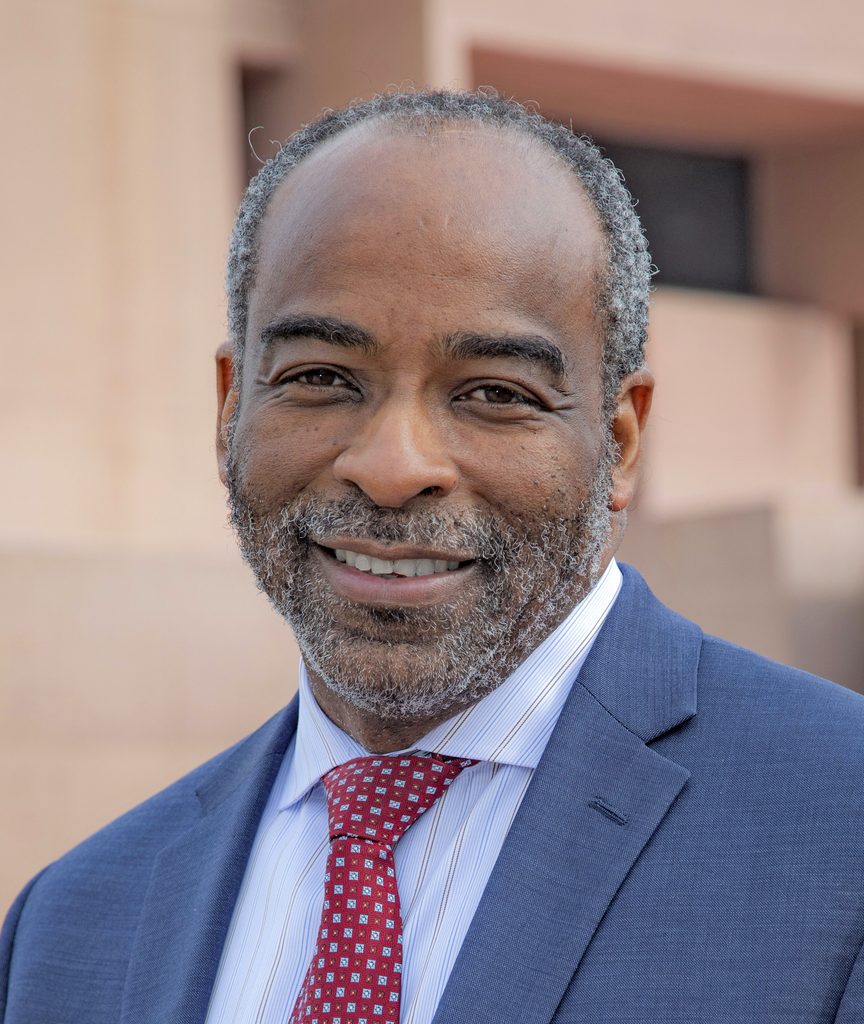
As a faculty member, AMS was a place to grow my academic career, especially in terms of building a research program, teaching, and training students. For example, the AMS Annual Meeting was a great opportunity to recruit students—I met several of my PhD students there. I also became more engaged and invested in the community by serving on several AMS committees. An example of that is a BAMS article I contributed to through service on the AMS Board on Higher Education providing advice to students on how to position themselves for a successful career in graduate school.
As a leader of a national scientific organization now, AMS meetings provide a vital opportunity to engage directly with the communities we serve and to build partnerships with peer organizations. The importance of AMS as a forum for professional engagement and collaboration was especially evident following the pandemic. At the first in-person AMS meeting after activities resumed, I left with the impression that I connected with more organizations and community members through both planned and informal interactions and made more progress on a range of issues in a single week than I had during the previous year of virtual meetings.
Finally, the sense of community from AMS is irreplaceable. I’ve formed lasting relationships and had impactful experiences at AMS that continue to enrich my life in ways that are unexpected.
What has been your most memorable experience as an AMS member?
There are so many experiences to choose from. One that stands out is the Color of Weather networking event hosted by faculty from Howard University’s Program in Atmospheric Sciences at the 88th AMS Annual Meeting. While earlier networking gatherings organized by the group provided a welcoming and inclusive space, they were informal and often felt somewhat peripheral to the broader meeting and community.
The Color of Weather event was different by being included in the program and promoted by AMS. Furthermore, the strong turnout and high energy reflected growing recognition of the importance of broadening participation within the atmospheric sciences community. The event created a powerful sense of belonging and optimism about the future of the field. I found the experience so impactful that I wrote an article about it, which was published in the July 2008 issue of BAMS.
Over time, Color of Weather grew into an anticipated networking event at the AMS Annual Meeting, attracting students, early-career scientists, and senior leaders from across the community. Its success demonstrated the value of creating intentional opportunities for connection, mentorship, and inclusion within the atmospheric sciences.
What is one of your favorite activities outside of work?
I enjoy physical activities, which I don’t do as much as I should. I enjoy a good bike ride. As someone who has deep roots in the Caribbean, I love anything on or close to the ocean and experiencing the food and culture of the Caribbean. I enjoyed snorkeling as a teenager and have taken it up again, but now with my daughter, on recent trips we have taken.
Nicholas Metz
Why is being a member of AMS important to you?
Some of the most meaningful moments in my professional career have emerged through participation in AMS meetings. Although the opportunity to share and learn new science is always intellectually energizing, the professional networks fostered through AMS have been equally consequential in sustaining and advancing my career. At every AMS event, I look forward to substantive conversations with both long-standing colleagues and newly encountered peers. Over time, many of these exchanges have developed into enduring research collaborations and lasting professional friendships.

What has been your most memorable experience as an AMS member?
For nearly 15 years, I have brought my summer research and Research Experiences for Undergraduates students to the student conference at the AMS Annual Meeting each January. These experiences have been especially memorable because they allow students to take visible pride in presenting their research while also receiving substantive feedback from scientists across the atmospheric and related sciences. Just as importantly, the conference helps students broaden their professional networks, which in many cases leads to interviews for employment or graduate study. Many of these students are now employed in atmospheric science–related fields, and I see these poster sessions as an important springboard in their professional development.
What is one of your favorite activities outside of work?
Outside of work, I especially enjoy traveling with my wife and children, whether to nearby destinations or places much farther afield. Because my children are now 13 and 11, they are at a particularly rewarding age for exploring new locations with curiosity, independence, and enthusiasm.