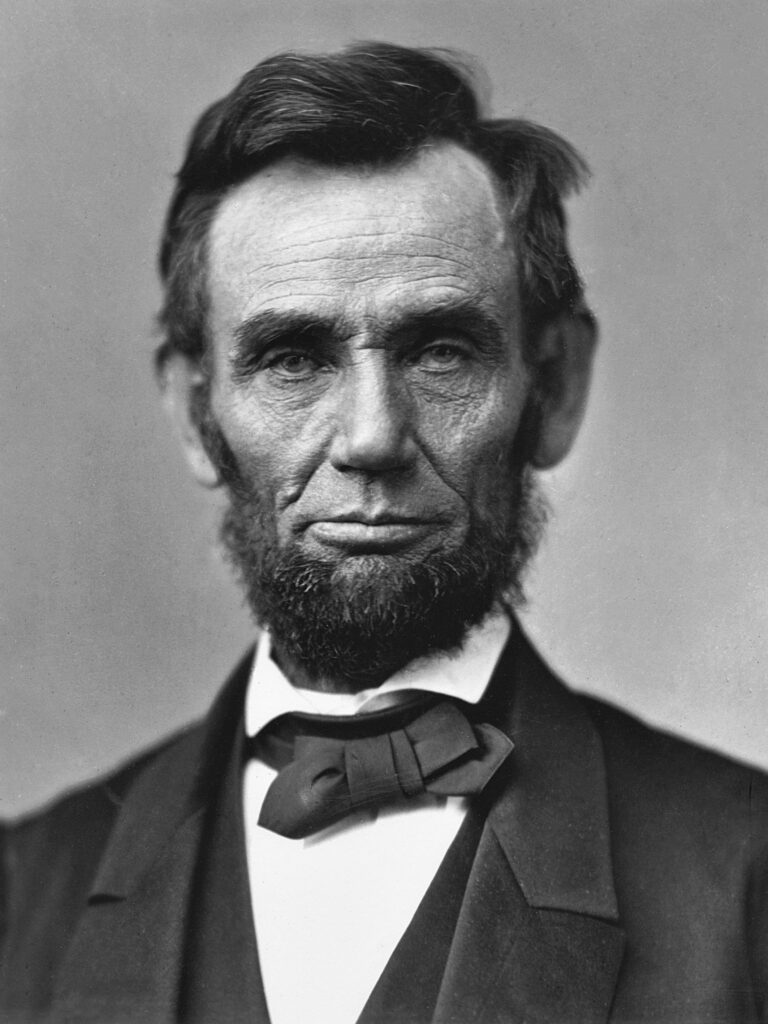
“I don’t like that man. I must get to know him better.”—Abraham Lincoln
“A stranger is just a friend I haven’t met yet.”—Will Rogers
Years ago, while still full-time at AMS, I was doing some committee work for what was then the International Council for Science (ICSU). I came across a quote in an ICSU document that went something like this: The greatest challenge facing twenty-first-century science is the widening gap between the advance of science and society’s ability to benefit from it.1
Juxtapose this idea with Francis Bacon’s admonition from 400 years ago, reproduced in the previous LOTRW post, that (scientists should seek knowledge) “for the benefit and use of life,” and it’s easy to see that science indeed has a problem.
In the face of this widening gap, it’s tempting for scientists in general and geoscientists in particular when we encounter people holding different opinions about how to cope with climate change, or whether climate change is even a serious threat, or the need to build resilience to hazards, or pollution’s impacts on human and animal health, to think: if they knew what I know, they would see things my way. This knowledge-deficit model underpins much of our communication of science to the public.
Here’s the problem. In our eagerness to tell them what we know, to deliver our message, we send them a companion message: we’re so focused on climate change we don’t care very much about your problems. At its worst, this message can sound to those ears like “we know better than you do what your problems are and what your priorities should be.” This becomes particularly problematic when we sooner or later try to go past the science and begin to advocate specific policy options. Or when we quickly move on to tell them that our science needs more of their tax support.
In this approach we’re abandoning basic tenets from our discipline. We’d never jump into a research project without a preliminary review of prior literature. We wouldn’t undertake a lab study or social survey without a solid familiarity with the strengths and limitations of our lab equipment, or our survey methods. But when it comes to the question of whether our research is for the benefit and use of life, we’re far more casual. We don’t survey people to identify their needs, and then think through how or even whether our science might benefit them. Instead, we jump to a conclusion. We think: this research may someday save this family from a tornado or flood. Therefore everybody should be thankful.
But we can think that way because our more basic needs have been met.2 However, that family’s concerns may be far more immediate: our roof leaks and we have mold. We lack food for tonight’s table, let alone tomorrow’s. The car failed to pass state inspection—calling for repairs we cannot afford—but is needed to get me to my job. My toddler is showing signs of autism.
Note that the transactional approach, the knowledge deficit approach, is a shortcut we all use when/if we don’t care about or value the other person very much: that sourpuss checking your groceries when you’re in a rush to get home (or, if you’re that grocery clerk, that impatient, obnoxious customer who looked right through you when you’ve been on your feet for four hours helping dozens of others like him/her).
Stephen Covey captured this dimension to collaboration in his 1989 book, The Seven Habits of Highly Effective People. A quick bit of background: Covey argued that a century or two earlier, books on management and leadership looked to virtues—honesty, hard work, fairness, etc., building character and independence—as the starting point. When it came to working with others, Covey saw the trend in management texts since then as moving away from these attributes, instead emphasizing manipulative techniques for influencing or controlling others.
Covey’s Habits 4, 5, and 6 are particularly relevant here. He argued in Habit 5 that we should emphasize active, genuine listening to others, versus pretending to listen while mentally formulating some rebuttal. In other words, he argued that we should seek first to understand, then be understood. In Habit 4, he argued for insisting on true win-win in our relationships—versus settling for some nominally equitable but inferior mix of “win some, lose some,” or “I’ll let you win this one if you let me win the next one.” And finally, he pushed the idea of getting past thesis and antithesis to “synthesis” and moving forward, together.
This latter point is the real challenge. Readers are all familiar with the notion of supporting diversity, equity, and inclusion in our dealings. But success with respect to DEI isn’t limited to skin color or ethnicity or gender. It only starts there. It’s more a matter of welcoming a diversity of ideas. April Lawson unpacks this in a 2022 essay entitled “Building Trust across the Political Divide.” She argues that most people taking the initiative to build bridges of trust are Blue (liberal-leaning); that they begin by listening and developing empathy (admirable). But she argues that this process breaks down because many Blues assume that if [conservative-leaning] Reds could just be taught what is true, they would be enlightened into Blueness.
She goes on: But there is a flaw: the implicit belief underlying this style of bridging is that we can learn to love each other by seeing that we are all deeply the same. While true in some senses, this misses a fundamental insight about relationship that most of us know from experience: We have the capacity to build relationship through conflict.
The rest of Lawson’s article fleshes out this idea; her organization Braver Angels and their Debates provide useful resources for those interested and serious about making science less political—expanding our circle of collaborative relationships.
In closing, a vignette: throughout the 1970s I worked for a NOAA Boulder lab director who combined vision and integrity. But he had a tendency to see our lab as an island of excellence in a sea of mediocrity. His mindset extended to “those people in Washington,” whom he didn’t see as particularly thoughtful, let alone wise. A few years later, when I transferred to a job in DC, I learned, and relearned, again and again, until finally it became integral to my thinking, that the people here were every bit as intelligent and high-minded as I was—in fact, a lot more so.
I started asking myself: What is it about their experience and perspective that makes them see and understand life in the way they do? I want to know.
(Our colleagues the ecologists also show us the same thing. When ecologists go into the Amazon and encounter the leaf cutter ant, the poison dart frog, the capuchin monkey, and the jaguar, they don’t say three out of four of you must be wrong. Instead, they ask a question: what is it about the local ecology that makes all four of you essentially ideal? The next question the ecologists ask goes even further: What is it about the ways all three million species of Amazon plants and animals engage each other that keeps the show going?)
Abraham Lincoln and Will Rogers saw this problem with special clarity. They realized they were the ones with the knowledge deficit. Comedians know that humor (not science) is one of the most difficult forms of communication to get right. The comic can’t demand the audience laugh. Comics can’t beg them to laugh. Comics must like their audience and vice versa; only then can they jointly explore the ludicrous side of the life we’re all living together. Political leaders can’t make their platform “give me your support because I need this job more than my opponent.” Their job is to figure out where help is wanted—and then offer it, not ask for it.
Bottom line? Scientists and politicians have this in common. We need to be generous, not needy, in our approach to society.
AMS Executive Director Amanda Staudt and her coauthors have brilliantly articulated this idea in their recent AMS Headlines piece, “A Movement for Earth Sciences Grounded in Generosity.” They’re doing more. They’ve set out on such a path and are inviting us to join in.
[Next time: AI—an arena where scientific help is wanted. Not simply for coding (thank you), or for building large language models—but especially for applications.]
- Apologies; I tried tracking down the source and the precise quote just now, and failed. ↩︎
- Recall Maslow’s hierarchy: physiological needs (air, food, water, etc.) take priority over safety needs (health, personal and emotional safety, financial security), before we can shift focus to love and social needs etc., etc. ↩︎