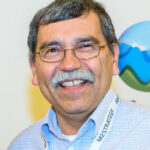
Walter Orr Roberts Lecturer Jeffrey Pierce
For Jeffrey Pierce, the path to becoming an atmospheric scientist was not entirely planned. It began with an interest in math and science, an influential chemistry teacher, and an undergraduate degree in chemical engineering at Northeastern University. It was during graduate school, when he discovered research on air pollution at Carnegie Mellon University (CMU), that his scientific direction became clear.
“I found out that some of the professors there worked on air pollution, and right away, I knew I wanted to work with them,” Pierce said.
That decision launched a career focused on the complex interactions between atmospheric particulate matter, air quality, climate, and human health. Pierce is the recipient of the Walter Orr Roberts Lectureship, recognized for highly impactful, policy-relevant interdisciplinary research on the influence of atmospheric particulate matter on air quality, climate, and human health.
Pierce views the recognition not simply as an individual honor, but as a reflection of the students, collaborators, and mentors who have shaped his work.
“This is really a team award,” he said. “Finding out I was chosen for this award has been a really good reason to reflect on how fortunate I’ve been to work with great students and collaborators as well as having great mentors.”
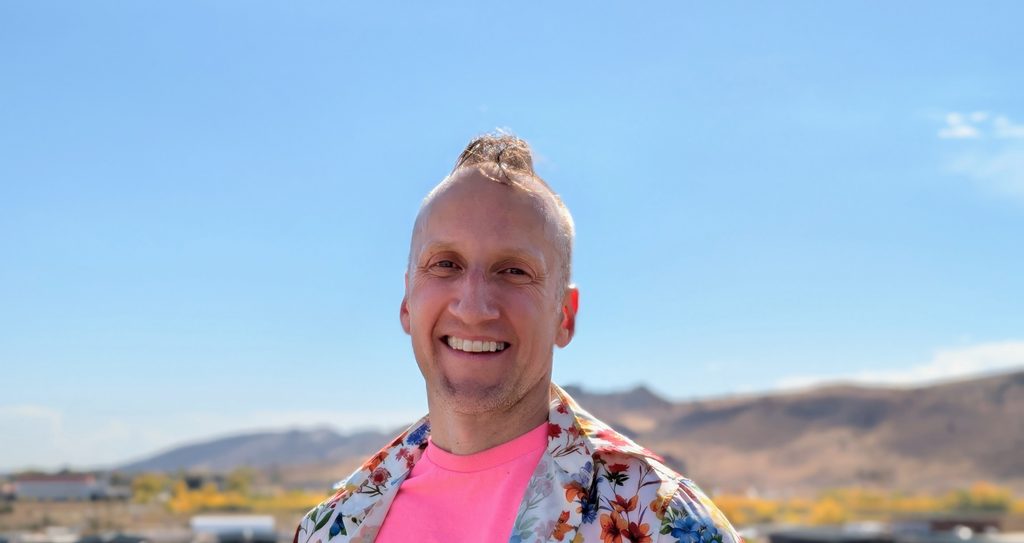
From Chemical Engineering to Atmospheric Science
At CMU, Pierce worked with Peter Adams and Spyros Pandis on simulating aerosols in climate models. He later completed a postdoctoral fellowship at NASA Goddard Space Flight Center, where he studied aerosol remote sensing with Ralph Kahn and Lorraine Remer.
He then joined Dalhousie University in the Department of Physics and Atmospheric Science before moving to Colorado State University (CSU) in 2013, where he is part of the Atmospheric Science Department.
His transition from chemical engineering to atmospheric science happened gradually. While working on aerosols in a climate model at CMU, Pierce realized that understanding the model required a deeper understanding of the atmosphere itself. He began reading atmospheric science textbooks and turning to mentors with questions.
“My interest in atmospheric science really took over,” he said.
That self-directed learning continued as his research broadened through his work at NASA, particularly in radiation and optics. When he arrived at Dalhousie, he still didn’t consider himself an atmospheric scientist.
“I was neither a physicist nor an atmospheric scientist! At least I didn’t know I was yet,” he said.
Over time, however, he grew more comfortable with the field and credits the atmospheric science community with welcoming him as an outsider.
Understanding Aerosols at the Plume Scale
Pierce’s research has developed at the intersection of atmospheric chemistry, climate modeling, air pollution, and health. One major area of his group’s work examines aerosol chemistry and physics at the scale of individual pollution and smoke plumes.
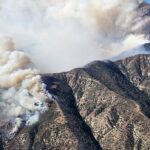
Since late in his PhD, Pierce and his collaborators have studied how aerosols evolve in power plant plumes, wildfire smoke, and urban plumes. Their work examines how aerosol size and chemistry change as plumes evolve, how small and large plumes differ, and what may be missed when measurements are collected at stationary sites as a plume passes overhead.
These questions address an important challenge in atmospheric modeling: Processes that occur at small scales can be nonlinear, making them difficult to represent accurately in larger-scale climate and air quality models.
Pierce credits the many collaborators who have contributed field measurements from aircraft and the ground with advancing this work.
Connecting Air Pollution to Human Health
Another major area of Pierce’s work emerged after he joined CSU, where collaborations with atmospheric chemist Emily Fischer, epidemiologist Sheryl Magzamen, and exposure scientist John Volckens helped connect his aerosol research with human health.
Their research has focused on the health effects of wildfire smoke, including whether health effects differ depending on how recently smoke was emitted and how people are exposed in areas without air quality monitors.
Those collaborations expanded to include economists, communication scientists, statisticians, and others, allowing Pierce to contribute to broader efforts examining health and air quality. His work has also included participation in NASA’s Health and Air Quality Applied Science Team and engagement with stakeholders on air quality and health issues.
“I’ve learned so much from these collaborations!” he said.
The Impact of Mentorship
Mentorship has been equally important to Pierce’s career. He points to Peter Adams, his primary PhD advisor, as a model for the kind of advisor he hopes to be. He also credits Spyros Pandis, Neil Donahue, and Allen Robinson as important science and career mentors during and after graduate school.
At Dalhousie, Randall Martin became a mentor and close collaborator, while at CSU, Sonia Kreidenweis, Jeff Collett, and A.R. Ravishankara helped Pierce grow as a faculty member, navigate self-doubt and mistakes, and move into new areas of research.
Collaborators Emily Fischer and Shantanu Jathar have also influenced his approach to teamwork, while Sheryl Magzamen and John Volckens encouraged and helped him move into health and exposure science.
And, in turn, Pierce has found increasing motivation in mentoring the next generation of scientists.
“I’ve grown to be most motivated by student and mentee growth,” he said. “I find that focusing on students/mentees is the easiest way to see the impact of my work and to feel like I have value.”
For Pierce, the impact of mentorship can extend far beyond a single research project or academic career.
“By focusing primarily on helping mentees grow, the research and impacts still happen through them,” he said. “Plus, the impact of their growth continues far beyond my time directly mentoring them.”
Looking Ahead: Science, Technology, and Public Value
His research continues to be driven by questions about how atmospheric processes can be better represented and understood. He is particularly interested in nonlinear processes that occur at scales too small to be resolved in climate and air quality models, as well as combining models, in situ observations, and satellite data to better understand the atmosphere.
Looking ahead, Pierce sees both opportunities and challenges in the growing use of machine learning and artificial intelligence. He emphasizes the importance of ensuring that the next generation of scientists maintains a strong understanding of the physical processes governing the Earth system and develops the intuition needed to recognize when results require deeper investigation.
He also sees a growing need for scientists to communicate the value of atmospheric and environmental forecasting, monitoring, and fundamental research to audiences beyond the scientific community.
“Our community understands the value of these things, but it’s becoming increasingly important for people outside of our community to see this value in order to keep these efforts supported,” he said.
Advice for the Next Generation
For students and early-career scientists, Pierce offers advice that extends beyond research: Find ways to stay happy and balanced.
He encourages young scientists to maintain athletic, artistic, and social interests, cultivate sources of joy outside of work, and seek out supportive supervisors, advisors, mentors, and colleagues.
“I think it’s far more important to find the people and colleagues who care about your growth and well-being than finding the research project and work that you’re most interested in,” he said.
Even after years of research, teaching, collaboration, and leadership, Pierce says his own sense of self-doubt has never completely disappeared.
His willingness to acknowledge that experience reflects another theme that runs through his career: Scientific progress is rarely accomplished alone. It grows through collaboration, mentorship, curiosity, and a willingness to cross disciplinary boundaries.
A Team Award
For Pierce, the Walter Orr Roberts Lectureship is ultimately a recognition of the community that has shaped his career.
“It means a whole lot that mentors and colleagues would put all of that time into putting a nomination together,” he said. “I’m really grateful to be able to work with people that care that much.”
He added, “I’m also very grateful to be part of a research community that is collaborative and supportive.”