“I may not be nuthin’ but a man, but before I let some old steam drill beat me down, I’m going to die with a hammer in my hand, Lord, Lord…”—lyrics from the eponymous ballad of John Henry
The ballad of John Henry tells a story of man competing with—and besting—a machine, only to die in the effort. John Henry wins the battle; technology goes on to win the war.
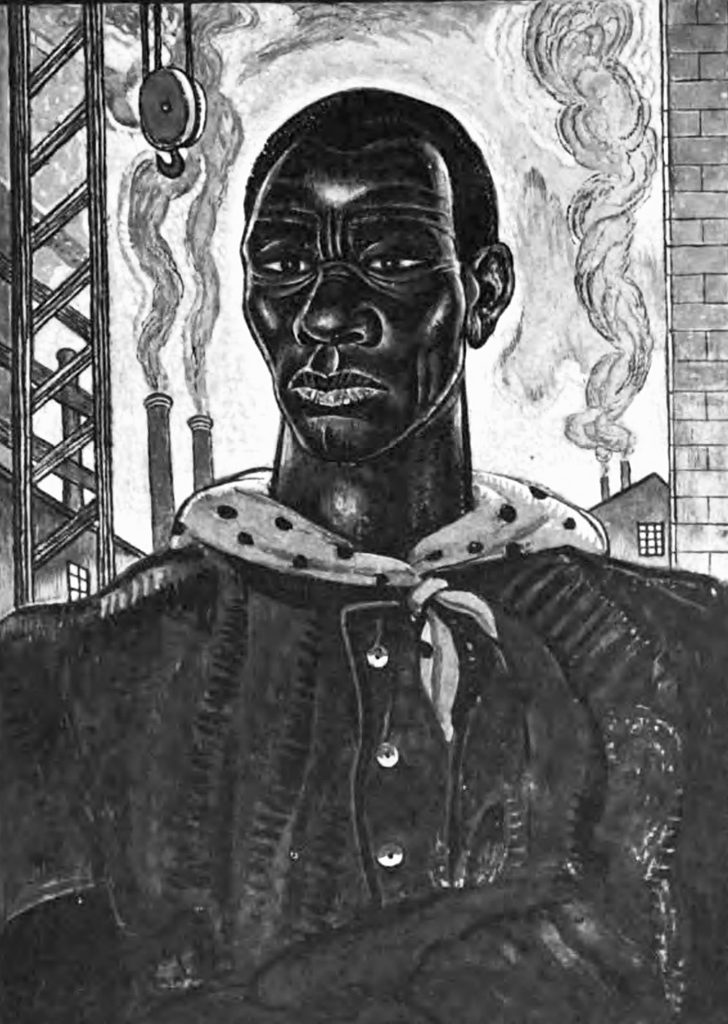
There are many versions of this railroading folk song, and the lyrics vary in detail. You might want to hear it sung; here’s a link, one of several, this by Martin Gilmore. (A rule for good living? Always make time for blues-folk.)
The love-hate relation between humanity and technology is, of course, ongoing. An example close to the AMS home gives the flavor. Toward the end of the twentieth century, some oceanographers decried the influence of computers (and soon after, satellites) on their science. Modeling ocean processes on computers offered a quicker route to a PhD than the time-honored tradition of going to sea and arduously collecting real data, then working out an analysis and a thesis. Oceanographers no longer necessarily shared actual experience on the water. One truly remarkable figure from this mostly male time and culture is Susan Avery (a former AMS President, but that is a needle in the haystack of her other achievements and recognition, as chronicled in this Wikipedia entry). She was educated and did research in upper-atmospheric physics but expanded her interests and influence, eventually serving as president and director of Woods Hole Oceanographic Institution and its largely bearded crowd for eight years before stepping away. Truly amazing!
In today’s version of the story, AI is the steam drill and scientists are the John Henry.
In particular, recent OpenAI disclosures have set the mathematics community areel. Start with some mathematics that matters to atmospheric scientists and oceanographers. On September 8, OpenAI announced a solution to the so-called Navier-Stokes existence and smoothness problem, in the process triggering a controversy about priority that already has its own Wikipedia entry.1 But that was a drop in the bucket. On October 6, OpenAI published solutions to hundreds of other problems that have long vexed the mathematical community. According to one account, this from The Economist:
TUESDAY OCTOBER 6th 2026 may go down as one of the most consequential days in the history of mathematics. That was when OpenAI, an American artificial-intelligence firm, announced that its AI agents, powered by an unreleased model, had solved at least 372 long-standing mathematical problems in a matter of weeks. The findings, detailed in over 700 AI-generated papers, represent research at an unprecedented scale and speed.
Such a glut has left some queasy. The excitement of potential new mathematical truths is, for many researchers, freighted with concern for the future of their field. Unless more care is taken, they say, the mass production of mathematics will lead to more solutions but less understanding.
In June of this year the so-called Leiden Declaration on Artificial Intelligence and Mathematics, endorsed by the International Mathematical Union, laid out the concerns. The American Association for the Advancement of Science, through its journal Science, marked the event this way:
Part warning, part manifesto, the 11-page Leiden Declaration on Artificial Intelligence and Mathematics cautions that unchecked automation threatens not only how math is practiced, but what the discipline stands for. It also lays out principles for using AI in ways that support, rather than erode, the field. These include the values of the mathematical profession…
…math is more than a machine for producing correct answers. The discipline, its authors believe, is a deeply human endeavor built on creativity, understanding, collaboration, and the pursuit of knowledge for its own sake. Those values often clash with the incentives driving AI development…
The Leiden Declaration states the values with this language:
We base our recommendations on what we take to be characteristic values of mathematical research that we have a joint interest in preserving. Among these are the following:
- There are many reasons to pursue mathematical research, ranging from intellectual curiosity to a desire to solve practical and societal problems. Underlying much of mathematics is the activity of proof. Mathematical proofs are regarded as conferring the highest degree of certainty to their conclusions, as well as imparting understanding of why their conclusions are true. These characteristics of proof support the scientific integrity of mathematics.
- Results are attributable to specific authors who take credit for their discovery and assume responsibility for their correctness. These principles ground the merit-based standards to which we aspire in mathematical research.
- Mathematical arguments are regarded as transparent and subject to independent verification. They may be extremely long or difficult, but in principle no proprietary knowledge or equipment should be required to understand them.
- Mathematicians share a concern for proper evaluation of mathematical work relative to shared standards of depth, difficulty, and significance.
- Mathematics produces not only a body of results, but also understanding, clarity, and judgment among the communities of mathematicians who have shaped them, often in the context of their own autonomously guided research. This expert knowledge is essential, both to effectively use mathematics, and to continue to articulate new and significant research questions. A key source of strength of the discipline has long been the autonomous shaping of the direction of research and the methods used to pursue it.
These characteristics of mathematics as a subject matter are also compatible with understanding mathematics as a human practice, and its place in the world. As mathematicians, and also as inhabitants of a shared world, we have a duty to care for other people and our environment.
Recent developments in artificial intelligence threaten each of these values, often in ways that disproportionately affect students and early-career mathematicians, and hence the long term future of the discipline…
The Declaration goes on to discuss these threats in more detail, and to provide guidelines for individuals and institutions in the world of mathematics.
All true. The enumerated values are both fundamental and existential. But there’s a piece, a value, that’s missing—something that would hint that what’s to be protected is not simply mathematics as a purely human pursuit in and of itself, but mathematics as a means to a larger end—the benefit and use of life, say. My guess is that every author of the Declaration, and indeed every one of the several thousand signatories would say “Of course—that goes without saying. That’s understood!”
The problem is—it might not be, especially by the millions of taxpayers footing the bill for much of today’s mathematical research and education. They might like to see that value spelled out, too.
The challenge isn’t confined to mathematics. It extends across the disciplines, including the geosciences. The October 17th, 2026 print edition of The Economist provides a thoughtful overview, worth reading in its entirety (and linking to other relevant articles in the same issue), entitled “What If the Machines Take Over Science?”. A snippet:
… Academics have no more right to dictate the production of knowledge than any other profession. Truth-seeking benefits everyone and cannot be reserved for a guild of scholars. The hierarchies of academics, climbed by proving things, are not sacred. If needs be, they must be remade for a world in which AI produces proofs and humans digest them. In science, understanding should not be fetishised over results.
AI is coming for all of us. To the extent that we see science as not simply a communal effort for societal benefit but also a personal competition, to the extent the metric we value most is our number of publications or our h-index, we might see reasons to grieve. But if our goal is harnessing science to build a better world, we’ll gratefully welcome the potential of AI for accelerating our work, and happily turn to the task of taming it.
As scientists, we’re in the business of change. We’re not going to be immune to change; we need to embrace it. Our hearts may always lie with John Henry—but the urgent societal need will always be for lots more railroad.
- Coincidentally, Yu Deng, a mathematician at the University of Chicago, was recently awarded a 2026 Fields Medal for successfully connecting the physics of Newton and Boltzmann to the same family of equations. ↩︎