“Climate doesn’t respect national borders. We’re more interconnected than we thought.”
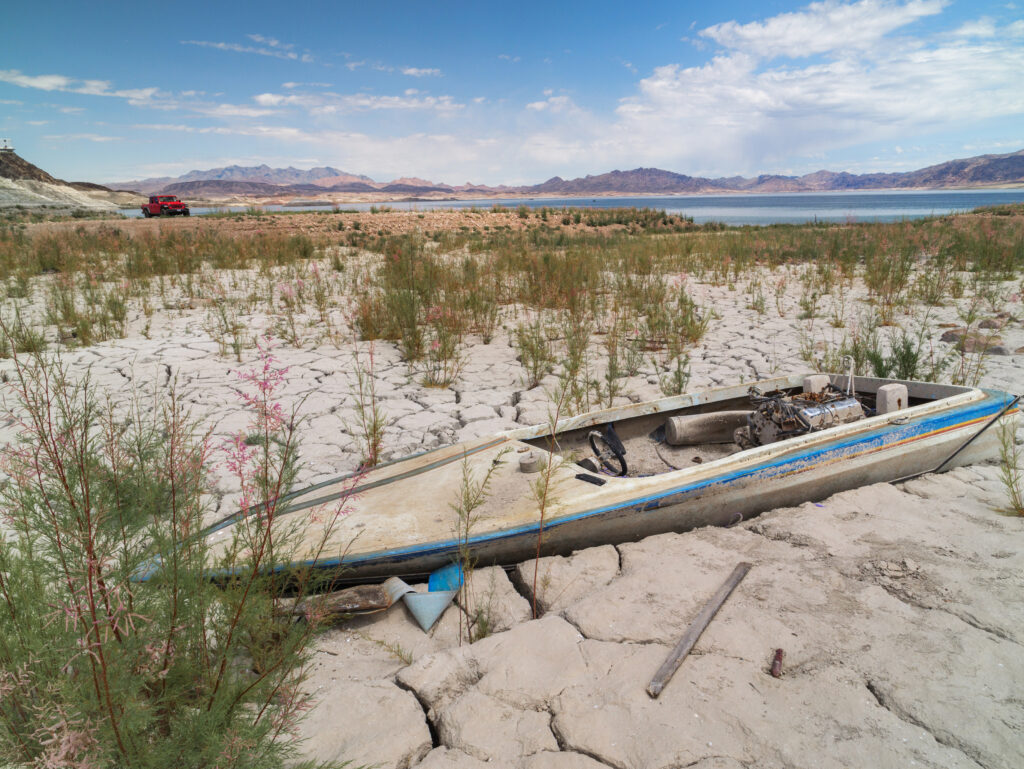
— Enrique Vivoni of Arizona State University, on new research that found dry soils can cause combined heat wave/drought events known as “hot droughts” hundreds of miles away. Vivoni and Somnath Mondal of Northeastern University defined such droughts as a period of at least two weeks with abnormally low rainfall and at least three consecutive days of unusually high temperatures. They used temperature and rain gauge data and a soil moisture database to analyze a summer 2023 hot drought in southwestern North America, when temperatures spiked by as much as 8°C (14°F). The event was driven by weather patterns that limited the transfer of atmospheric moisture from the Pacific Ocean into the North American Monsoon, which typically provides much of the rainfall in the U.S. Southwest. Normally the monsoon brings rain to northern Mexico, with some of the moisture evaporating, returning to the atmosphere, and then, in the generally northward monsoon flow, falling as rain in the Southwest. In a surprising discovery, the new research revealed that the weak monsoon may have led to unusually dry soils in northern Mexico, preventing the cycle that brings rain north of the border and subsequently triggering the hot drought conditions. “In 2023, Mexico influenced Arizona’s hot drought in a stronger way than the soil of Arizona itself,” Mondal says. “I verified it five times to be sure I was doing the right calculation.” The study, which was published in Geophysical Research Letters, also found that over the past 40 years, daytime temperatures are more commonly increasing so much during a hot drought that some of the warmth lingers in the atmosphere overnight, causing warmer temperatures the following day and creating a cycle of intensifying heat that can continue for weeks. This can cause an uptick in heat-related health issues, with Vivoni noting that “[t]here isn’t a good understanding that in a hot drought, you need to take more precaution than if it’s just a heat wave.” Vivoni and Mondal plan to expand their research to other regions where hot droughts may be transferred across borders, such as India and Pakistan. “We know we receive water vapor, clouds, and rain from Mexico,” Vivoni says. “We didn’t know we could also receive a hot drought.” [Source: American Geophysical Union]