Meet the AMS Policy Fellows
The AMS Policy Fellowship is helping two scientists bridge the gap between scientific research and public decision-making, bringing new perspectives to challenges involving weather, climate, and public health.
Scientific research can reveal how environmental hazards develop, who is most vulnerable to their impacts, and what can be done to reduce harm. But translating those findings into policy requires more than data. It takes communication, collaboration, and an understanding of how decisions are made.
For AMS Policy Fellows Becky Rose and Mahshid Ahmadian, the fellowship offers an opportunity to explore that intersection firsthand. Through research and engagement with experts and policymakers, both are gaining a broader understanding of how scientific evidence can inform decisions affecting communities.
Although their academic backgrounds differ, their work has converged around a shared challenge: making scientific information useful to the people who need it.
Connecting Science, Policy, and Public Health
Rose’s interests lie at the intersection of weather, climate, health, and society. Her work examines how climate hazards affect people, how those impacts are measured and communicated, and what can be done to reduce their consequences.
With a background in physical and social science and focused primarily on local and statewide issues, Rose saw the fellowship as an opportunity to better understand the federal policy landscape.
“The structure and workings of government agencies and their interactions with other major bodies of science and social change, especially at a federal scale, represented a key area for further learning and growth,” Rose said.
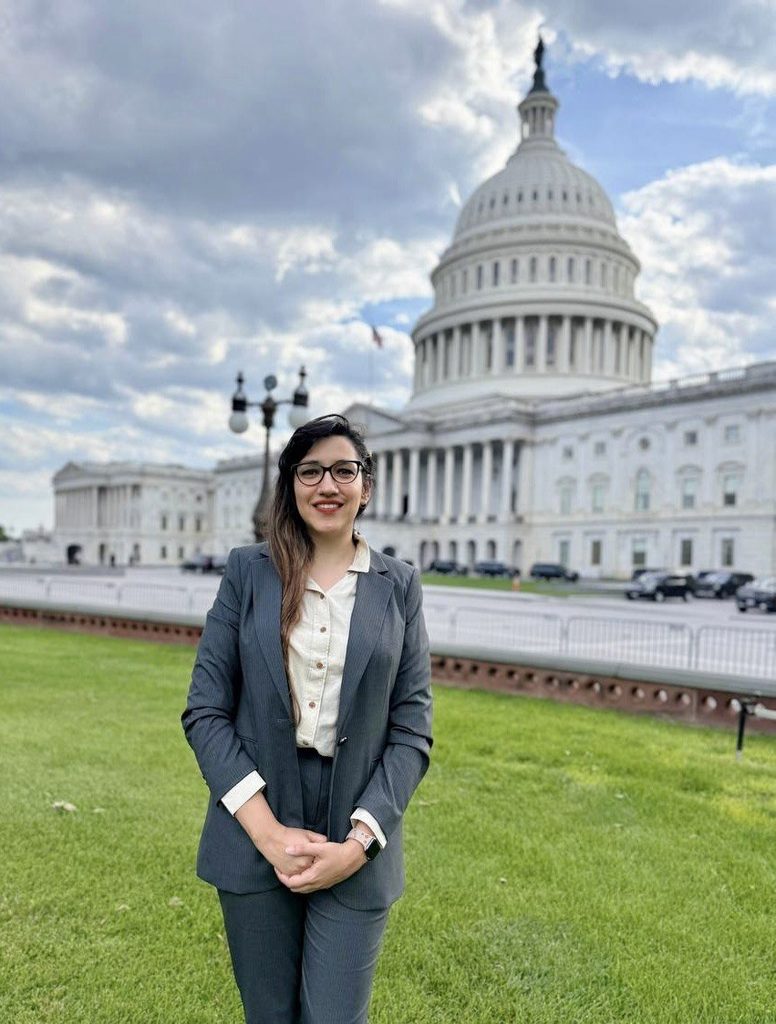
Ahmadian, a Virginia Sea Grant–AMS Policy Fellow funded through the Virginia Sea Grant, came to the fellowship from a different direction. With a PhD in statistics and data science from Virginia Commonwealth University, her research has focused on Bayesian modeling, machine learning, and developing tools that make complex models and algorithms easier to use.
She was interested in learning how scientific findings make their way into policy and how decision-makers use data and evidence.
“I wanted to understand the policy side of science, which was something I hadn’t had much exposure to during my academic training,” Ahmadian said.

Addressing Wildfire Smoke and Extreme Heat
Both fellows are contributing to work examining the public health impacts of environmental hazards and the systems in place to communicate and respond to them.
In July, the AMS policy group convened a workshop on wildfire smoke and health, bringing together experts across disciplines to discuss current impacts, existing response systems, barriers to effective action, and opportunities for improvement. Both fellows helped plan and organize the workshop and are now contributing to the synthesis of its findings.
“Even with a background in weather, climate, health, and social dimensions of vulnerability, I learned a huge amount,” Rose said. “It felt surprisingly important and energizing to be in a room where expertise was being exchanged in real time.”
Both fellows are also contributing to a climate enterprise working group focused on improving communication and connections between climate services and finance.
Her individual research centers on extreme heat, a hazard that can have widespread and growing impacts despite leaving little visible damage to infrastructure. Her projects include research on heat–health impacts using ambulance and meteorological data, examining social dimensions of heat vulnerability in the Upper Midwest, and collaborating on a study involving people experiencing homelessness and social service providers.
“Because it is diffuse, invisible, and increasingly a threat in places that have not historically had to deal with these extremes, heat is an issue that is difficult to confront,” Rose said.
For Ahmadian, the fellowship has provided an opportunity to connect her quantitative background with questions about how environmental information reaches the public.
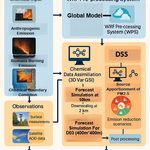
One of her projects examines the June 2023 Canadian wildfire smoke episode and its impacts across Washington, DC; Maryland; and Virginia. She is comparing air quality information and official warnings with observed measurements to understand how well public communications reflected the conditions people were experiencing.
She has also written a policy memo on wildfire smoke and public health and a background brief on the health impacts of the 2023 Canadian wildfires in the United States.
The work has allowed her to apply her analytical skills to a question with direct policy relevance: how to evaluate the information people receive during severe air quality events.
Learning to Communicate Beyond the Scientific Community
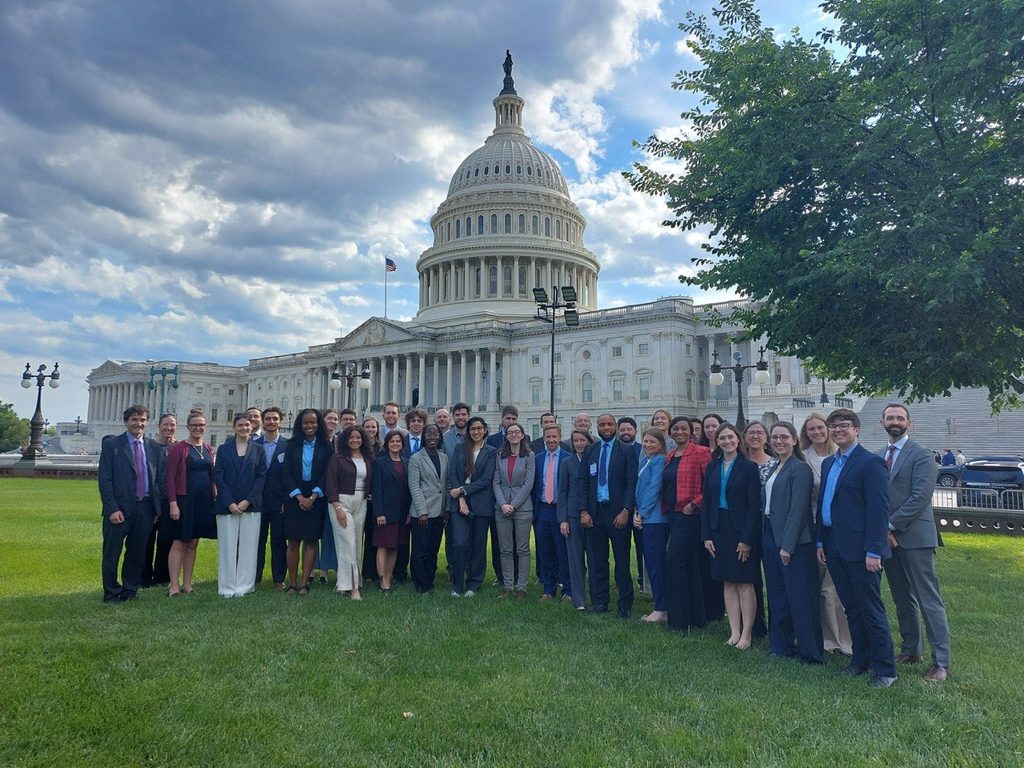
For both fellows, the AMS Science Policy Colloquium provided an important introduction to the policy process. Meetings with representatives from federal agencies, congressional offices, and industry offered insight into the many factors that shape policy decisions.
One of the most important lessons was that producing rigorous scientific evidence and making decisions based on that evidence are related, but distinct, processes.
“Even when the science is strong, someone still has to decide what to do with it,” Ahmadian said. “They have to consider uncertainty, available resources, timing, and the people who might be affected.”
That distinction also influences how scientists communicate their findings.
In academic research, scientists are trained to explain their methods, justify assumptions, and provide details supporting their conclusions. Policymakers often need concise information that identifies the central issue, explains why it matters, and outlines what the evidence can and cannot tell them.
Rose found that the colloquium challenged some of the assumptions she had carried from her scientific background.
“It dispelled a number of notions that many people with a science or research background may carry: that if you show people the data, they will agree with you and do what you believe to be the logical response,” Rose said.
She emphasized that communication, brevity, and efficiency are essential skills for scientists who want their research to lead to tangible action. Understanding what matters to policymakers, particularly their constituents and the direct impacts on their jurisdictions, is also critical.
Ahmadian has found the transition from technical writing to policy writing similarly challenging.
“The goal isn’t to oversimplify the science, but to figure out which details matter most to the person reading it,” she said.
Both fellows also emphasized the importance of presenting scientific information objectively, particularly when working on politically sensitive issues. Scientists can help decision-makers understand the evidence, its limitations, and the options available without advocating for a particular outcome.
Building Bridges between Scientists and Policymakers
The fellowship has broadened both fellows’ perspectives on the role scientists can play in addressing weather, water, and climate challenges.
For Rose, the experience has reinforced the importance of collaboration and provided a clearer understanding of how interconnected federal agencies are, including the structures and funding mechanisms that support scientific research and environmental programs.
While the experience has included some disillusionment, it has also offered reassurance.
“Even if climate change is politicized, people do still value the individual line items that fall under weather and climate knowledge-building and communication, as they have clear, direct impacts on their jurisdictions,” Rose said.
Ahmadian has gained a greater appreciation for the specialized knowledge required to produce and interpret atmospheric information. She believes scientists have an important responsibility to communicate not only what the evidence shows, but also its limitations.
Both fellows encourage scientists and students to recognize that policymakers and researchers often operate on different timelines. Researchers may want additional data and analysis to reduce uncertainty, while policymakers sometimes must make decisions with the information available.
Understanding those differences can make scientific communication more effective and help ensure that scientific evidence remains part of the conversation.
Looking Ahead
The skills Rose and Ahmadian are developing through the fellowship will continue to shape their careers.
Rose expects to carry forward her experience in convening experts, facilitating discussions, synthesizing information, and collaborating across disciplines. She hopes to share what she has learned with colleagues, collaborators, and students.
“I intend to spend my career continuing to work at the intersection of science and policy,” Rose said.
Ahmadian hopes to build a career that combines quantitative work with problems that have a meaningful impact on people and communities. She is particularly interested in the growing use of artificial intelligence and machine learning in weather, climate, and coastal science, including questions about how these methods are evaluated and used in decision-making.
The fellowship has also changed how she approaches research.
“Alongside the technical questions, I now think more about who might use the results and what decisions they could help inform,” Ahmadian said. “For me, good research combines rigorous methods with a clear understanding of the problem it’s trying to solve.”
For both fellows, the experience has reinforced a central lesson: Scientific knowledge is most powerful when it can be understood, shared, and used.
By helping bridge the worlds of atmospheric science and public policy, the AMS Policy Fellowship is equipping scientists to contribute not only to a better understanding of weather, water, and climate, but also to the decisions that shape how communities prepare for and respond to their impacts.