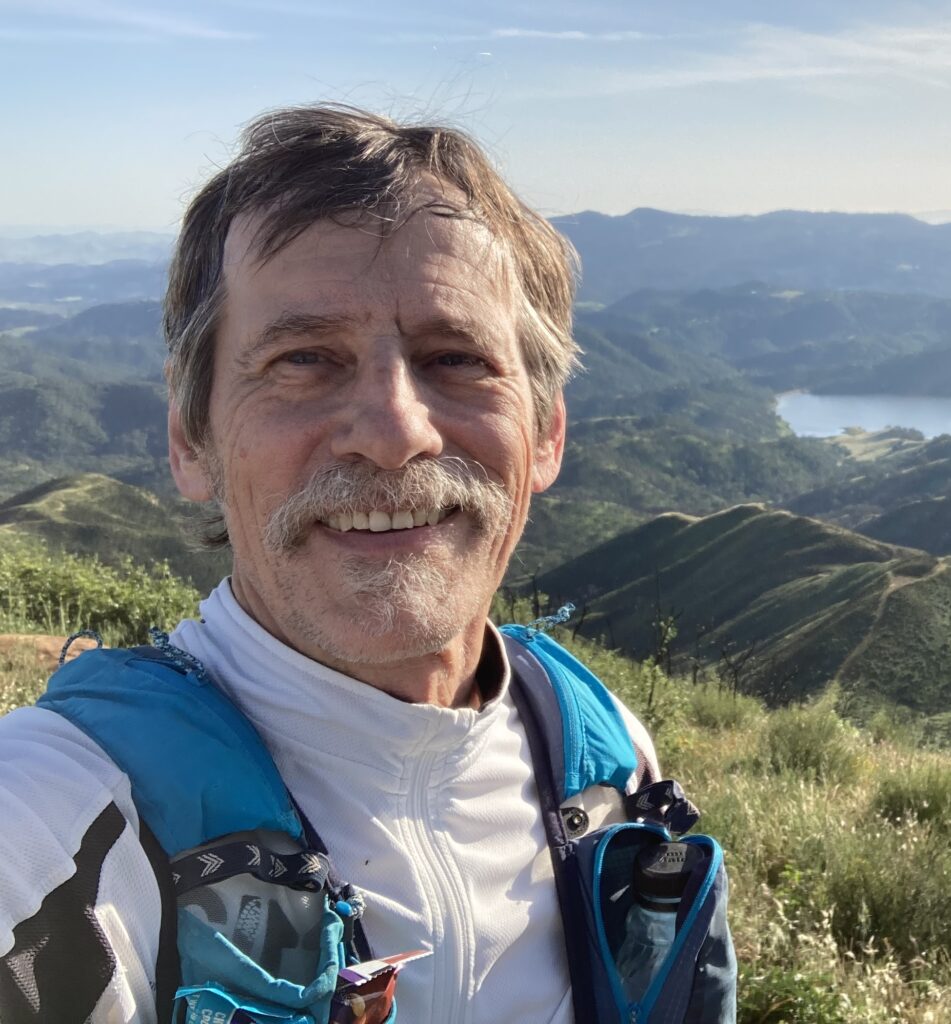
Richard Grotjahn spoke with us about his distinguished career in atmospheric science and the inspiration behind the creation of the new AMS Richard Grotjahn Research Fellowship in Extremes (RGRFE). Drawing on decades of research, teaching, and leadership in the study of weather and climate extremes, Grotjahn shares how mentorship, collaboration, and a lifelong passion for science shaped his vision for this fellowship.
Can you share a bit about your career journey and how it led to your involvement with AMS?
Grotjahn: I was born in Seattle and earned a B.S. degree in atmospheric science from the University of Washington. From there, I attended Florida State University, completing M.S. and Ph.D. degrees in meteorology. I was a graduate student member of AMS.
To avoid spending summers in Tallahassee, I took various summer appointments at NCAR, where I wrote a proposal that funded my Ph.D. work for three years under the joint supervision of James O’Brien and Cecil Leith. After graduation, I maintained my AMS membership.
For many years, my involvement with AMS was minimal—limited to authoring articles in AMS journals and attending meetings related to weather forecasting and dynamics. Later, when my focus shifted from dynamics to climate simulation and ultimately to the multifaceted study of large-scale extremes, my attention turned more toward the International Association of Meteorology and Atmospheric Sciences (IAMAS).
Within IAMAS’s International Commission on Dynamical Meteorology (ICDM), I served as secretary and later president, co-organizing a successful series of symposia on High-Impact Weather and Climate Extremes from 2011 to the present. However, IAMAS is not structured to implement a fellowship like the RGRFE.
Why did you choose AMS?
Grotjahn: As I’ve grown older, I’ve developed a clearer sense of what I can accomplish. As a parent, I also think about future generations. The RGRFE is designed to build practical expertise where it’s needed most—both now and in the future. I reached out to several organizations that have fellowship programs. These programs had different advantages and disadvantages. What I had in mind required some creative modifications of these existing programs. Even though the RGRFE is a new kind of fellowship for AMS, the Society has other fellowships and could work with me to develop this new type of fellowship. Simply put, I chose AMS because AMS was best able to bring my vision to life.
What inspired you to establish this specific research fellowship?
Grotjahn: I’ll answer that question in two parts: one about the structure, and one about the need.
At the end of my first year of graduate school, during the summer of 1974, I was fortunate to receive an NCAR Summer Computing Facility Fellowship. It provided a stipend to be in residence at NCAR in Boulder, where I learned high-performance computing and worked with an NCAR scientist on a research project. The project and mentor were selected after arrival, and the work had to be completed within 10 weeks. That fellowship, which existed only briefly during the 1970s, inspired the core structure of the RGRFE, which expands on that model in several ways:
- The collaborative work is not limited to NCAR scientists but open to any expert willing to work with the applicant.
- The project need not focus on computing—it can involve any topic under the broad umbrella of “extremes.”
- The application must include a detailed plan and identify a collaborating scientist, along with written agreement from that mentor.
- Finally, the work must be presented—formally or informally—at an AMS meeting.
The AMS Annual Meeting covers a wide range of topics, including more than two dozen sessions fitting under the umbrella of “extremes.” Extremes encompass an enormous scope, from statistical analyses (EVS) to synoptics, dynamics, thermodynamics, modeling, and forecasting—across time scales from minutes to decades, as with extreme precipitation and drought, and spatial scales from tornadoes to continent-wide heat waves.
Extreme events, by their nature, have major societal impacts, making them vital to understand, forecast, and mitigate. The interpretation of such research often requires specialized statistical methods—namely EVS—that differ from traditional statistics. Not so long ago, only a handful of U.S. researchers were applying EVS to meteorology, compared to many in Canada and Europe. In a small way, another goal of the RGRFE is to help build greater U.S. expertise in this area.
What do you hope the fellowship will achieve for students or early-career scientists?
Grotjahn: That NCAR computing fellowship had a major impact on my skills and my relationships with other scientists. I wanted, in some small way, to create similar opportunities for future students.
While NCAR is a special place with which I’ve had a 50-year relationship, I wanted the RGRFE to encompass a much broader range of subjects and mentors. This wide scope is intentional—the RGRFE is designed to last in perpetuity, and as science evolves, so will the most compelling topics and centers of excellence in extremes.
How do you envision this fellowship supporting the broader mission of AMS?
Grotjahn: I wouldn’t presume to fully define the broader mission of AMS, but clearly one of its core goals is to support atmospheric and related sciences. That includes advancing knowledge through AMS-hosted journals and meetings, as well as supporting students.
The RGRFE contributes to both missions by fostering collaboration and knowledge exchange between students and mentors who might not otherwise have the chance to work together.
How do you hope your contribution will inspire others to support scientific advancement?
Grotjahn: “Extremes” is a broad concept. When I began co-organizing symposia on extremes for IAMAS in 2011, I was struck by the diversity of topics that fell under that umbrella—from nowcasting tornadoes to analyzing continental-scale heat waves. The range of time and spatial scales is enormous, as are the methodologies: statistical, observational, dynamical, forecasting, and climate modeling.
The RGRFE is unique among AMS fellowships because it requires students to identify and collaborate with a mentor on a project. I hope it serves as a model for others—there are many topics within and beyond extremes that could benefit from a similar structure.
Additionally, the RGRFE is unusual in that it benefits both the student and the mentor—essentially doubling its impact.
Looking back, what role did research or mentorship play in your own development as a scientist or professional?
Grotjahn: My work on extremes grew out of decades of teaching a synoptics course with a forecasting component. Teaching well demands a deeper understanding than what’s presented in class. During 2000, I hosted a self-supported student from Météo-France who needed a short-term research project. We agreed on a topic, and his visit transformed my teaching interest into a full-fledged research initiative—one that became the foundation for many later projects on extremes.
Sharp-eyed readers might notice that this experience mirrors the RGRFE model, providing benefits for both mentor and student.
If you could give one piece of advice to young people considering a career in atmospheric science, what would it be?
Grotjahn: Diversify your skillset. My M.S. research focused on numerical methods, while my Ph.D. was on linear dynamics. This breadth was a double-edged sword—on one hand, it doubled my job prospects; on the other, it made developing deep expertise in multiple areas more difficult.
However, graduate research is not an end in itself—it’s training in how to do research. Most scientists will explore a variety of topics throughout their careers, and versatility is a powerful asset.
More information about the fellowship and how to apply can be found here.