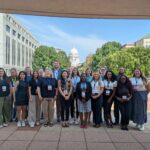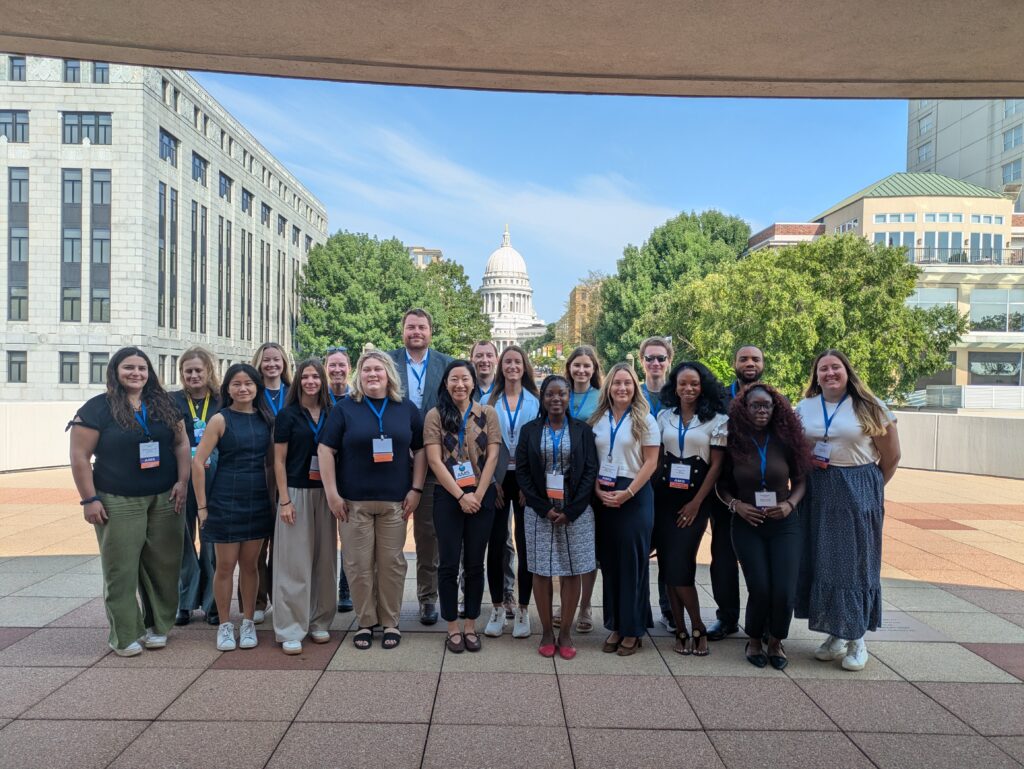
The American Meteorological Society’s Early Career Leadership Academy (ECLA), established in 2017, aims to build and sustain a resilient network of early-career leaders in weather, water, and climate (WWC) science. Each year, ECLA brings together a group of early-career individuals for an immersive experience focused on developing leadership skills, such as creative problem-solving, conflict resolution, building trust, and communication expertise. The curriculum includes current “hot” topics that change from year to year, such as weather policy, AI techniques, or adaptive leadership frameworks.
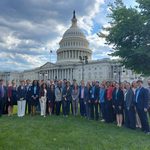
This year, the eight-cohort met virtually through a series of leadership webinars and then convened in-person during the AMS Madison Summit. Current Planning Committee Chair Liz Gilden and incoming Chair Marcus Williams shared insights on the 2026 program and looked ahead to 2027 and beyond.
AMS Headlines: The ECLA program works to push participants into an “uncomfortably comfortable” zone while teaching skills like active listening and giving credit in partnerships. Can you describe how some of the interactive speaker activities supported this kind of growth in this year’s program?
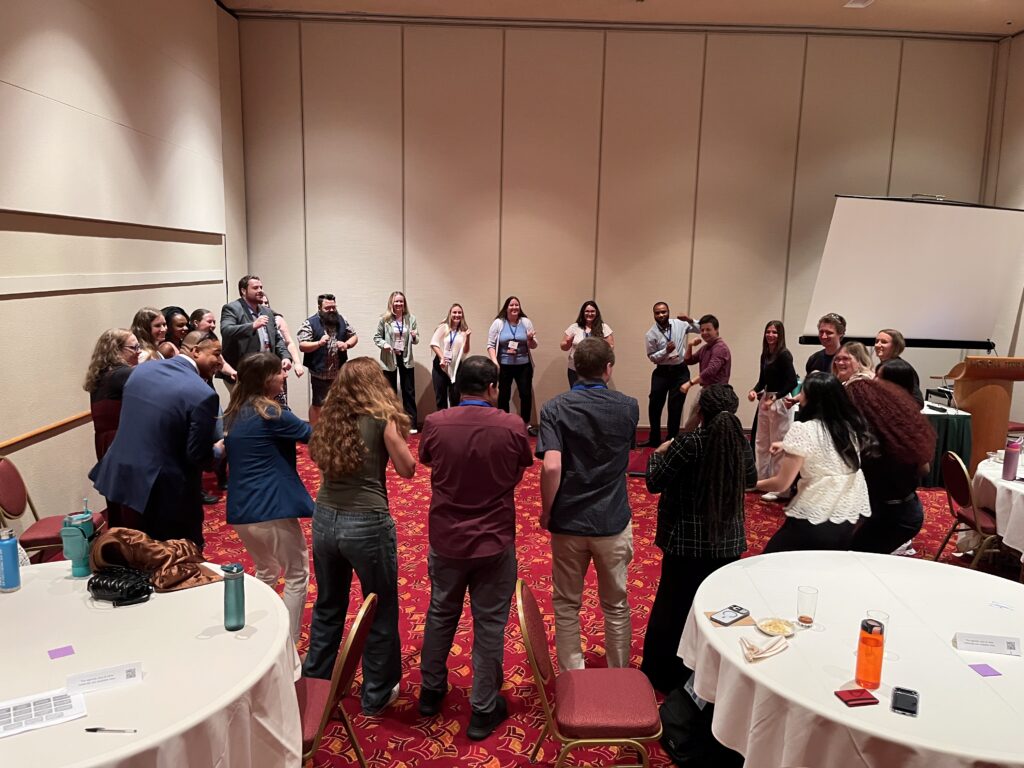
Liz Gilden & Marcus Williams: Our keynote, DaNa Carlis, challenged everyone to stay “comfortably uncomfortable.” He had participants honestly [acknowledge how they felt], from “comfortable” to “drowning,” and talk through why with a partner. He modeled it by openly sharing the hard lessons of leading NOAA’s National Severe Storm Laboratory through major staff losses. Additional sessions such as improv and a speed debate pushed participants to truly listen and respond, and our Difficult Conversations session used a “you and me versus the problem” approach. In the post-program survey, participants named these interactive sessions among the most valuable and asked for even more hands-on practice.
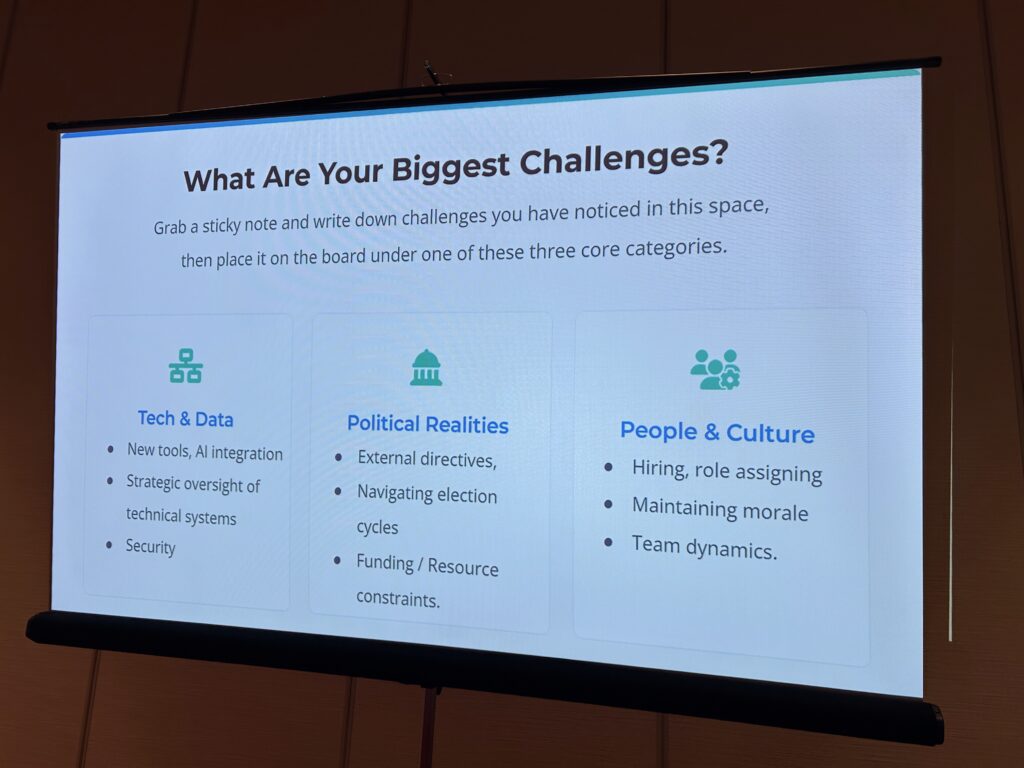
AMS Headlines: What potential challenges or benefits do you anticipate as you incorporate more dedicated content on science communication into future programming?
LG/MW: The demand is there. One participant told us outright that science communication deserves its own full session and materials. The benefit is that nearly everyone in the cohort eventually has to translate their work for decision-makers, and speakers like Jen Walton (founder, Girls Who Chase) and Gina Eosco (NOAA Weather Program Office Director) showed how central that skill is to leadership. The challenge is time and depth. Our participants were clear that they want practical tools and practice, not just presentations, so we’ll engage future cohorts on what they need most and keep that in mind as we plan both the webinars and the in-person sessions.
AMS Headlines: As AMS (and other WWC organizations) prioritize supporting a new generation of individuals beginning careers in weather, water, and climate, what insights would you share with organizational leaders?
LG/MW: This generation wants substance and transparency. Our cohort asked for actionable tools over validation, clear expectations about time commitments so they can plan with their employers, and real practice instead of lectures. They value small, trusted peer groups where they can speak freely. They’re also drawn to nontraditional career paths and want guidance on moving between sectors, setting boundaries, and building networks from scratch. Leaders should see that as ambition and adaptability, not a lack of commitment.
AMS Headlines: Preparing the next-generation workforce is a strategic priority for AMS. Based on the trends and debriefs coming out of ECLA, can you share any insights you’ve learned about attracting, supporting, and retaining incoming talent in dynamic times?
LG/MW: Every participant who answered our postprogram survey said they were likely or very likely to recommend ECLA. One participant put it simply: They just need more chances to lead. Another said they lacked support from their employer and were looking for new roles because of it. Programs like ECLA build skills and confidence, but retention depends on what happens back at the [individual’s] home institution: ongoing mentorship, stretch assignments, psychological safety, and managers who back their growth.
AMS Headlines: With over 150 alumni across cohorts at this point, how are you thinking about opportunities to connect past graduates and the importance of strengthening this network?
LG/MW: ECLA has always been involved at the AMS Annual Meeting and hosts a variety of opportunities for alumni to get together and reconnect. Through peer-mentoring groups, the alumni have strengthened bonds with each other and can continue a lifetime of friendship and support. As the alumni group expands, we are looking into ways to host regional happy hours, highlight past alumni and their careers, and continue to build a supportive community that supports each other throughout their careers.