by Xubin Zeng et al.
Key Messages From
Global Precipitation Experiment—A New World Climate Research Programme Lighthouse Activity
by Xubin Zeng (The University of Arizona), Lincoln Alves, Marie-Amélie Boucher, Annalisa Cherchi, Charlotte DeMott, A. P. Dimri, Andrew Gettelman, Edward Hanna, Takeshi Horinouchi, Jin Huang, Chris Lennard, L. Ruby Leung, Yali Luo, Meloth Thamban, Hindumathi Palanisamy, Sara C. Pryor, Marion Saint-Lu, Stefan P. Sobolowski, Detlef Stammer, Jakob Steiner, Bjorn Stevens, Stefan Uhlenbrook, Michael Wehner, and Paquita Zuidema. Published online in BAMS, February 2025. For the full, citable article, right click on the title above for options.
Precipitation is a critical component of the water cycle and a major driver of atmospheric circulation through the latent heating associated with condensation and evaporation. Many high-impact weather events affecting society are manifested as too much or too little precipitation. For these reasons, precipitation has already received much attention from numerous national and international projects. Nevertheless, the accurate measurements, modeling, and prediction of precipitation remain one of the fundamental challenges in weather, water, and climate research.
As precipitation is produced by complex moist processes and their multiscale interactions with atmospheric dynamics and other components of the Earth system, the strategy of the Global Precipitation Experiment (GPEX) is to make sustained progress with this challenge through observations, understanding, modeling, and capacity development, which will lead to a quiet yet progressive revolution, just like the case for numerical weather prediction.
GPEX was first discussed in 2020 among various U.S. agencies to address the slow progress in improving precipitation prediction. This effort was elevated in 2021 to an international initiative to be pursued through the World Climate Research Programme (WCRP). A GPEX Tiger Team prepared a white paper on the GPEX strategy in 2022. This team was expanded in 2023 to form a GPEX Science Team in developing the Science Plan, with the launch of GPEX as a new WCRP Lighthouse Activity in October 2023. This team was then transitioned to the interim Scientific Steering Committee in 2024, with the new membership in 2025 tasked with implementing the GPEX Science Plan.
GPEX will address four main science questions related to reducing precipitation product uncertainties, improving understanding of precipitation and related processes, improving precipitation prediction and projection, and enhancing regional and local capacity. Its four key activities organized into four working groups will cover four storm systems: atmospheric rivers, mesoscale convective systems, monsoons, and tropical cyclones.
Field campaigns are needed to better understand precipitation processes. Indeed, the 1974 field campaign (GATE) data over the tropical Atlantic are still widely used for process understanding. What is most exciting about GPEX is the planning of its unprecedented, globally coordinated atmosphere–land–ocean coupled field campaigns with in situ, airborne, and satellite measurements. A key activity is to identify and approve potential anchor projects for each storm system, and to develop international partnerships for coordinated field campaigns around these anchor projects.
GPEX will develop gridded precipitation-relevant datasets with high temporal and spatial resolutions that will complement existing efforts. Such datasets already exist, but they differ from each other (e.g., for extreme precipitation and for how precipitation relates to other variables). GPEX will also pursue a baseline surface precipitation network, similar to the long-term radiation and atmospheric aerosol networks. This network will ensure high-quality measurements of precipitation rate, type, and hydrometeor size distribution, which can also be used to calibrate other measurements, improving the overall quality of global precipitation datasets.
GPEX will seek to coordinate precipitation analyses and forecasts from major prediction centers for the GPEX period and support the establishment of multimodel databases, along with common evaluation metrics for deterministic, probabilistic, and extreme forecasts of precipitation. While kilometer-scale modeling offers a very useful tool for precipitation simulation and prediction, significant biases persist, because physical processes—such as shallow convection, turbulence, and cloud microphysics—still need to be parameterized. Therefore, GPEX will focus on model simulations at various resolutions and address questions such as: How can process understanding from kilometer-scale modeling help improve coarser-resolution modeling? Furthermore, GPEX will emphasize the cross-scale process understanding of land–atmosphere and land–hydrology interactions and their implementation in climate models.
As WCRP has already set up projects on capacity development, GPEX will focus on entraining scientists and graduate students into global field campaigns. Local researchers understand regional and local processes and will contribute to model evaluation, development, and experiment design for these regions.
GPEX will move forward with three phases: 2–3 years to plan field campaigns and carry out other activities; 2–4 years to organize and conduct field campaigns and carry out all activities; and 2–3 years to pursue postcampaign activities. The GPEX implementation strategy is to lead few activities, but do them well, with strong partnership. GPEX activity will be completed in a decade or so and then be fully integrated into WCRP Core Projects.
Through our BAMS article, we invite the broader community to contribute to GPEX as we seek to engage in an unprecedented global effort to advance understanding of the hydroclimate, and the modeling and measurement of precipitation.
If you are excited about GPEX, please get involved!
METADATA

“While precipitation is the driver of the water cycle, river flow measurements provide an excellent constraint for each river basin.”
“My initial interest was in physics, and my PhD research on chaos theory and its applications to the atmosphere was advised by an atmospheric scientist and a theoretical physicist. After learning about atmospheric physics in college, such as clouds, precipitation, radiation, and turbulence, I saw the relevance of these topics to our daily life and wanted to better understand weather, water, and climate. Decades later, I am now connecting with physicists again in an attempt to link quantum science and computing to our field. Life is a spiral!”
—Xubin Zeng, The University of Arizona
“My first interest was in physics, but my degree course in the late 1990s was also offering geophysics classes, and I started to be interested in them. Among the classes was a short course on meteorology and climatology that showed me fascinating aspects of this science, and from there I started with a degree thesis and later on with a PhD. While preparing my degree thesis, I read a poem on how people living in monsoon countries see and wait for precipitation. It was quite a different perspective from mine living in Italy, far from the tropics. Nowadays, perspectives have changed for all of us, and how we wait for precipitation and/or are scared by its scarcity or extreme abundance are becoming common because of climate change and its consequences.”
—Annalisa Cherchi, National Research Council of Italy
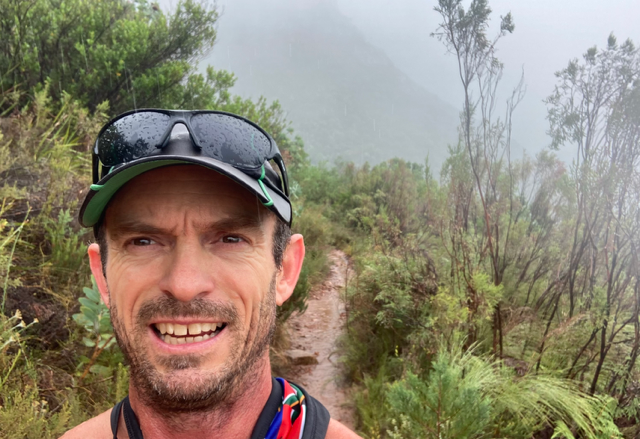
“I grew up on the South African highveld. During the summer, I would be mesmerized by the growth of a small cumulus cloud as it bubbled up into a towering cumulonimbus full of lightning, thunder, heavy rain droplets, hail, and raw power. Gazing out of my window, I hoped we would get lucky and it would pass overhead and drench us with rain, and we would feel the CLAP of lightning-triggered thunder. If we were unlucky, there would be golf ball– or tennis ball–size hail! My mother would always shout at me to get away from the window, which I never did. At university I studied atmosphere and ocean science so I could understand these phenomena better, and now I want to understand how climate change will impact events like these in my continent as we approach 1.5 and 2 degrees Celsius of global warming.”
—Chris Lennard, University of Cape Town
A Brief Conversation
with the Authors
BAMS: What would you like readers to learn from this article?
Xubin Zeng (The University of Arizona): Precipitation observation, modeling, and prediction is an old and complex problem. Discovering the silver bullet as a magic solution is unlikely. GPEX offers an exciting opportunity for sustained progress through observations, understanding, and modeling. Please get involved!
Annalisa Cherchi (National Research Council of Italy): Understanding, modeling, and predicting precipitation is still a big challenge for our community. Progress has been slow but continuous so far, and GPEX is a new chance to join together and continue on this path with new energy and new opportunities.
Chris Lennard (University of Cape Town): Precipitation has been one of the trickiest variables for climate models to simulate—a challenge that is still with us today. Through GPEX we want to address this challenge by improving our understanding of the processes that lead to precipitation through better observations of both precipitation and the atmosphere.
BAMS: How did you become interested in the topic of this article?
XZ: Almost everybody’s research in our field is related to precipitation in one way or another. I have worked on precipitation retrieval, precipitation dataset evaluations, precipitation modeling and prediction, and precipitation-related satellite mission concept development. There have been many atmospheric, atmosphere–ocean coupled, and atmosphere–land coupled regional field campaigns. What is lacking is the globally coordinated atmosphere–land–ocean coupled field campaigns. This would provide an unprecedented opportunity in accelerating the progress in precipitation research. This perspective gets me excited, and hence I was willing to spend three years leading a large group of interdisciplinary scientists in developing the GPEX Science Plan, and will be further involved in GPEX.
AC: I started my scientific career with monsoons, specifically the Asian monsoon. I have worked with global climate models to better understand and better predict monsoons’ precipitation and related variability. For monsoons, precipitation is the key variable. For GPEX, monsoons are the optimal test case to gather the community and apply improvements and understanding derived from common activities. Moreso, GPEX is a new challenge for me, as I’m now cochairing it. This is scary and exciting at the same time because of the large group of interdisciplinary scientists involved and the planned objectives we want to reach.
CL: Rainfall is a word always on the lips of Africans, as we depend on it for our livelihoods and well-being. Having lived through several droughts, including the Day-Zero Cape Town drought, and flood events most years, I have firsthand experience of the disruption and devastation these events cause to society. From this context I want to better understand the drivers of rainfall across various scales: from the local and regional scale to subcontinental and continental; from seasonal and intraseasonal to the near- and medium-term futures. Then, how climate change alters rainfall characteristics at these scales.
BAMS: What surprised you the most about the work you document in this article?
XZ: With a diverse group of colleagues, we learn from each other on a familiar topic (i.e., precipitation), such as the possible in situ estimates of precipitation over oceans and the global network for stable isotopes in precipitation measurements. As another example, what are precipitation features? We usually talk about precipitation intensity, frequency, and amount. Now we also need to characterize precipitation by its duration, type, hydrometeor size and distribution, seasonality, and extremes.
AC: My big surprise has been realizing how important each diverse voice is and also how important connecting and interacting with interdisciplinary scientists is: precipitation has been and is an incredibly unifying element. At the same time, it has been amazing to also became familiar with each other via online meetings, and once we met in person for the first time, we had the impression of being old acquaintances.
BAMS: What was the biggest challenge you encountered while doing this work?
XZ: There are always different perspectives associated with diverse authorship. Precipitation arises from complex interactions across a range of spatial and temporal scales, and a major question was about the focus of GPEX—focusing on all processes leading to precipitation or some weather systems. In the end we decided to focus on atmospheric rivers, mesoscale convective systems, monsoons, and tropical cyclones. But what are the names to characterize them? We decided to use storm types. Questions were raised later regarding whether monsoons can be classified as a storm type. In retrospect, it is better to use four storm systems.
AC: My big challenge has been and is still being as open as possible to the different aspects and the complexity of precipitation and its understanding, trying to look at and recognize other important aspects that are less familiar to me and to my main expertise and daily research.
CL: I have two: The first was realizing, relatively speaking, how few Africans work in this research space, and therefore the limited number of research questions we can address. As critical as rainfall is to the continent, we have so few researchers in the field compared to Global North countries, and the challenge for me is how to raise awareness of this dilemma through GPEX and be part of the solution to the problem. The second was how few observations we have compared to other regions of the world. Here I think GPEX has the potential to facilitate improved observations of rainfall in key regions of the continent so we can have a better understanding of our observed rainfall climate.
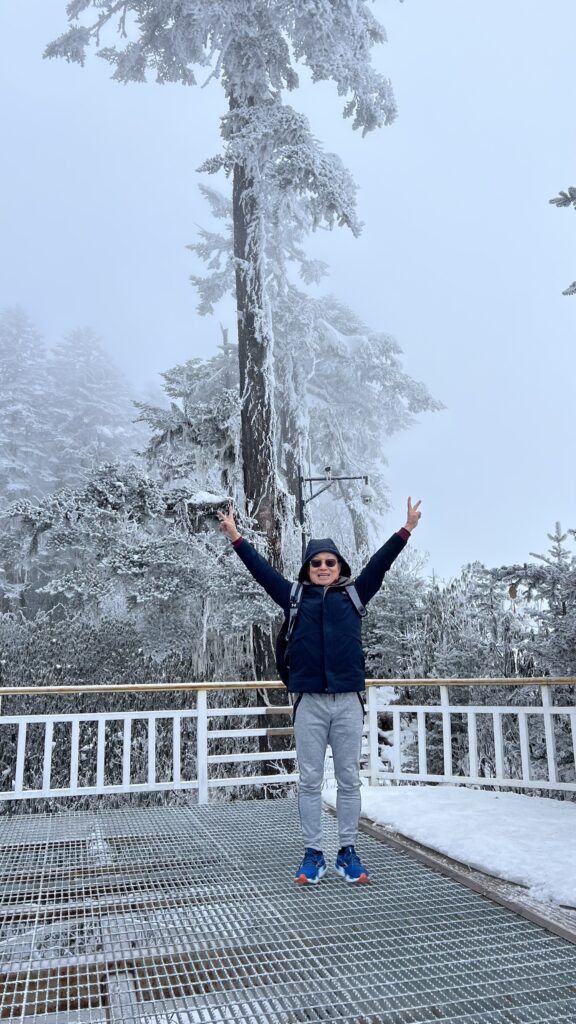
“What’s next is to implement the GPEX Science Plan! The organizational structure is in place, with the GPEX Scientific Steering Committee cochairs, the cochairs of its four working groups, and most of the members already appointed. The great challenge would be the financial support of the field campaigns; precipitation-related dataset development; process understanding, modeling, and prediction; and capacity development at this chaotic time of our life in the world.”
—Xubin Zeng, The University of Arizona
Xubin Zeng having fun and thinking about the glacier mass balance from snowfall, sublimation, melt, and glacier flow during a visit to a low-altitude modern glacier around 2,900 meters above sea level just 130 miles (210 km) away from his hometown in Sichuan Province, China.
“What’s next for me could be a lot, as cochair of GPEX— a new adventure! Apart from this, a big challenge for all of us involved and contributing to GPEX will be to collect financial support for the field campaigns in primis, or first of all, but also to identify the optimal keys for a fruitful cooperation leveraging on our expertise and daily work.”
—Annalisa Cherchi, National Research Council of Italy
“Securing funding for the activities of GPEX is essential. Additionally, in the context of capacity development for precipitation research in Africa and the Global South more broadly, as cochair of the WCRP Academy I will work very closely with GPEX to achieve its capacity development goals to reach, train, mentor, and hear from marginalized and early-career scientists who have a similar passion to understand rainfall in their regions.”
—Chris Lennard, University of Cape Town