By Joshua Macholl and Julian Heming, UK Met Office
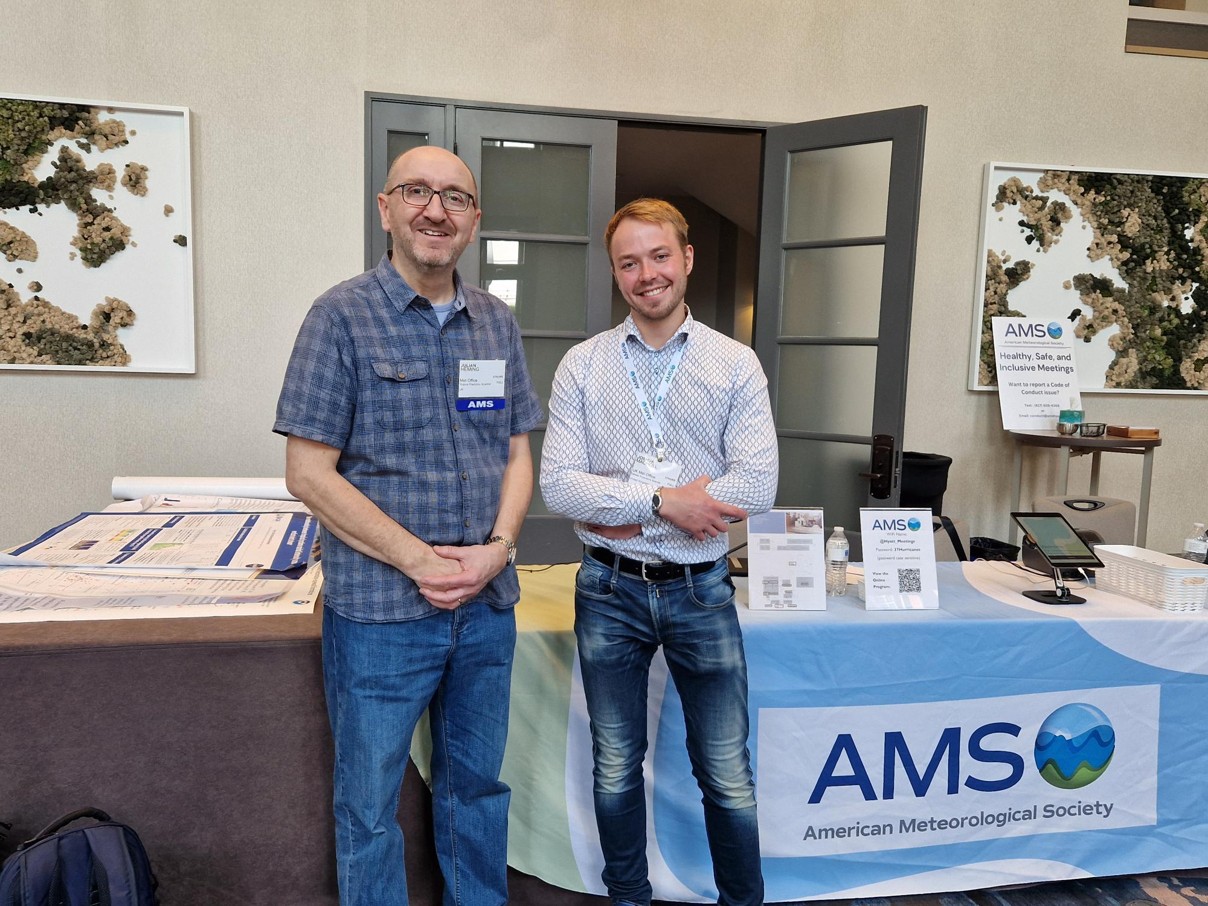
This article originated as a LinkedIn post by the authors, describing their experience at the 37th AMS Conference on Hurricanes and Tropical Meteorology. The authors have granted permission to republish most of the article on AMS Headlines. You can read the original article here. The post has been lightly edited.
Note:
This article contains links to sessions at the AMS Hurricanes Conference. Recordings of all AMS conference sessions are made available to the public three months after the conference. If you registered for/attended the meeting, you can access those recordings now via the online platform.
Tropical cyclones kill thousands of people and cause billions of dollars of damage each year.
Tropical cyclones (TCs) — otherwise known as hurricanes or typhoons — are the most dangerous hydrometeorological hazards. Thousands are killed and billions of dollars are spent recovering from the losses each year. Research into these extreme weather phenomena is vital to save lives and mitigate losses. Since 1957, the American Meteorological Society (AMS) has held a bespoke conference to address this, harnessing the latest progress on TC research and tropical meteorology to improve predictions. Topics are vast, and stem from the formation of TCs (tropical cyclogenesis) all the way through to impacts. Topics in between include theory, modelling, and observations of these systems.
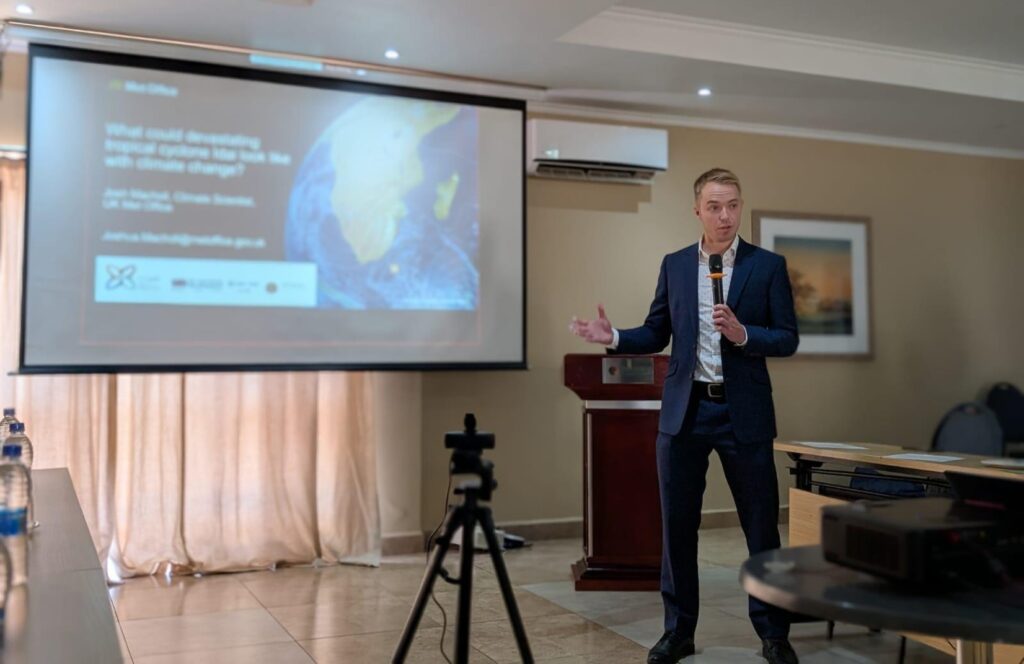
In addition to weather time scales, a considerable proportion of the conference is dedicated to discussing TC activity on climatic time scales, including observed trends and future projections. Josh chaired two sessions within the “Tropical Cyclones and Climate” section of the conference in addition to giving a presentation. It is generally accepted that TCs have become more destructive as warming oceans have fuelled more powerful cyclones, but reliable observations of TCs only go back several decades, which makes detecting trends challenging. In her presentation, I-I Lin made a convincing argument that the current hurricane intensity scale is inadequate to distinguish “super typhoons” which have occurred in recent years.
Global warming is making them worse.
We expect that global warming will continue to make TCs and their impacts more dangerous, but it’s unclear just how severe these events could get. Confidence in future projections hinges on the ability of models to realistically resolve TCs in the current climate. Recently, climate models have shown increasing skill in representing TC attributes like intensity, location, and frequency. However, an insightful talk by Adam Sobel highlighted that Earth system models may be universally misrepresenting the observed ocean warming pattern over the Pacific, which may have significant implications for future projections and our understanding of risk in different regions. Specifically, observations indicate that the tropical Pacific has warmed in a “La Niña-like”, whereas models suggest an “El Niño-like” warming pattern.
Vulnerable communities are exposed to these risks.
There are regions in the southern hemisphere which have received little research attention, yet they are home to some of the poorest and most exposed communities to the impacts of climate change. The UK Met Office is addressing this through the Resilience and Preparedness to Tropical Cyclones in Southern Africa (REPRESA) project, funded by the UK/Canada Climate Adaptation and Resilience Programme. Josh presented important insights from state-of-the-art Met Office climate models, such as the evolving risks of TCs that have stronger winds and heavier rainfall than we have ever observed in Southern Africa, plus the possibility of landfall in new locations, which puts new populations at risk. On the other hand, our projections indicate that the frequency of weaker systems will decline (consistent with the scientific consensus), which could be interpreted as positive.
Therefore, while we may see fewer low-intensity TCs, when TCs do occur, they are likely to be more destructive. Given there are multiple dimensions to TC risk, the scientific communication must be clear-cut to ensure future projections are not misinterpreted.
Having attended every AMS Hurricane Conference since 1997, Julian has observed firsthand significant progress in the forecasting of TCs and has sought to promote the Met Office’s contribution to the field. He presented results on the impact of the recent global model change (GC5) on TC forecasts and experimental work such as use of nudging the Global Model with AI forecasts and the development of a high-resolution relocatable regional model for TC prediction.
Artificial Intelligence (AI) is enhancing TC forecasts.
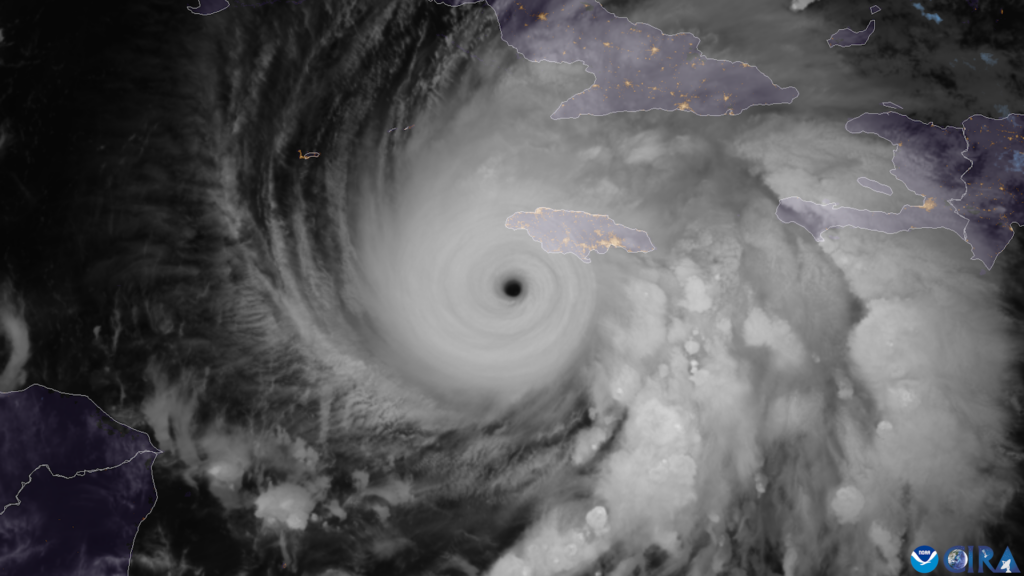
It was noticeable how quickly AI models have become competitive in the prediction of TCs, and this was a major theme at the conference. Historically, global and regional models such as those from the Met Office, European Centre for Medium Range Weather Forecasts (ECMWF), and National Oceanic and Atmospheric Administration (NOAA) have been the main players in operational prediction of TCs. However, AI models such as ECMWF’s Artificial Intelligence/Integrated Forecasting System (AIFS) and NOAA’s Artificial Intelligence Global Forecast System (AIGFS) have quickly established themselves as valuable operational tools, showing great skill in the prediction of TC tracks, but often underestimating TC intensity. Moreover, Google DeepMind have in quick time developed a model which predicts TC track and intensity with accuracy which rivals and often exceeds traditional physics-based models. Google DeepMind have sought to engage with the TC research and forecasting communities, and there was a special session at the conference on Google DeepMind’s engagement with the U.S. National Hurricane Center and how their predictions were used during the 2025 hurricane season, with a particular focus on the devastating Hurricane Melissa.
Overall, the conference provided a fantastic opportunity to discuss scientific progress across both weather and climate modelling time scales. We were pleased to showcase how the UK Met Office is supporting developing nations understand the threats posed by a changing climate and how we are approaching the adoption of artificial intelligence to enhance our tropical cyclone forecasts. We are grateful to the AMS for their hard work in organising the conference and look forward to attending future meetings.