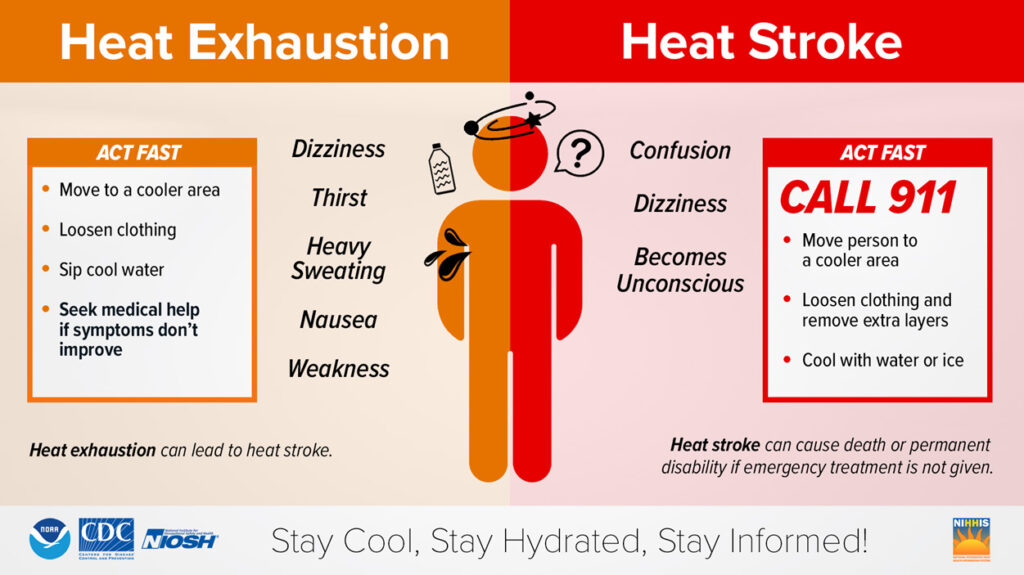
Heat is one of the deadliest weather hazards globally, and heat safety is a critical intersection of atmospheric science and public health. Heat waves are trending hotter, longer, more frequent, and more geographically widespread, impacting more people.
This requires the weather community to move beyond simple temperature prediction toward “impact-based” forecasting (e.g., public health, infrastructure, etc.). The weather and climate community provides the foundational data (wet-bulb globe temperature, humidity, heat indices, HeatRisk) that public health officials and emergency managers rely on to mobilize, such as activating cooling centers.
Heat Safety Awareness Week (May 18-22, 2026) aims to increase awareness and preparedness ahead of the summer season. By unifying heat safety education across federal, state, local, tribal, territorial, media, academia, and private sectors, the effort reaches more people to raise awareness and prevent heat-related illness and death.
Advance preparation is essential because heat is often a “silent killer” that can quickly overwhelm individuals and infrastructure. No one is immune to the impacts of heat, but some are more susceptible than others, and heat-related illness and deaths are preventable. Think about how you might implement some of these actionable prevention steps where you live or work:
- Mitigating Preventable Illness: Heat-related illnesses are preventable, and it is possible to prepare for extreme heat to mitigate impacts to health. Advance awareness of symptoms and safety tips allows people to take action before a medical emergency (like heat stroke) occurs.
- Protecting High-Risk Groups: Advanced planning ensures that cooling centers are sited correctly, outdoor workers have safety protocols in place, and athletes are conditioned or scheduled for safer times of day.
- Urban Complexity: Actions such as Urban Heat Island mapping enable communities and officials to plan targeted interventions (like tree planting or cool roofs) before the peak of summer.
- Infrastructure Stress: Preparing in advance helps utilities and local governments manage the increased demand on the power grid and water systems that occurs during extreme heat events, preventing cascading failures.
- Behavioral Preparedness: By holding awareness weeks in May (before Memorial Day), the National Integrated Heat Health Information System (NIHHIS) helps people begin thinking about hydration, protective clothing, and monitoring the news for alerts as they enter the summer recreation season.
Ultimately, heat safety is a shared responsibility that bridges the gap between sophisticated atmospheric science and everyday public health. By moving toward impact-based forecasting and using tools like HeatRisk and Wet-Bulb Globe Temperature, and effectively communicating risks and prevention strategies, we can better protect vulnerable populations and infrastructure. Looking toward the summer season, staying proactive and informed is the best defense against this “silent killer.”
For more resources on how to prepare your community, access detailed safety checklists, and track real-time heat alerts, please visit the official National Integrated Heat Health Information System website and the NWS Heat Safety portal.
Submitted by Kimberly G. McMahon, National Integrated Heat Health Information System Co-Lead, NOAA