The 2026 FIFA World Cup is on! With teams vying for supremacy in the heat of summer at venues across Mexico, the United States, and Canada — and millions of fans cheering them on — the risks from heat and other weather events are considerable. AMS Headlines spoke with Kevin Kloesel, an event-safety consultant and retired meteorologist whose 40-year career included serving as director of the Oklahoma Climatological Survey, and Lance Wood, meteorologist with Harris County Flood Control District, about how meteorologists and event planners are helping keep players, fans, and everyone else safe at the world’s largest tournament.

Why is the World Cup such a huge challenge for event safety planners?
Kloesel: The 2026 FIFA World Cup is the largest tournament of any kind in history, with 104 matches to be contested. Total attendance will likely exceed 7 million people. In addition, the cities hosting FIFA matches, as well as nonhost cities across the United States, are organizing Fan Fests and outdoor watch parties with a total estimated attendance of these approaching 10 million additional people. Add in tens of thousands of workers and you have the largest weather exposure for any event since Moses crossed the desert. This event is not just a challenge for the large venue managers, but for event safety and emergency management personnel in every state and province across North America.
Wood: I think a big challenge for us [in the Houston area] has been all the international visitors who are not acclimated to our heat. Even our first responders, who are more acclimated to this climate/heat, are typically not outside for these long durations. Fan Fest generally opens in the morning and closes late evening — so they are outside much of the day/evening. On the first day we had a first responder get overcome by heat and need treatment. We also saw the need to open up additional air-conditioned spaces for them to cool off in.
How are World Cup venues and host cities responding to weather challenges, and how are meteorologists and other atmospheric scientists helping?
Kloesel: Every sector of the global weather enterprise has been involved in some way with the events associated with this year’s FIFA World Cup. From academia providing peer-reviewed literature on heat metrics, state and federal climate offices supplying climatological information to venues, and the private weather enterprise and National Weather Service forecasters providing direct weather monitoring and forecasting support to venues and emergency managers, to national soccer teams working with meteorologists in conjunction with sports scientists and performance consultants to plan training times and regimen, hydration protocols, physical recovery procedures after matches, etc.
What are some of the major weather-safety considerations for World Cup venues (heat, for example), and how are host cities responding?
Kloesel: FIFA is implementing hydration breaks as a standard heat protocol in every match, although these have been controversial when applied in indoor venues. FIFA decided that every game would be treated the same for competitive consistency as well as to take away any ambiguity associated with how difficult it is to measure the various temperature inputs to heat metrics such as the wet bulb globe temperature (WBGT). It is noteworthy that NCAA Soccer and Major League Soccer already implement WBGT-triggered hydration breaks.
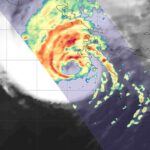
Because the 16 FIFA venues span much of North America, weather sensitivity is not confined to heat. Houston has already experienced weather from Tropical Storm Arthur, Toronto has already experienced heavy rain. Typical late-spring severe lightning storms have already placed several venues in severe thunderstorm and tornado watches. The weather plans for these events are comprehensive, not heat-centric.
Wood: Here we have been doing everything we can to make adjustments for the heat to try to prevent heat-related illness. Refillable bottle stations, a few misters, and shaded structures. There is a hall that is air-conditioned that can hold 800 people at a time. The fire department coordinated with FIFA to begin regularly spraying the turf pitch down to cool the turf when it gets hot. That has been very popular, with many attendees looking forward to the fire truck spraying, as they run out to cool down in the spray. An additional medical tent that is air conditioned was added after the first day. EMS has several mobile teams that can go to help someone when there is a report of heat illness. They also have a dunk tank to rapidly cool someone if their core temperature gets too high.
We have closed Fan Fest a few times already because of weather/lightning. I monitor real-time lightning and use 8 miles [distant] as a threshold for shutting down. We then wait 30 minutes for an all-clear after the last lightning strike that occurred within 8 miles. Fan Fest was closed during Tropical Storm Arthur due to the flooding potential and persistent lightning.
If I’m attending a World Cup match, how can I best prepare to be weather safe?
Kloesel: Preparing to attend a FIFA World Cup match, Fan Fest, or watch party is no different than preparing to attend any other large gathering, whether that be American football or a concert. Have a plan! Look at the weather forecast, multiple times! Have a way of getting weather warning information. Check out the venue’s website in advance for more specific safety information such as evacuation routes and shelter locations. Given the pervasive heat concerns, our friends at Zelus have created a handy quick look web page that provides real-time temperature and WBGT at each of the 16 FIFA venues for the duration of the tournament.
If WBGT is well into the 80s or higher, make sure you are looking for shade, cooling stations, and hydration stations, and taking additional precautions like wearing a head cover, using sunscreen, etc.
If you want more information about WBGT? The National Weather Service has a great page for you to learn more. You can also read more in this article from CNN.
How have you personally been helping host cities deal with/prepare for heat and other weather issues during the World Cup?
Kloesel: I have been working with several venues and Fan Fest organizers as a consultant, trying to help these safety professionals acquire meteorological expertise through recommendation and referral, as well as hosting webinars on weather preparedness through the Event Safety Alliance. I am so thankful that my phone carrier allows unlimited texts and calls.
Wood: I have been working at the Houston Fan Fest command center. I am working with Houston Police/Fire/EMS and providing weather support. We (Harris County Flood Control District) installed weather stations at the Houston stadium (NRG) and also at Fan Fest so that we have real-time observations to help assess heat. We have real-time WBGT calculated, as we have a black globe installed as part of the weather station. We get data every two minutes. This has been very helpful for Fan Fest because it is about 3-4 degrees warmer than what we are seeing at other area observations at airports due to the urban environment with a lot of concrete and also the nearby turf pitch.