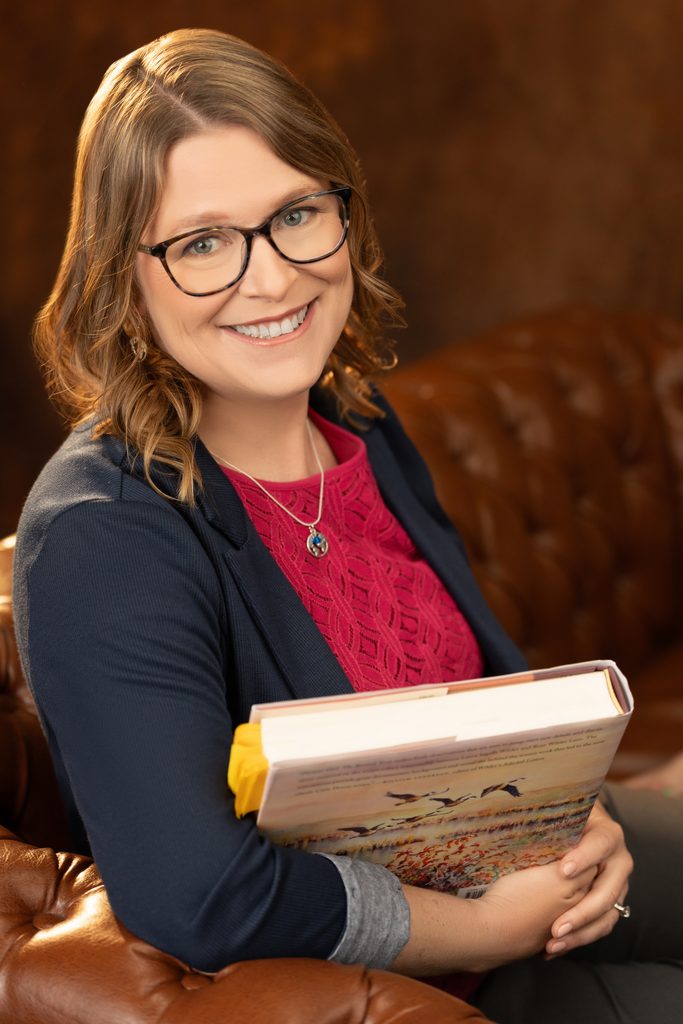
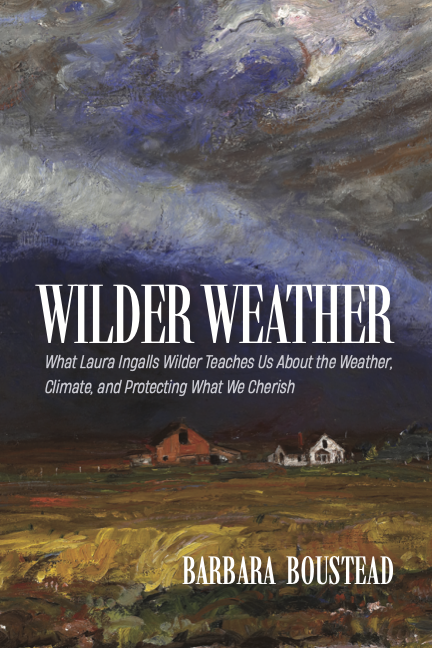
AMS Headlines sat down with Barbara Boustead, meteorologist, climatologist, and author of Wilder Weather: What Laura Ingalls Wilder Teaches Us About Weather, Climate, and Protecting What We Cherish, to talk about her career, her research, and the story behind her new book.
Boustead spent 24 years with NOAA, including 22 years with the National Weather Service in roles ranging from operational weather forecaster to climate program leader and instructor. She now serves as heat services program manager for NOAA’s National Integrated Heat Health Information System.
A longtime member and volunteer leader within AMS, Boustead currently serves as president-elect of the AMS Board of Certified Climate Scientists and Professionals and as an editor for Weather and Forecasting. She has also served as president of the Omaha-Offutt AMS Chapter and on the AMS Committees on Applied Climatology and Environmental Stewardship.
Why did you decide to write this book?
When I presented the first tidbits of Wilder Weather research at LauraPalooza in 2010, the audience of Laura Ingalls Wilder scholars, artists, writers, and enthusiasts became the most curious audience that I had ever encountered.
But let’s back up.
The work started with a rabbit hole—a side project looking up the Long Winter of 1880–81 because I was curious if Wilder’s account was anywhere near accurate. As the research progressed, I found myself at a very unique intersection of interests, with expertise in weather and climate as well as Wilder’s life and history. Making the connection between the weather and climate of Wilder’s life and ours, now and into the future, was my story to tell.
Part of the story is a bit of “gee whiz, Laura really did see some interesting weather events that really occurred!” But that wasn’t the whole story.
Talking about those “gee whiz” facts connected me to Laura Ingalls Wilder readers and TV audiences. People paid attention, asked questions, and wanted to learn more.
I wanted to help people see how weather, and our preparedness for and response to it, has changed. We still get tornadoes and blizzards just like Laura did, but we have forecasts and warnings to help us prepare and take shelter, and we know more about what to do to stay safe. The climate at Laura’s homesites has also changed from when she lived there to now, and we can learn from the past as we adapt to new and changing climates.
If we pay attention to the weather as closely as the Ingalls family and others did, we also can observe the details of the weather around us and the changes in the weather, landscapes, and environment.
Who is Wilder Weather for?
Wilder Weather is for your favorite aunt who watched Little House on the Prairie, your sibling who read some or all of the Little House book series, or your parents who can’t resist poking their head outside to watch foul weather.
It’s an entry point for talking about interesting weather events, safety measures, and changes in our weather and climate. Laura Ingalls Wilder is a trusted voice for many of her readers and TV show audience members, which opens common ground and a path toward communicating about topics that can sometimes be difficult.
The books and TV show, as well as the new Netflix show, can connect generations of readers and viewers, creating an opportunity for conversations about the weather and climate in Wilder’s life, now, and in the future.
What obstacles did you face while writing the book?
Writing a book while working full time and parenting a young child is not easy. The time span from when I first started researching the weather in the Long Winter to the publication date was 15 years!
I snuck writing time into small windows—a half hour after my work day ended, or an hour on weekend mornings—along with a couple of writing retreats to get some larger chunks written.
I also had to learn how to write a book, not just a collection of academic-like papers or blog entries, but something with structure and purpose, with chapters that move into each other and flow as a whole, complete story. Fortunately, I had book coaches who helped me find the structure and, ultimately, the book’s story arc.
What did you learn through the process?
I certainly became cozy with potential sources of historical data, including observational data from the Cooperative Observer Program (COOP) and historical fort observations (FORTS), as well as documentary sources like town histories, newspaper clippings, diaries, and other qualitative sources.
On the logistical side, publishing a book is about way more than writing words. The process has a lot of intricacies, from writing a book proposal and deciding what kind of publisher to seek to marketing the book before and after publication.
Book coaches were an amazing source of help throughout the process, from writing to publishing. Through the whole experience, I learned how to be a writer and an author.
What surprised you most in your research?
Laura Ingalls Wilder, as it turns out, was a very good weather observer!
Wilder’s accounts of weather events throughout her Little House books are largely traceable to real events, even if she used literary license to move them around in time. This includes the big weather, climate, and environmental hazards she described: the grasshopper (Rocky Mountain locust) infestation in the mid-1870s in Minnesota; just about every detail from the Long Winter of 1880–81; extremely cold temperatures while teaching school and riding home with her future husband, Almanzo, in 1883–84; tornadoes not far from De Smet in 1884; and wildfire and a dust storm in 1889.
Even more minor weather events—the “sugar snow” in Little House in the Big Woods, prairie fires in Little House on the Prairie and On the Banks of Plum Creek, treacherous river conditions in Little House on the Prairie and On the Banks of Plum Creek, and a big hailstorm in The First Four Years—are plausible based on weather observations from the region.
It really got to the point where finding a weather event that couldn’t be traced to observations was much more of a surprise!
What are the broader implications of this work?
Laura Ingalls Wilder didn’t write about how many inches of snow fell, and she loosely used the phrase “40 below” for just about every cold snap. What she did was give us a window into how the weather felt and how it impacted the lives of her family, neighbors, and communities. She described sunsets and frost alike with vivid, evocative, even poetic language.
To truly understand weather and climate, it takes both the measurable data and the human element.
We can learn a lot from how Laura Ingalls Wilder saw the world. She paid attention to the land, sky, and water around her, recalling those details decades later as she wrote her books. She and her family did what they could to stay safe or learned from their mistakes when hazardous weather crossed their path. They adapted to new climates as they moved from place to place.
They lived sustainably and frugally, mostly out of necessity, but with valuable lessons we can apply today. Blizzards will come again, as will droughts, prairie fires, tornadoes, and flooding rains. Some of those hazards are increasing in intensity and frequency, perhaps changing in seasonality.
Where do you go from here?
I’ve had the privilege of presenting on Wilder Weather at university campuses, historical sites, and for an array of organizations, and I would love to continue that face-to-face engagement.
Depending on the audience and purpose, Wilder Weather can be a lesson in science communication, a thread connecting a group to the weather affecting its members, a connection to history, and a path into understanding and paying attention to weather and climate.
I’ve also started the writing process for my next book. Writing has always been a part of who I am, and now that I’ve written and published one book, hopefully I can publish the next one in something less than 15 years.
Readers can learn more about Boustead’s work and find Wilder Weather: What Laura Ingalls Wilder Teaches Us About the Weather, Climate, and Protecting What We Cherish through the South Dakota Historical Society Press or Wilder Weather website.