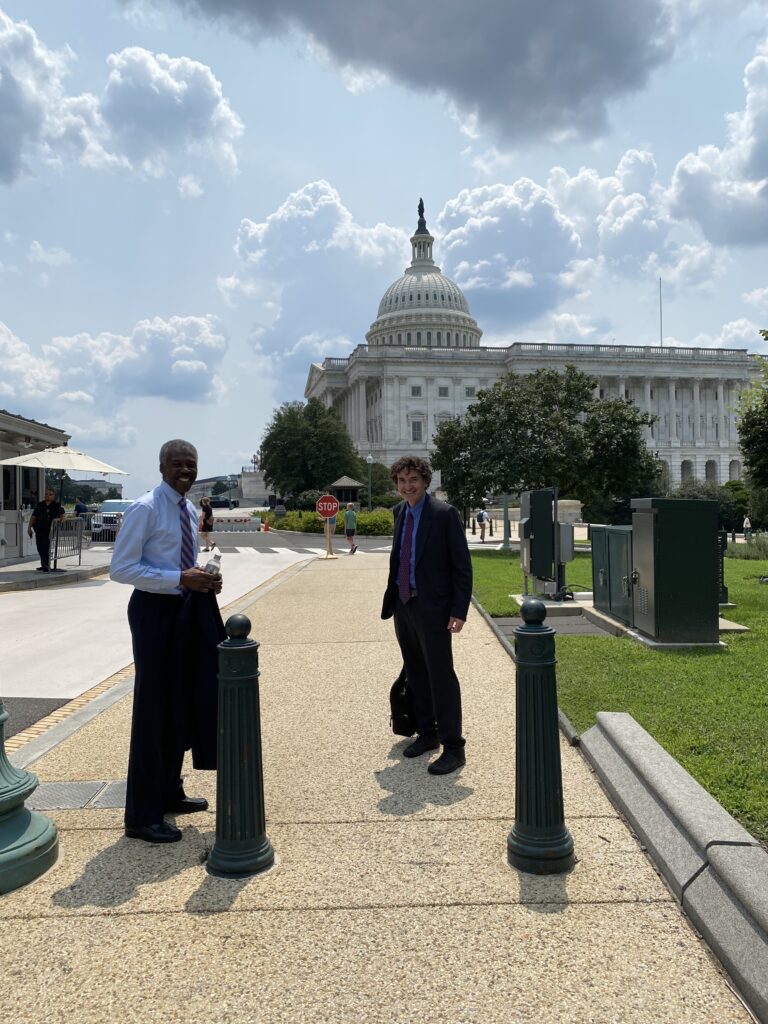
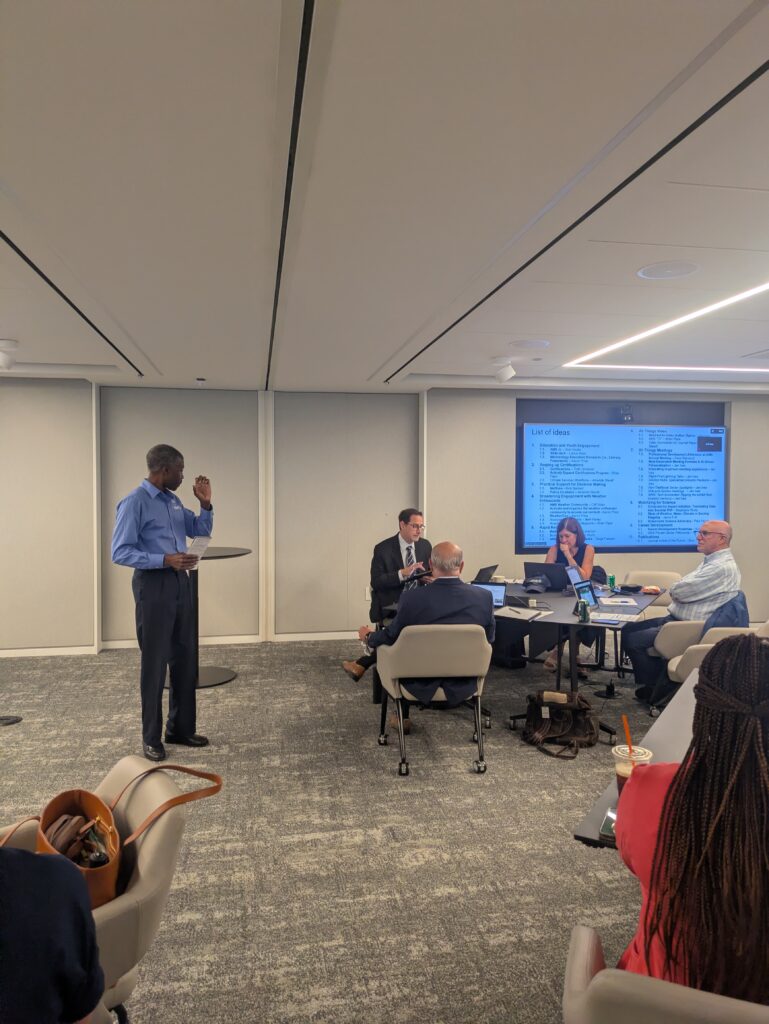
At last month’s midyear AMS Council meeting in Washington D.C., weather played a role. No, it wasn’t the wildfire smoke, nor was it extreme heat. It was a broken squall line. The D.C. area was under a slight risk of severe thunderstorms, and the line was forecast to arrive in the late afternoon, in the window between the end of the day’s Council meeting and dinner, which was five blocks away. Given the high degree of focus and engagement in the Council meeting, few people were watching the weather closely. I was. Part of the AMS President’s duty is leading the Council meeting, and that includes watching out for personal safety. I did what many of us encourage our friends and family to do. I checked the forecast and the radar regularly, not just at the beginning of the day!
The work of the weather enterprise made all of this possible. Using a commercial weather app, I frequently pulled up the KLWX WSR-88D radar to watch the progress of the convection. GIS mapping showed me exactly where lightning detected by the Global Lightning Mapper on GOES-19 was. The weather app presented Mesoscale Discussion #1783 followed by Tornado Watch #529 from the Storm Prediction Center. Warning polygons were displayed from the Baltimore/Washington National Weather Service office. This is the situational awareness that anyone with a cell phone has in their pocket in some form or another, but may not be aware of. I went one level higher, using NOAA’s High Resolution Rapid Refresh (HRRR) model, also widely available online. This model updates every hour with projections that I find to be fairly accurate on the county level.
For all of the day, the HRRR showed convection moving through Washington D.C. at various times between 5:30 pm and 6:30 pm. Dinner was scheduled for 6:00 pm. By the end of the Council meeting, toward 4:00 pm, the model had zeroed in on 6:00 pm for the initial impact of the broken squall line at our location. Armed with this data, I was able to inform Council of the threat, have the dinner start time moved up, and get everyone to the restaurant before the rain and before the lightning and wind. The rain started outside the restaurant at about 6:15 pm, and the core of the convection hit shortly after that. Dinner was delicious and the squall moved through before dessert.
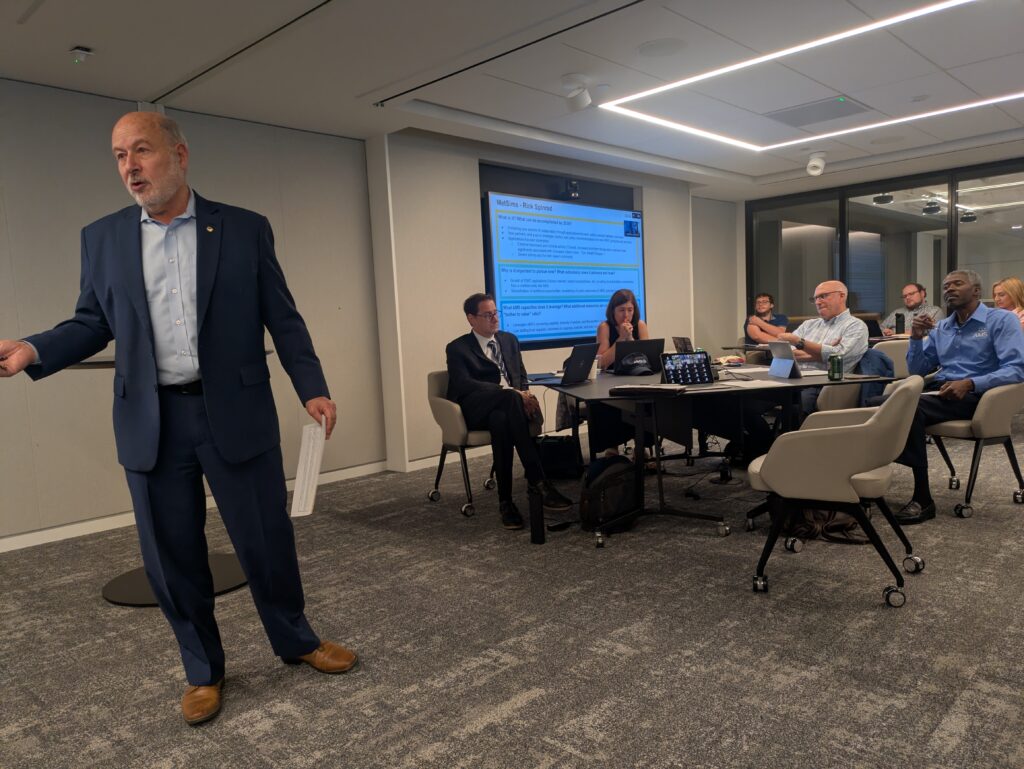
AMS President Elect Rick Spinrad commented on how this was a clear example of the workings and value of the weather enterprise, from federal funding of research to instrument and technology development, to operations and the human input, to public domain data and commercial service providers, to the education that enabled me to understand the science and limitations, with the ability to communicate it to a diverse group of people for their safety and benefit.
Thanks, weather enterprise. That’s what we do!