For decades, television was the primary way audiences connected with their local meteorologists. But as viewers increasingly turn to YouTube, social media, and other digital platforms for weather information, the definition of a broadcast meteorologist, and where that meteorologist can reach an audience, is changing.
For three veteran Certified Broadcast Meteorologists, that shift presented an opportunity.
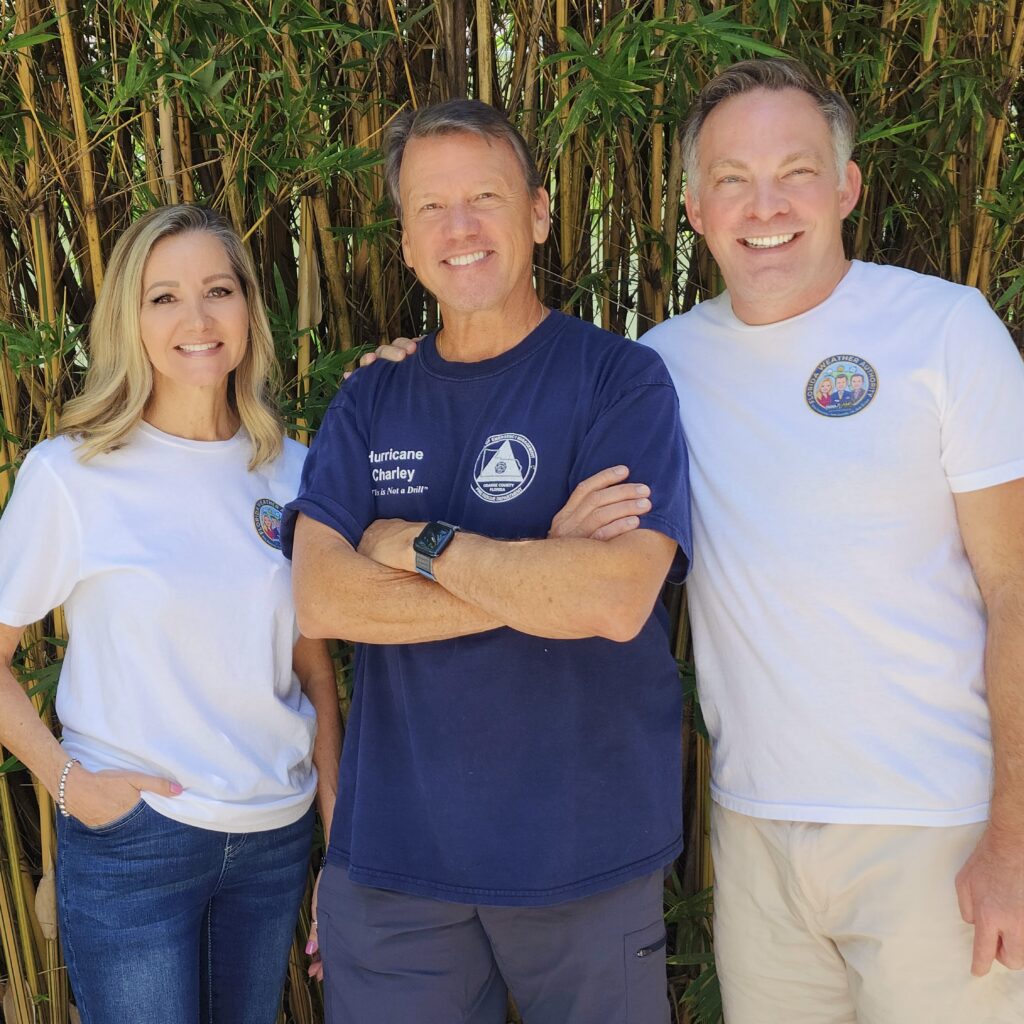
Tom Sorrells, Amy Sweezey, and Rob Eicher each built long careers in television before finding their way into new chapters. Rather than stepping away from meteorology, however, they saw an opportunity to bring their experience to audiences in a different way. The result is Florida Weather Authority, a digital-first weather platform built around experienced Florida meteorologists and the idea that trusted weather information shouldn’t be limited by station boundaries or a traditional broadcast schedule.
Their story offers a glimpse into a larger question facing broadcast meteorology: As audiences move online, what does the next generation of the profession look like and where does the CBM fit into that future?
Leaving Television Doesn’t Mean Leaving Meteorology
For Sweezey, who spent her career in full-time television before leaving in 2020, stepping away from the daily grind gave her a chance to rediscover what she loved about weather.
Working the morning shift for nearly 20 years had made meteorology feel like a chore. Storms and hurricanes meant longer hours and more time away from her family. Once she left full-time television, freelance work allowed her to create her own schedule while continuing to work in weather-related roles, including weather messaging for Carnival Cruise Line and freelance work for television stations.
“I have been blessed to keep my foot in weather,” Sweezey said, noting that she also continued developing weather-related projects, including children’s books and educational workbooks.
For Sorrells, leaving television was even more clearly distinct from leaving meteorology.
After more than 40 years in broadcasting, including 24 years as chief meteorologist at the CBS affiliate in Orlando, Sorrells accepted a buyout in 2024. He wasn’t planning to retire, however. He continued studying forecast models, tracking tropical systems, appearing in media, and sharing forecasts on social media.
“Leaving television never meant leaving meteorology,” he said.
After nearly four decades, weather had become more than a job. It was how he thought, communicated, and served his community. What he missed most was not necessarily the television studio, but the relationship with the audience.
Eicher, meanwhile, had already made the transition from television to academia. After more than two decades as a broadcast meteorologist in markets including Boston, Charlotte, and Orlando, he became an associate professor of meteorology at Embry-Riddle Aeronautical University, where he teaches broadcast meteorology and other weather-related courses and manages the university’s Weather Lab.
That combination of broadcasting, communication research, and teaching gave him a different perspective on the changing media landscape and on the skills future meteorologists will need.
The Audience Has Moved
The idea for Florida Weather Authority grew out of years of friendship among the three meteorologists and conversations about the future of broadcasting.
They had also talked for years about the importance of having a Plan B after television.
When Sorrells left his television position, the three began revisiting an idea they had discussed before: What if they built something themselves?
“The audience had moved, the technology had become more accessible, and the opportunity to build something independent was suddenly very real,” Sorrells said.
The timing finally felt right.
The three had decades of forecasting and communication experience, established relationships with audiences, and a shared belief that Florida could benefit from a trusted statewide weather source that wasn’t tied to an individual television station.
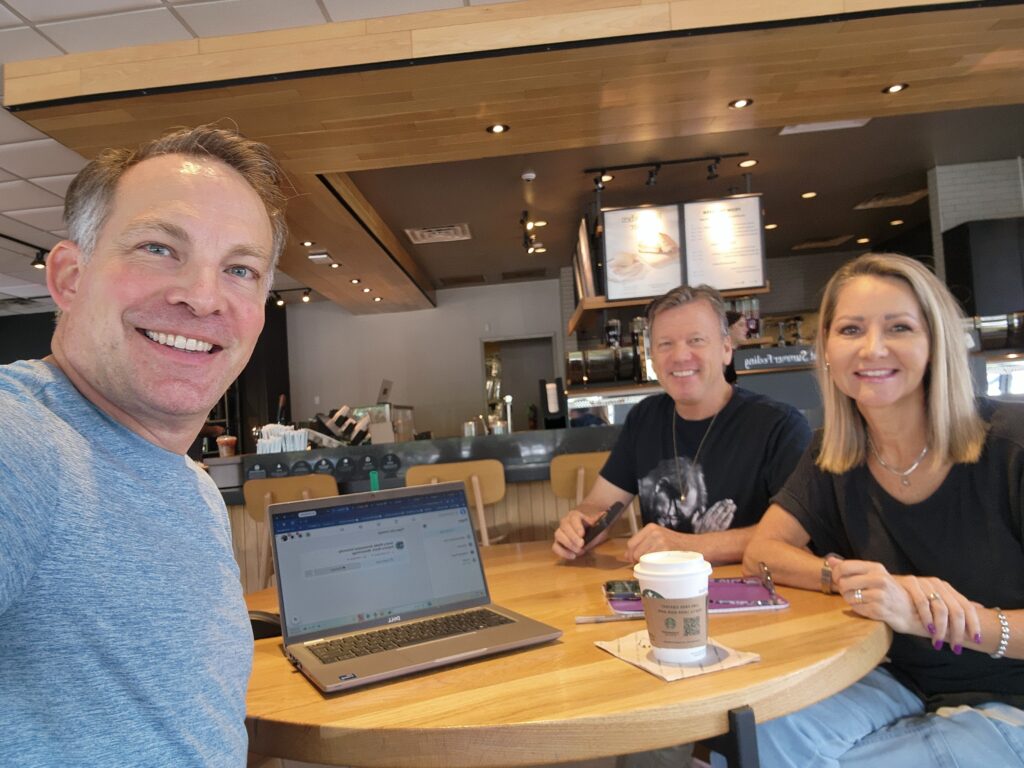
The process began informally. After lunch one day, Sorrells asked, essentially, whether they were actually going to do this. A coffee meeting turned into a barbecue lunch, which turned into a business plan in motion. Sorrells secured the domain and social channels, Eicher created the logo, and Sweezey began working on scheduling and graphics.
Their different experiences became part of the strength of the project.
But they also quickly learned that building a digital weather brand involves considerably more than forecasting.
“You can do that, of course,” Sweezey said of simply uploading a video to YouTube. “But if you want to create a business and make something that lasts, you have to cross the t’s and dot the i’s.”
That means a business plan, website, partnerships, potential sponsors, production, graphics, and an understanding of what an audience actually wants.
From the Broadcast Clock to the Digital Feed
One of the biggest advantages of working digitally is freedom.
Television meteorologists have traditionally worked within tightly structured newscasts and limited time slots. Digital platforms can remove those constraints.
“If a weather concept needs six minutes to explain, rather than 30 seconds, we can do that,” Sweezey said. “We can go deeper, provide more context, and let the story dictate the format rather than the clock.”
Digital platforms also provide something television largely lacks: immediate, direct audience feedback.
Eicher spent years wondering whether viewers understood his forecasts, whether they cared about the information, and whether his communication was effective. His academic work in strategic communication and weather messaging grew in part from those questions.
Now, digital platforms provide an opportunity to ask the audience directly.
Florida Weather Authority viewers can comment, ask questions, and tell the meteorologists what they want to know. Audience behavior can also help shape future content.
For Eicher, that two-way relationship is one of the most exciting aspects of the venture.
What Happens to the CBM Beyond Television?
As meteorologists increasingly work outside traditional broadcast settings, certification remains an important part of the conversation.
Sorrells believes the value of the CBM should not diminish when a meteorologist leaves television.
The credential has historically helped audiences identify qualified broadcast meteorologists. As weather information increasingly moves to the web, he sees an opportunity for that credibility to carry into digital spaces as well.
“The most ascendant weather providers over the last decade have not been on TV, and not CBM approved,” Sorrells said. He hopes the profession will ultimately find ways to bring together the CBM and Certified Digital Meteorologist communities.
That evolution could become increasingly important as audiences encounter an ever-growing number of weather sources online, some from highly qualified professionals and others from people without formal meteorological training.
For the Florida Weather Authority team, the strategy isn’t necessarily to engage every questionable forecast or piece of misinformation.
Their goal is to provide enough trusted, useful information that audiences know where to turn.
Preparing the Next Generation
The digital transition also raises questions for meteorology education.
Eicher already incorporates social media into his broadcast meteorology classes, but the experience of building Florida Weather Authority has shown him how much more there is to learn.
He sees the venture as a form of “research” that can inform his teaching. The skills required for digital meteorology overlap with traditional broadcasting in some important ways, while introducing new considerations around platforms, formats, analytics, audience engagement, and production.
He is already thinking about developing a dedicated digital meteorology course.
And he acknowledges that he is learning alongside his students.
Even seemingly simple changes can require a new mindset. After years of producing television for a standard 16:9 screen, Eicher has had to retrain himself to think vertically for social and digital video.
Some lessons, however, remain universal.
Good communication still matters. Good storytelling still matters. And, Eicher emphasizes, good audio still matters. The technology may change, but audiences still respond to clear, credible communication.
A New Chapter, Not a Replacement
For all three meteorologists, Florida Weather Authority isn’t about recreating their television careers.
It’s about taking what worked—the forecasting expertise, communication skills, credibility, and relationships they built over decades—and applying those strengths to a new media environment.
Sorrells says he loved television, but by the time he left he was doing seven shows a day, five days a week. He misses his colleagues. He does not miss the grind.
Sweezey sees the venture as a way to do what she loves on her own terms while giving audiences something they may not find in a traditional newscast or weather app.
And Eicher sees an opportunity to understand firsthand how the profession is evolving and to bring those lessons back to the students preparing to enter it.
Perhaps most importantly, the three have discovered that audiences are willing to follow trusted meteorologists beyond the television screen.
“We knew there were people who still wanted to hear from experienced local meteorologists,” Sorrells said. “But we did not know how rapidly viewers would find us.”
The response has reinforced something that may be easy to overlook amid the rapid evolution of digital media: the platform may change, but trust still matters.
For meteorologists considering what comes after traditional broadcasting, that may be the most important lesson of all. A career in broadcast meteorology doesn’t necessarily end when the final newscast ends. For those willing to adapt, it may simply move to a different screen.