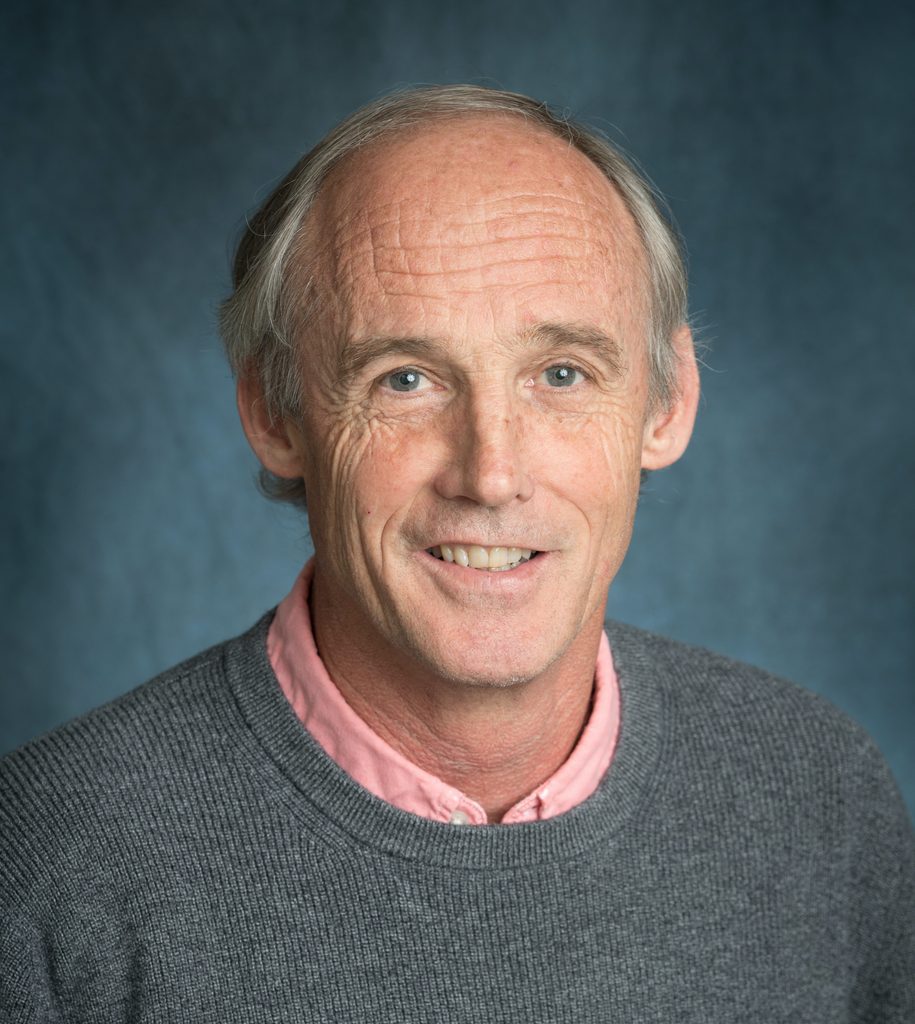
Christian Kummerow of Colorado State University has been named the recipient of the 2027 AMS Verner E. Suomi Technology Medal for pioneering advances in satellite microwave remote sensing of precipitation, which have transformed global water cycle observations and applications for weather, hydrology, and climate science.
For Kummerow, the recognition carries both professional and personal significance. The medal honors Verner E. Suomi, a pioneer of satellite meteorology whom Kummerow first met early in his career.
A Career Shaped by Opportunity
Kummerow began his academic career in nuclear physics at the University of Minnesota but was drawn toward weather and climate. Halfway through graduate school, he changed advisors and began studying under Jim Weinman at the University of Wisconsin while remaining enrolled in the University of Minnesota Physics Department.
That decision opened the door to a career in satellite meteorology. Weinman arranged a postdoctoral position for Kummerow at NASA Goddard with Joanne Simpson, who was beginning work on the Tropical Rainfall Measuring Mission (TRMM) satellite.
“My career really took off under her mentorship,” Kummerow said.
He progressed from researcher on the TRMM mission to project scientist by the time the satellite launched in 1997. After 13 years at Goddard (1987–2000), he joined the faculty at Colorado State University.
Kummerow said there was no single defining moment that drew him to atmospheric science. Weather and climate had always interested him, and when the opportunity arose to pursue a PhD in the field, “I simply took it.”
Transforming the Way We Observe Precipitation
Kummerow’s early work on TRMM helped advance satellite remote sensing of precipitation from empirical approaches toward a more physically based understanding of what satellite instruments measure and how those observations should be interpreted.
“Because of the early work on TRMM, I think most people give me credit for helping evolve remote sensing of precipitation from the early days when everyone used regressions, to a much more physical understanding of what we were measuring and how it should be interpreted,” he said.
Although the field continues to evolve, Kummerow believes that a fundamental principle has endured: Atmospheric observations need to be interpreted on the basis of the underlying physics.
“Even though the field continues to evolve and younger people continue to modify the approach, I think the fundamental thesis that we need to have a physical basis for how we interpret the atmosphere has probably endured,” Kummerow noted.
The Influence of Mentors
Kummerow credits several mentors with shaping his career, beginning with Weinman, who helped launch him into the field.
But Joanne Simpson had an especially profound influence. Kummerow describes her as both an exceptional scientist and an exceptional mentor. He recalls that after meetings, Simpson would often pull him aside to explain the “undercurrents” he needed to understand to successfully navigate a scientific program.
Franco Einaudi, the lab director at NASA Goddard, also influenced Kummerow’s approach to leadership, particularly in managing projects. His colleagues have been equally important.
“I was lucky in that I think I had absolutely marvelous colleagues my whole life,” he said. “Work was always fun and it was always a pleasure to get together with them to discuss science or anything else.”
Those relationships, he said, have been an important part of what has made his career such a rewarding journey.
Continuing to Ask Questions
For Kummerow, the motivation to continue working in science comes in part from problems yet to be solved.
“Every field has questions that remain unanswered,” he said. “As with my whole career, you pick the fruits that are hanging the lowest and you continue to try to make progress.”
Looking ahead, he sees an important question for the atmospheric, oceanic, and hydrologic sciences: How should the field balance fundamental research with increasingly urgent societal needs?
While research and applications have historically operated at arm’s length, Kummerow believes that there are great opportunities to better integrate these fields and reduce the time it takes to turn new knowledge into positive outcomes for society.