by Solomon Bililign1
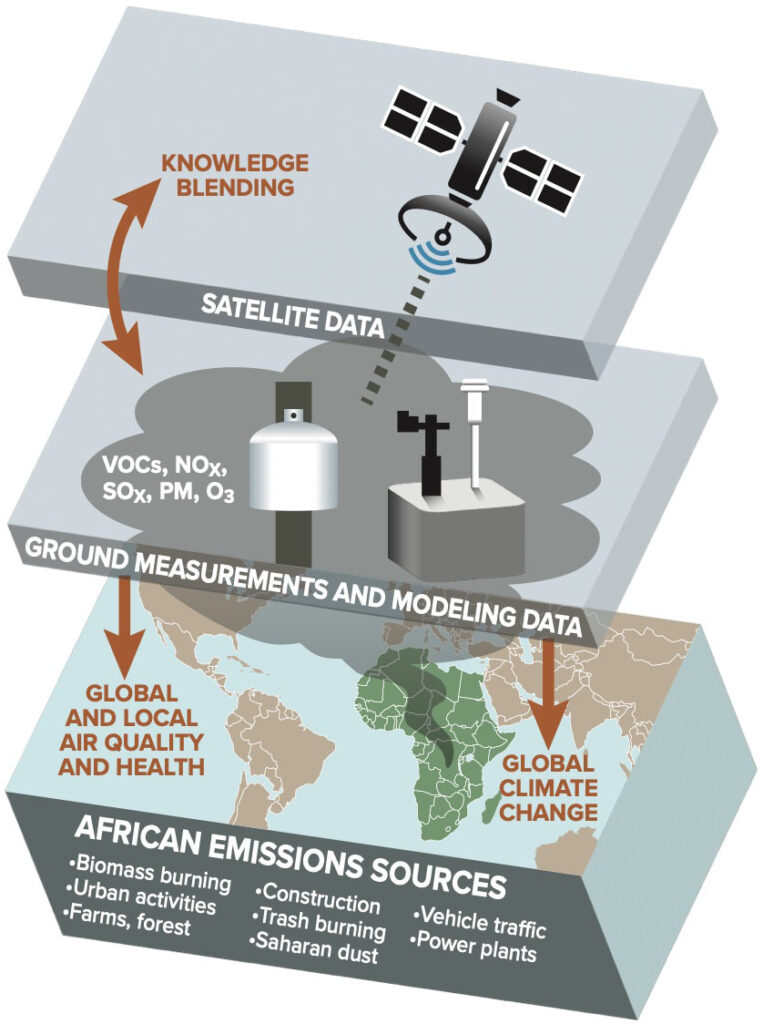
Air pollution is a well-established public health risk that continues to claim the lives of millions worldwide and is now the second-leading environmental risk factor. The issue is acute in sub-Saharan Africa, home to a population of some 1.3 billion that is projected to grow and urbanize rapidly throughout the twenty-first century. The trajectory of this growth and associated urban, industrial, and other emissions will determine air quality impacts for the regional population as well as the composition of the global atmosphere. Despite these important and growing issues, there remains a startling lack of observational data to characterize levels of ambient air pollutants, emission sources, and meteorological drivers. East Africa in particular remains one of the least observed regions of the world, with at most very limited monitoring data and no history of intensive meteorological or chemical field observations.
East African emission sources include fossil fuel combustion, biomass and trash burning, agriculture, dust, the biosphere, continued widespread savanna and agricultural fires, and, increasingly, unregulated motor vehicles. Together, these lead to a pollution mix unique to this region that remains poorly understood and that will impact atmospheric composition and chemistry globally. African governments and the international community have given these issues little attention, as evidenced by lack of investment in monitoring air pollution and technical training.
Understanding the impacts of air pollution in the region requires collaboration and knowledge sharing among regional and international scientists to address key scientific gaps. These include, but are not limited to
- scarce and/or underconstrained emissions inventories, including underrepresented sources such as open-waste burning;
- poorly understood source attribution and chemical processes leading to major secondary pollutants such as PM2.5 and O3 that affect human health; and
- sparse meteorological and atmospheric composition observations, including a lack of continuous pollutant monitoring.
In addition to the scientific gaps, there are several barriers to scientific advances, including
- lack of human technical capacity and research infrastructure to fully comprehend the unique atmospheric chemistry of the region;
- reliance on foreign consultants without local knowledge; and
- low level of public awareness and engagement on key pollution sources and impacts.
Moreover, many of the scientific challenges in atmospheric chemistry are global in nature and affect populations well beyond the regional scale. Demographic trends suggest that a significant fraction of future emissions affecting global atmospheric composition may come from Africa. Because these emissions are in the Tropics, they undergo efficient and deep convection processes under conditions of high humidity and intense sunlight that affect global atmospheric composition differently than historical anthropogenic emissions at northern midlatitudes.
Research efforts at a scale needed to address outstanding air quality issues is nonexistent in East Africa. A detailed meteorological and atmospheric chemistry measurement program using research-grade instruments, field intensives, satellite observations, and modeling has the potential for a breakthrough scientific advance. The goal of our research is to provide a framework for multiplatform observations, measurements, modeling, and a capacity-building program for the region.
Our framework has the following components:
- Scientific objectives: These include characterizing and understanding 1) regional emissions; 2) potentially unique chemical transformations; 3) regional specific meteorology and transport; and 4) emissions trends and global impacts. This requires creating and growing educational opportunities to build and expand human capacity and infrastructure.
- Observational approaches: These include 1) establishing long-term monitoring of key primary and secondary pollutants; 2) conducting periodic field intensives with more detailed chemical and meteorological observations; 3) developing state-of-the-art models to take best advantage of these data sources; and 4) leveraging emerging satellite tools that can be linked to local observations.
One of the main challenges to addressing air quality in low- and middle-income countries is a lack of public awareness and outreach based on solid data and science. To build sustainable science-based approaches, it is important that the public and policymakers learn about the process of developing monitoring systems, their functions and limitations, and the meaning of the data for public welfare and health. This requires inclusive public education and the engagement of stakeholders with tailored outreach and mechanisms of participation. To do this well, it is critical to understand the existing awareness level of communities and policymakers toward air quality through a review of existing knowledge through focus group discussions and surveys.
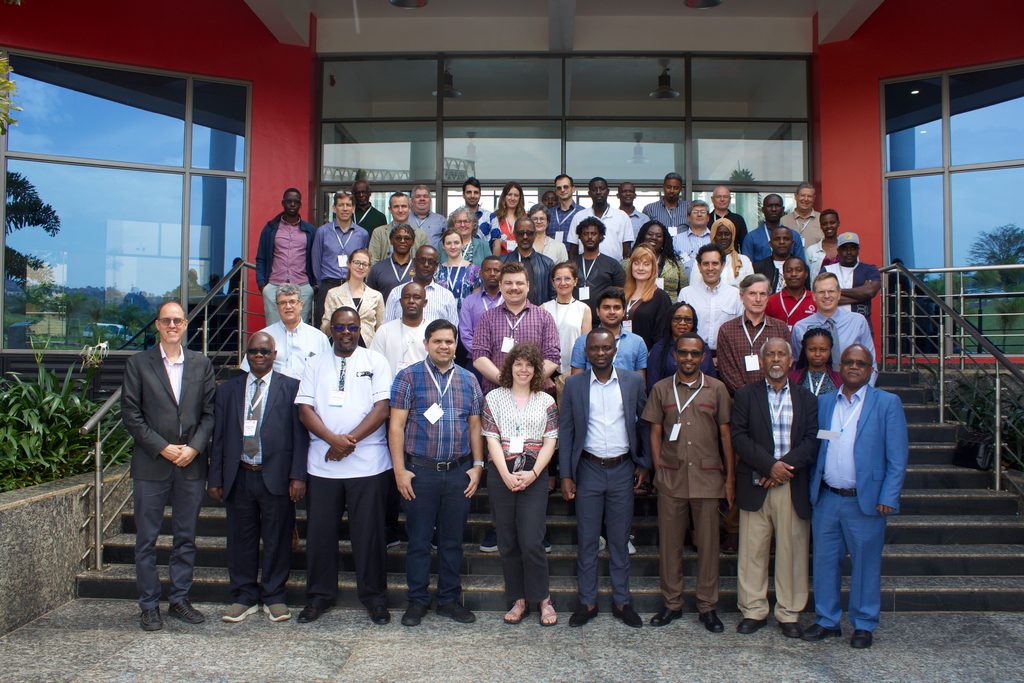
Other ways to have more impact and spread awareness and build support is through schools, clinics, community groups, and diverse government agencies, and locating monitors in places that matter to people and can be connected to their air pollution exposure. Citizen-science efforts are also possible to bring wider participation into science and support learning. These elements, along with the development of curriculum, workshops, and strategies with journalists and media, can ensure deeper impact and continued support for air quality monitoring and science to support the needs of policymakers and the public.
A Brief Conversation
with the Authors
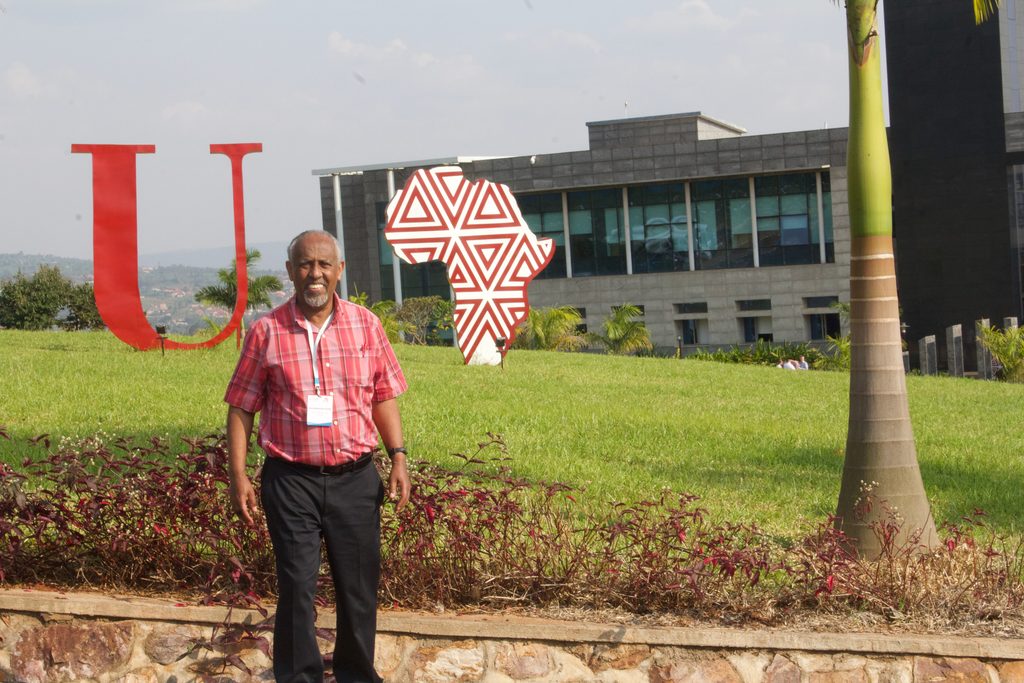
—Solomon Bililign, North Carolina Agricultural and Technical State University

—Steven S. Brown, NOAA/Chemical Sciences Laboratory and University of Colorado Boulder
BAMS: What would you like readers to learn from this article?
Solomon Bililign (North Carolina Agricultural and Technical State University): Air pollution–related deaths are not visible and do not make headline news like other natural disasters. As a result, the issue is ignored or considered secondary. We want the readers in Africa and the world to understand the urgency of serious continuous monitoring of air pollution, expanding research capacity to understand the process chemistry, and connecting it to health outcomes. These activities should also go hand in hand with capacity building, public and policymaker outreach, and education. This effort requires both international collaboration and investing locally to enhance research in the area.
Steven S. Brown (NOAA/Chemical Sciences Laboratory, and University of Colorado Boulder): There is a remarkable lack of data in a region with extremely rapid rates of urbanization and severe air quality issues. The scientific need in East Africa is acute.
BAMS: How did you become interested in the topic of this article?
SB: I was born and raised in Ethiopia, and lived at a time when air pollution was not a very serious issue. I was interested in understanding emissions from African biomass fuels, which led me to conduct laboratory studies and field measurements in Africa.
SSB: I have studied air quality in the United States for more than two decades. My friend and colleague, Solomon Bililign, encouraged me to consider the potential for such research in his native Ethiopia. Once I learned more about the subject, I became convinced of the urgency of this issue.
BAMS: What surprised you the most about the work you document in this article?
SB: I was intrigued by the lack of interest in understanding African emissions by lots of U.S. atmospheric chemists.
SSB: I was most intrigued by the demographic projections of population growth and urbanization for Africa through the end of the century, and their potential to alter global atmospheric composition. This, together with the potential for science to inform air quality mitigation strategies that may save millions of lives, is compelling motivation for investigators from the Global North to engage in Africa.
BAMS: What was the biggest challenge you encountered while doing this work?
SB: Despite the seriousness of the problem, the public in East Africa doesn’t have a clear understanding of the problems of air pollution, and it is considered a luxury to address it, considering the economic challenges. Government agencies mandated to address this problem do not have the skilled manpower or the infrastructure for continuous monitoring and laboratory analysis. There is a heavy reliance on donated equipment coming from different sources, with no local expertise to maintain and fix them. Only PM2.5 levels are monitored, and there is no information on gaseous emissions or the process chemistry.
SSB: Bridging the cultural gap between scientists in the Global North and Global South is both challenging and essential to this work.
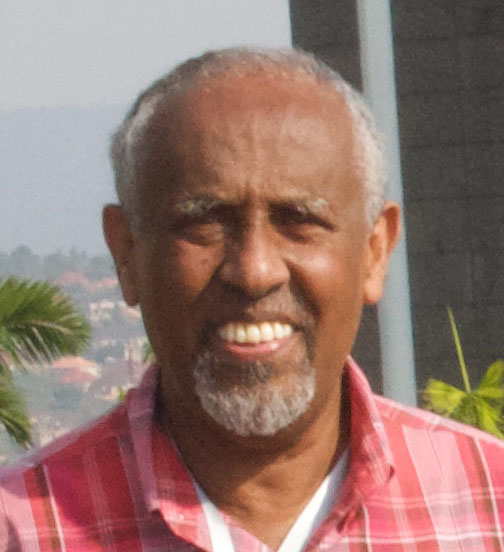
“We are organizing international teams of scientists and local scientists for writing large collaboration proposals. If funded, this will help in developing human and infrastructural capacity in the region.”
—Solomon Bililign, North Carolina Agricultural and Technical State University

“We are developing proposals for U.S. and European support of research efforts in Africa and collaboration with the scientific community there.”
—Steven S. Brown, NOAA/Chemical Sciences Laboratory and University of Colorado Boulder
- Key messages from “East African Megacity Air Quality: Rationale and Framework for a Measurement and Modeling Program,” by Solomon Bililign (North Carolina Agricultural and Technical State University), Steven S. Brown (NOAA/Chemical Sciences Laboratory and University of Colorado Boulder), Daniel M. Westervelt, Rajesh Kumar, Wenfu Tang, Frank Flocke, William Vizuete, Kassahun Ture, Francis D. Pope, Belay Demoz, Akua Asa-Awuku, Pieternel F. Levelt, Egide Kalisa, Garima Raheja, Alex Ndyabakira, and Michael J. Gatari. Published online in BAMS, August 2024. Click here for the full, citable article. ↩︎