The State of the Climate report, published each year as a supplement to the Bulletin of the American Meteorological Society, is the most comprehensive annual global climate report, with contributions from hundreds of authors worldwide. The newly released State of the Climate in 2024 details record-breaking global greenhouse gas concentrations and surface temperatures as well as other key trends, events, and phenomena.
In this post, we speak with Regional Climates chapter co-editor Laura Stevens about the North American climate in 2024. Read the Regional Climates chapter here [PDF].
What was your role in the report?
This is my second year as editor for the North America section of the Regional Climates chapter. I work with a wonderful team of authors from Canada, the United States, and Mexico who provide their expertise in contributing information on temperature and precipitation for their regions, as well as a description of notable extreme or unusual weather events. My role involves reviewing and editing text and figures produced by the authors, coordinating responses to internal and external peer reviews, and keeping the author teams on schedule!
What are some noteworthy trends or events you’d want to highlight from North America in 2024?
- 2024 was the warmest year on record for North America as a whole, at 1.32°C above the 1991–2020 base period.
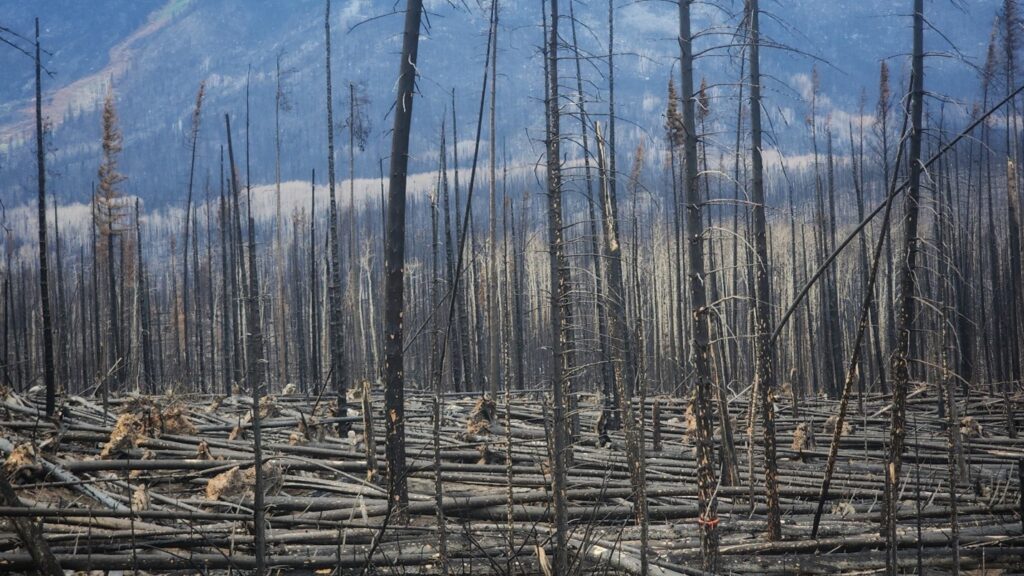
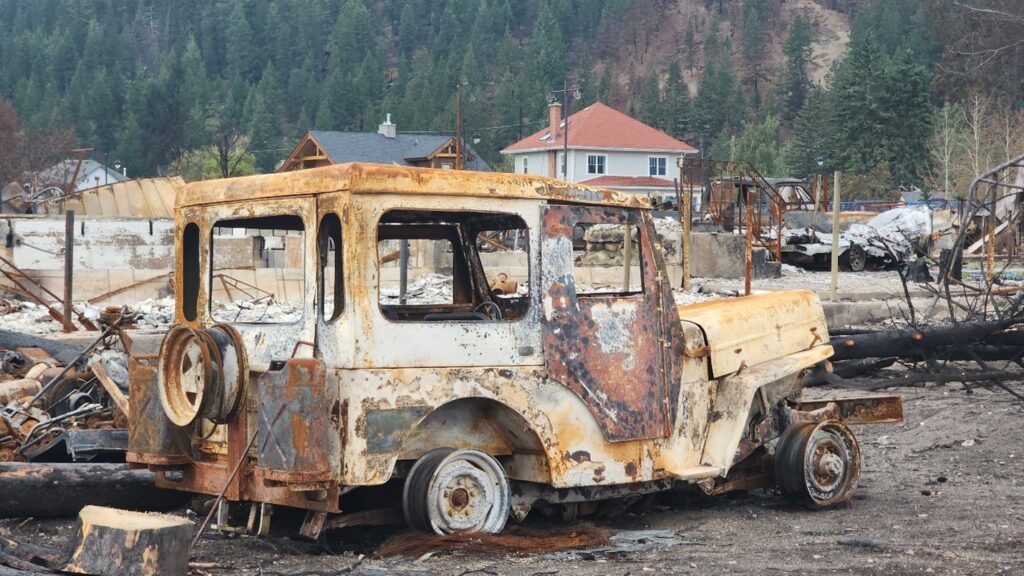
- It was also a big year for extreme events, including extreme heat, wildfires, and flooding events in Canada, a very active tornado season in the United States, and multiple heatwaves in Mexico.
- All three countries also experienced impactful tropical cyclone events, including the remnants of Tropical Cyclone Debby in Canada, Hurricanes Helene and Milton in the United States, and Hurricane John in Mexico.
What was unexpected or differed from the norm last year?
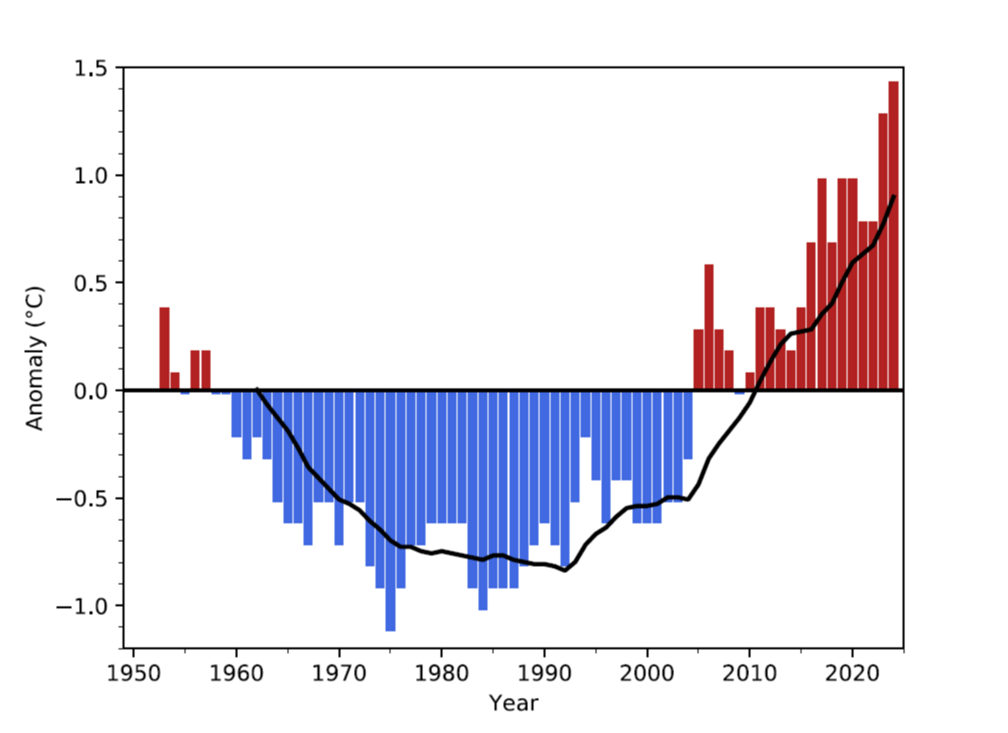
In addition to North America as a whole experiencing record warmth in 2024, it was also the warmest year on record for each of Canada, the United States, and Mexico individually.
Image: Annual average temperature anomalies (°C; 1991–2020 base period) for Mexico for the period 1953–2024. The black lines represent a 10-year lagged running mean. Mexico’s annual average temperature in 2024 was 1.4°C above the 1991–2020 average. (Source: National Meteorological Service of Mexico.)
The extreme weather events that occurred in Canada and the United States were exceptionally destructive. Canada saw a new all-time annual record for insured losses of over $8.5 billion (Canadian dollars), and the United States saw its second highest ever annual number of weather and climate events exceeding $1 billion (U.S. dollars) in damages.
When Hurricane John made landfall in Mexico, rainfall totals in Acapulco from that single event exceeded amounts usually accumulated across an entire year.
How is our ability to monitor the climate evolving?
We are fortunate to have very reliable temperature and precipitation data going back as far as 1895 for parts of North America. Although no new advances have been incorporated into this year’s report, work is underway to develop the first homogenized long-term monthly precipitation station data series and gridded dataset for Canada. We are also planning to expand temperature and precipitation data analyses for the United States to include Hawaii (in addition to the contiguous U.S. and Alaska).

What was it like to work in the climate field in 2024?
As a climate scientist, I’ve been analyzing and writing about weather and climate data for 15 years, but it wasn’t until last year that the impacts of climate change really hit home. Hurricane Helene left a devastating footprint on my community here in Western North Carolina, and it was truly surreal to experience an event of such magnitude first-hand. I saw the true power of human resilience as we recovered from the damages, however, and seeing communities come together in the wake of the storm proved how important my work is.
Image: Flooded roadways surrounding Laura Stevens’ neighborhood in Arden, North Carolina in the wake of Hurricane Helene. Credit: Scott Stevens.
What do you hope to see/what do you worry about in the year ahead?
Unfortunately, it looks like we are seeing yet another year of extreme weather. So far in 2025 North America has experienced several impactful extreme events, including intense wildfires, record-breaking heatwaves, and devastating floods. This year is currently on track to be one of the top five warmest years on record for the globe. I hope that people continue to see the value in weather and climate data, as well as reports such as BAMS State of the Climate, which enable us to gain valuable insights and make informed weather- and climate-related decisions.
Image at top: A neighbor attempts to deal with downed trees in Laura Stevens’ neighborhood in Arden, North Carolina in the wake of Hurricane Helene. Credit: Scott Stevens.