Highlights from the 2026 President-Elect Candidate AMA
Voting is underway for the next AMS President-Elect and new Council members. To help you get to know their platforms, our three candidates for 2026 President-Elect joined us online 9 October for an Ask-Me-Anything (AMA) session in the AMS Community. They responded to community questions about their leadership goals, qualifications, and thoughts on the role of AMS in a rapidly changing world. We have highlighted a few of their questions and answers in this blog post.
If you’re a voting member of AMS, you can read the full AMA on the AMS Community, and then vote for the leaders who will guide our Society and help lead the weather, water, and climate enterprise through a time of challenge and opportunity. Cast your vote by 26 November!
Candidates for AMS 2026 President-Elect


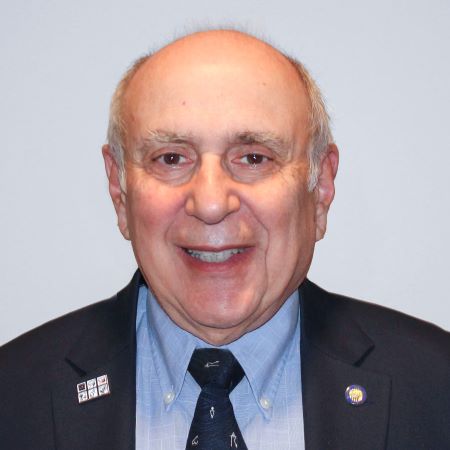
How do you view this disruptive period of weather industry transformation, and what can AMS do to support the new reality?
Rick Spinrad: There’s a saying that in every crisis there is opportunity. Clearly, the threats to the public sector’s ability to provide standard weather products and services beg the question of how to more effectively coordinate efforts between the public and private sectors. I believe the limited success we’ve had in the use of private data by NWS [the National Weather Service] should be expanded upon. AMS can help in teeing up the discussion about more formal programs to expand provision of data from commercial sources. A standard process to identify data gaps, test the utility and accuracy of commercial products, and then institutionalize their provision (as has been done, for example, with GPS-RO for many years) is the best way forward.
Bruce Telfeyan: The weather industry is undoubtedly undergoing significant transformation. As the nation shifts away from government being the primary provider of weather data and support, the private sector is stepping in to fill gaps, a trend that has been emerging even before recent government budget cuts. This presents a valuable opportunity for AMS to lead and support this transition.
AMS can serve as a crucial clearinghouse, helping to delineate boundaries between what industry can do and what remains inherently governmental, such as providing meteorological services that protect life and property, including watches and warnings. It is also important to explore how this boundary may evolve concerning emerging sectors like Uncrewed Aerial Vehicles and Advanced Air Mobility (Air Taxis), and whether these could be better served by industry. Additionally, AMS can facilitate dialogue on the roles of weather satellites and radar operations, as well as the impacts of Artificial Intelligence and Machine Learning on both sectors.
Moreover, AMS should promote collaboration across the government, academic, and private sectors, fostering innovation and ensuring that meteorologists and related professionals are equipped with skills and tools aligned with the opportunities in the private sector. By sharing emerging efforts through conference sessions, symposia, and town hall meetings, AMS can help shape a cohesive and adaptive weather enterprise suited to this disruptive and challenging period of industry transformation.
Jack Kaye: I believe that AMS needs to make sure that all those who are participating in the weather, water, and climate enterprise have the opportunity to be part of the “AMS process” and that as new entities come into being, or old ones evolve, those opportunities are widely shared and new participants are welcomed. AMS should continue to advocate for consistency in the underlying principles it has advocated for in the past, as well as look to provide whatever support it can for those individuals whose career paths may change as the community around them changes. As in many areas, “opportunity and challenge” come together, and AMS should work with all those who want to contribute to the enterprise to maintain a focus on advancing knowledge, products, and services that benefit the public as well as provide sustainable career paths for those who devote their professional lives to the enterprise.
What do you feel are the three most important items that AMS should be focused on during your term? Where do you feel AMS/you can make the most impact?
Jack Kaye:
- Continue to be a strong and reliable source of information for statements about and products concerning meteorology and related aspects of the weather, water, and climate enterprise. These statements and products should continue to be made freely and easily available to the public in ways that facilitate their uptake and use and be applicable to all members of the public who are affected by the relevant aspects of the environment. There should also be appropriate coordination with other entities where there is potential overlap in statements and/or products to maximize their overall impact while minimizing the demands on the communities involved in generating them (but this does NOT mean that AMS should not do these by itself when that is the preferred course of action).
- Make sure that the AMS continues to be an important resource for the community of scientists and the organizations that employ them in government, academia, and industry, serving their needs (publication, meetings, volunteer structure, awards, etc.), and is recognized as a constructive and trusted provider of information. Given all the changes going on in the way it has traditionally operated (meetings and publications among them), and the changes taking place in government support for and public response to science, the commercial sector, and the academic sector that responds to both while helping provide the future workforce, this will take time and effort and may require openness to change from how it has done business in the past.
- Encourage the AMS to build upon its ongoing efforts to make sure that its operations, processes, and products both (a) benefit from the efforts of a broader cross-section of individuals, communities, and organizations, and (b) provide value to that broader cross-section as they utilize the knowledge, products, and services that the AMS community generates.
Should I have the privilege of being elected, I will not be able to do all these by myself, but I would need to “lead by example.” The way to accomplish these is to listen, learn, and engage others and make them see themselves as valued members of the AMS community who will then choose to invest their time and energy in achieving the above objectives.
Rick Spinrad:
- Integrity — AMS has it, and always has, but now, more than ever, AMS needs to be up front and visible as one of the most trusted and credible technical organizations in the world
- Engagement — in the sense of broadening our list of “trusted agents”, to include communities that we might not have worked with in the past
- Productivity — we need to be rapidly responsive to what will be an increasingly frequent set of demands for products and answers.
On a very specific basis, I am also hoping that if elected, I will be effective in helping AMS adopt and incorporate new technologies into our field, including, for example, robotics, artificial generative intelligence, edge computing, and artificial/virtual reality.
Bruce Telfeyan:
First, we need to be focused on meeting the needs of all our members. Our conferences and our journals must continue to be of the highest quality and constantly evolve to address the concerns of our membership and society at large. By doing these things, we are likely to retain current members and attract new members.
Second, we need to address and solve our budgetary issues. We face challenges in publications with open source realities impacting the numbers of subscriptions. While we have started to slowly grow our membership, our percentages of members from the operational forecasting community are abysmal. We need to address this reality head-on and work cooperatively with NWS and private sector organizations to find out how we can attract individuals to become AMS members.
Third, incorporating artificial intelligence into our many diverse activities is essential. AI provides many opportunities and challenges, and we must adapt and benefit from the strengths of these tools. Our conferences and journals will face challenges as well as opportunities for increased efficiency. Our eighty-member salaried staff will need on-the-job education and training to be fully abreast of capabilities. If elected, I believe I can make an impact by forming a tiger team of Council members and past-Presidents to evaluate and recommend focus areas for incorporating AI and other emerging technologies.
Read all the community’s questions — and the candidates’ answers — in the AMS Community. And don’t forget to vote by 26 November!