Paths to Improving Forecasts
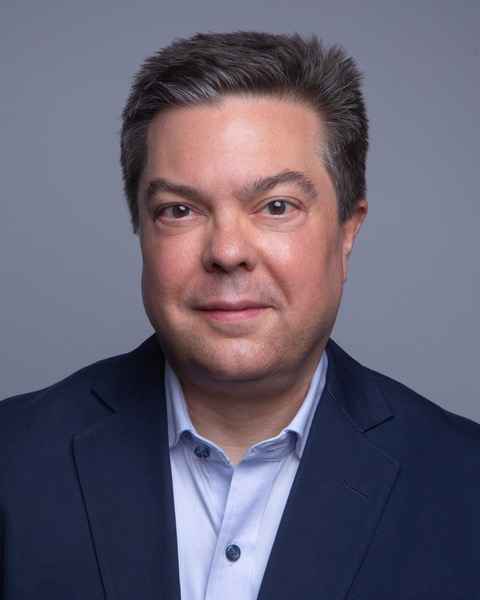
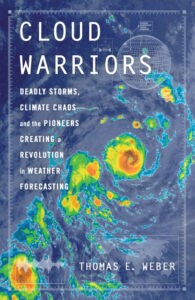
AMS sat down with author Thomas E. Weber to talk about his new book Cloud Warriors, an inside story of the people pushing boundaries of science and technology to build better weather forecasts—providing life-saving warnings and crucial intelligence about nature’s deadliest threats.
Weber is a veteran writer, editor, and newsroom executive with a lifelong interest in how science and technology shape society. Tom was The Wall Street Journal’s first internet columnist and went on to become a bureau chief and a founding editor of the Journal’s Saturday edition. Later, as executive editor of TIME, he supervised the magazine’s feature journalism.
Why do this book?
I wrote this book because the story of how we improve our ability to see dangerous weather coming matters to all of us. And as we’ve seen in recent years, the effects of climate change are worsening some extreme events. If climate change is a war, then individual weather events represent one battle after another—and you can’t expect to win a battle without good intelligence. Weather forecasts represent that intelligence.
The good news is, thanks to science and technology and legions of dedicated people across the world, forecasting keeps getting better. These improvements, and advances yet to come, represent a huge story. I realized it hadn’t been told, and I wanted to tell it. It’s a story that can better everyone’s lives—if we understand how forecasts work and how to put them to the best use. That’s something I tend to frame as weather literacy: the knowledge that helps you look at a forecast, comprehend the potential hazards, and, critically, take the appropriate steps.
As a journalist, my passion has always been to look at cutting-edge science and technology and then bring those advances alive for readers—not only how they work, but why they matter, for better and for worse. Early in my career, in the 1990s, I was the first Internet columnist for The Wall Street Journal, and the part of that role I found most rewarding was alerting readers to the enormous—and often underappreciated—impact of the expansion of this digital frontier. With this book, I wanted an opportunity to do that kind of rewarding work again. I had always been interested in weather and meteorology, and as I began to learn more, I realized the advances in forecasting represented a story that should be told—and a story that required not just looking at the science but also detailing the implications for society.
After spending years researching the world of meteorology and learning about the latest advances, I now feel smarter every time I view a forecast. My goal for Cloud Warriors is that readers will come away feeling that way too.
Who is it for?
I should say up-front that this is a general audience book. It’s from a mainstream publisher (St. Martin’s Press, a Macmillan imprint), not an academic press. You’ll find in the science section of bookstores. So at some level it’s for anyone interested in weather and the power of prediction.
And I believe now more than ever that everyone can benefit from becoming more weather literate: individuals, parents, workers (especially those whose jobs keep them outdoors), and public officials with safety responsibilities, such as school and hospital administrators. Business leaders, too, can benefit. Becoming more intelligent about the weather helps protect employees and drive better business decisions. My book was excerpted by The Wall Street Journal, whose readers are always looking to understand technologies that can give them an edge.
I realize that meteorology professionals may not be surprised by some parts of the book that explain forecasting techniques for specific types of weather. But I do hope professionals will find it rewarding to read because I’ve sought to connect these advances in forecasting to the lives of people who benefit from the work. I spent time in a Philadelphia neighborhood, a classic urban heat island, where community leaders are working on heat safety. I talked with farmers in Africa who have seen their prosperity grow from getting access to basic forecasting. I looked at emerging industries, such as delivery drones and self-driving cars, where weather forecasts will play a key role in making these technologies practical.
Finally, one thing I’ve heard from some meteorologists who have read the book is that it captures their work—not just the technical aspects, but the ethos of the field. Obviously that’s flattering (and just as obvious, I’m sure others will disagree). But for anyone in the field who wants others—whether that’s family, friends, or stakeholders in other areas of organizations—to understand their work, I hope Cloud Warriors offers a perspective they find useful.
What obstacles did you face?
One very basic obstacle was the covid-19 pandemic. I had conducted some of my research prior to the pandemic, particularly for a few articles I wrote for TIME magazine. But in 2020 I was gearing up for the bulk of my reporting—and like everyone else, was hit by lockdowns and restrictions. I did a lot of Zoom interviews!
But in-person reporting and observation is at the heart of my process. I wanted to get out and get to know the people closest to the weather and the forecasting. So the pandemic slowed me down. It wasn’t until mid-2021 that I was able to really kick into high gear with my research. Once things loosened up, though, I was able to do some invaluable in-person work. I spent time at Penn State with professors and students to understand the next generation of meteorologists. I went to a Lockheed Martin clean room in Colorado to see GOES-U (now GOES-19) being prepared for launch. I visited the ECMWF to learn from scientists there about how they advance their modeling work and how they expect AI to change things. So it took a bit longer than I initially hoped, but eventually I was able to do that kind of reporting, which I find so rewarding as a journalist.
Another obstacle for me was the complexity of some of the science. I had the opportunity to join the WeatherBrains podcast recently to talk about my book and I joked about how intimidating it was to be the only liberal-arts major in that group. I pored over a lot of published research. I certainly spent a lot of time with BAMS. And I benefited from interviews and conversations with a lot of people who were very patient about explaining their work. Ultimately my job in writing for a general-interest readership is to take the complex and be able to present it in an understandable and useful way. So sweating my way through some of the science was important for me to tell the bigger story.
What did you learn?
Oh, I learned so many things. Truly, it takes a book to contain them all. And even then, there’s so much I couldn’t fit in.
One thing I came across time and again was the gap between how much forecasts have improved versus public perception of forecast accuracy. To me, the progress has been astounding. Just take hurricane tracks as an example. We have so many more opportunities to prepare for dangerous weather in advance thanks to this progress. I devote a chapter to subseasonal and seasonal forecasting and in one example there I look at how the growing reliability of those forecasts is changing the way humanitarian organizations can get ahead of problems like famines rather than waiting for disasters to unfold.
I learned a lot about what an exciting time this period is. Not only are we seeing the benefits from continuing to study the atmosphere, but we’re also learning the potential for technologies like machine learning and new sources of data. Of course some of that is under threat from budget cuts. But the potential is enormous.
I’d also mention the appreciation I gained for the importance of the entire weather enterprise. The more I learned about the interplay between government efforts, academic research, and private enterprise, the more I saw that despite some of the tensions that arise from time to time, the United States has found a productive balance. I think that balance faces its biggest risks in decades; I hope leaders don’t tinker with it lightly.
What surprised you?
I went in thinking that I would be focused a lot on atmospheric science and data and computer forecast models. But then I started talking with social scientists. I wasn’t prepared for how important a theme their work would ultimately turn out to be. That turned out to be pretty exciting for me. At heart I’m a news reporter, and the recency of some of the social science work just felt so newsy. And it expanded the borders of the bigger story—giving me the opportunity to tell readers not only about better forecasting but about the potential to translate those forecasts into better outcomes if we can achieve that understanding of the people affected.
I was also, I’m not sure ‘surprised’ is the word so much as impressed, by the dedication of many of the people I met along the way. There’s such a strong element of public service. I wanted to share that with readers too.
What are the implications of this work?
If you’re talking about takeaways I have from the project, I have a couple of thoughts.
One is a very positive implication. People working to improve forecasting and outcomes on all fronts have demonstrated enormous progress and potential. The work to understand our atmosphere, predict it, and effectively communicate that information has invaluable payoffs.
But there’s a flip side there. One thing I heard particularly from young meteorologists is apprehension about attacks on their work. There are those who have worked to politicize climate science in our polarized world and increasingly, it seems, weather forecasting faces related attacks. Indeed, we see scientific research being threatened on many fronts, not just in meteorology. So as much as I came away excited about the progress so far and the potential for more advances, I fear the implications for everyone if that progress gets derailed.
Where do you go from here?
Of course, at the moment, I’m an author with a book to promote. But I hope that getting the word out about Cloud Warriors also serves to draw attention to the importance of better forecasting. I believe it’s of vital importance given some of the changes underway in both government agencies and in funding for academic research at the nation’s universities. I hope my book helps more people learn about what’s at stake, gives them the information to develop informed opinions, and perhaps motivates them to make their voices heard.
As I think about what’s next for me, I can say that working on this project has further deepened my interest in the power of science to be a force for progress. It’s distressing to hear the voices that dismiss the value of this work—not just in weather and climate but in so many other fields. When I was writing for my college newspaper in the late 1980s, I had an opportunity to meet and interview the great physicist John Bardeen, who had been awarded the Nobel Prize twice: once for his part in creating the transistor and later for his work on superconductivity. Whenever I think of him, I’m reminded of how the shock waves from scientific discovery can just ripple and ripple, changing society as they move. So I hope to keep telling stories that help people understand the wonder of discovery.