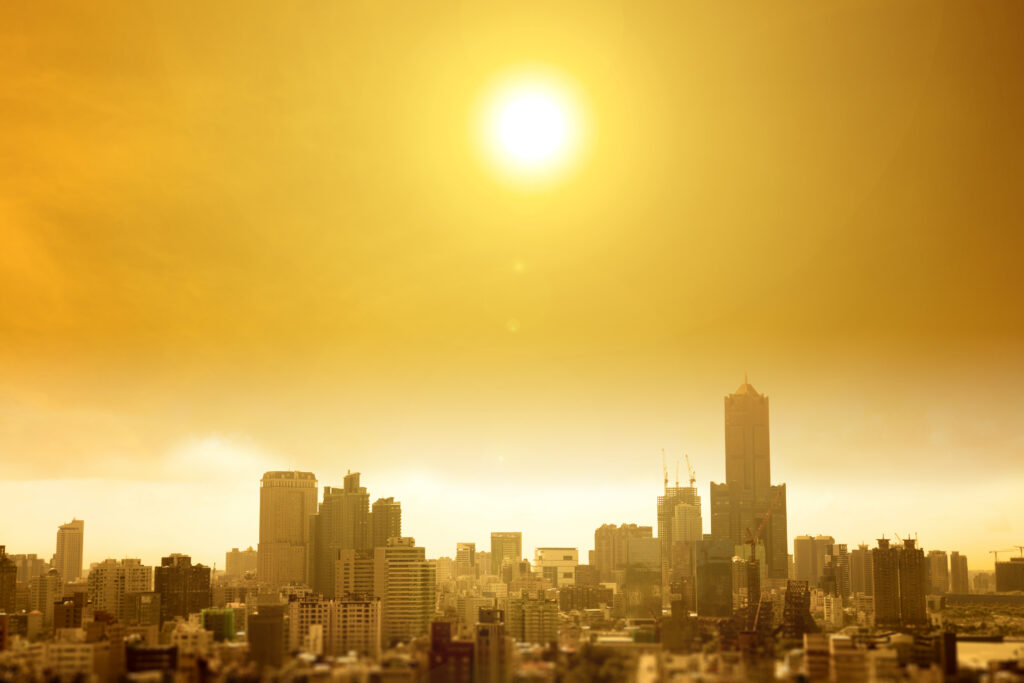
PROBLEM: Assessing the health impacts of heat in cities can be challenging, because urban temperature measurements are often taken at airports, which typically have lower temperatures than in downtown areas and therefore do not accurately represent the urban heat island effect.
SOLUTION: A study published recently in GeoHealth utilized crowdsourcing and a statistical technique to identify previously undetected urban heat islands. The research relied on personal weather stations of citizen scientists, applying the data they collected to a Bayesian hierarchical model, a technique that helps to account for inaccuracies in the crowdsourced data. Eva Marquès and Kyle Messier of the National Institute of Environmental Health Sciences utilized the method in their analysis of four urban areas that were chosen for the diversity of their layouts, population densities, and climatic zones: New York City, Philadelphia, Phoenix, and North Carolina’s Raleigh/Durham/Chapel Hill “Triangle.” Their method recorded hourly urban air temperatures at a much higher resolution (0.01° x 0.01°) than existing products, and it detected previously unknown hot spots in Philadelphia and the Triangle region. It also identified cooling effects of urban parks and green spaces like Central Park in New York. Additionally, it revealed that more densely populated neighborhoods were more likely to experience high temperatures and prolonged hot nights than less dense areas in the same city. Marquès and Messier hope their research will enhance epidemiological studies on the impacts of heat and cold stress on human health.