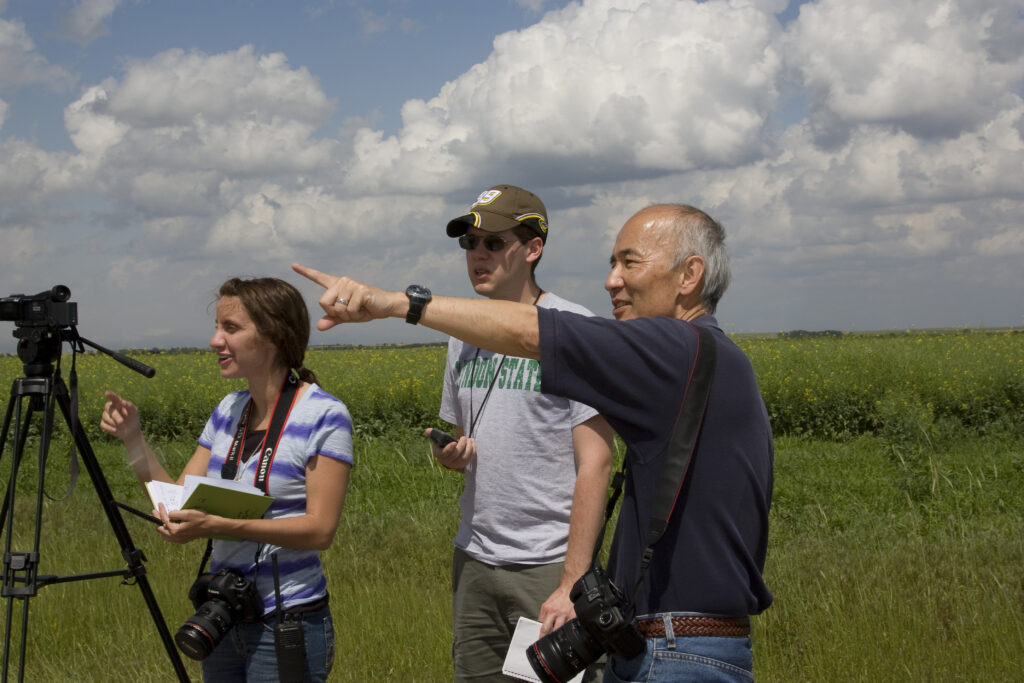
A symposium at the 106th AMS Annual Meeting will honor renowned mesoscale meteorologist, AMS Fellow and Honorary Member, and former AMS President Roger Wakimoto.
Wakimoto, currently the vice chancellor for research & creative activities at UCLA, is a global authority on severe convective storms, tornadoes, downbursts, drylines, frontal systems, and radar meteorology who has played a pivotal role in advancing mesoscale research. In his 40-plus-year career at UCLA, NSF, and NSF NCAR, Wakimoto has led multiple field campaigns and pioneered groundbreaking observational analyses of tornadoes, gust fronts, mesoscale convective systems (MCS), convection initiation, and midlatitude fronts. He received the AMS’s Meisinger Award in 1992 and the Charles Franklin Brooks Award in 2012, and served as AMS President for two terms, in 2017 and 2018.
We spoke to Roger M. Wakimoto Symposium Cochairs Wen-Chau Lee and Richard H. Johnson about what to expect during the symposium, which takes place Monday, January 26, 2026. (You can view the full program here.)
What can attendees expect from the Symposium?
Attendees, both in-person and virtual, will gain insight into the latest advances in our understanding of tornadoes and other severe weather, as well as the pivotal role Dr. Roger Wakimoto has played in driving those advances. The Symposium will highlight not only his scientific contributions but also his remarkable career trajectory, demonstrating how one individual can excel at the highest levels in both research and scientific leadership, administrative excellence, and service to the AMS community.
The Symposium includes four oral sessions by leading experts to present Dr. Wakimoto’s career path and his contributions and influences in research on mesoscale convective systems and tornadic storms.
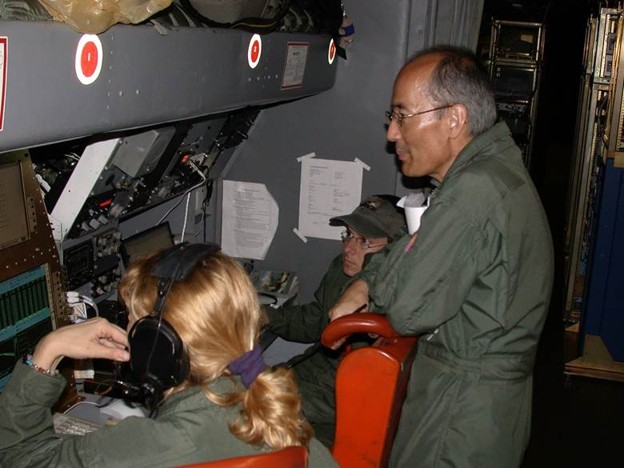
Roger Wakimoto, the Principal Investigator of the Bow Echo and MCV Experiment (BAMEX) field campaign, directing a NRL P3 mission in 2003. Photo courtesy of Wen-Chau Lee.
What research advancements should we expect to hear about?
Leading severe-weather experts will be presenting their latest research on severe weather. Particularly noteworthy are advances in understanding tornadoes and other high-impact weather events through both observations and numerical modeling studies. As the finale of the program, Roger Wakimoto will offer advice on how one can balance a career involving both research and service to society.
How would you summarize Roger Wakimoto’s impact on the field so far?
Virtually everyone is aware of tornadoes and other forms of severe weather and their impacts on society. Roger Wakimoto has led research that has contributed to major advances in understanding and forecasting these phenomena, as well as significant improvements in aviation safety due to dangerous wind shear events.
He is a world-renowned expert on extreme weather, especially through the use of ground-based and airborne weather radar observations. His PhD advisor, Professor Ted Fujita of the University of Chicago, first identified “downbursts”: powerful, localized bursts of wind that were later linked to several airplane crashes. Building on that foundation, Dr. Wakimoto’s research uncovered how downbursts form and why they pose such a serious hazard, work that has directly informed improvements in aviation safety and severe-weather preparedness. He has also advanced our understanding of how tornadoes develop and behave by creatively combining radar observations, detailed photogrammetry analyses, and damage surveys. Beyond downbursts and tornadoes, his wide-ranging research has shed new light on large frontal systems, coastal sea breezes, drylines on the Plains, and the structure of winter storms — phenomena that influence everyday forecasts and help meteorologists better anticipate dangerous weather.
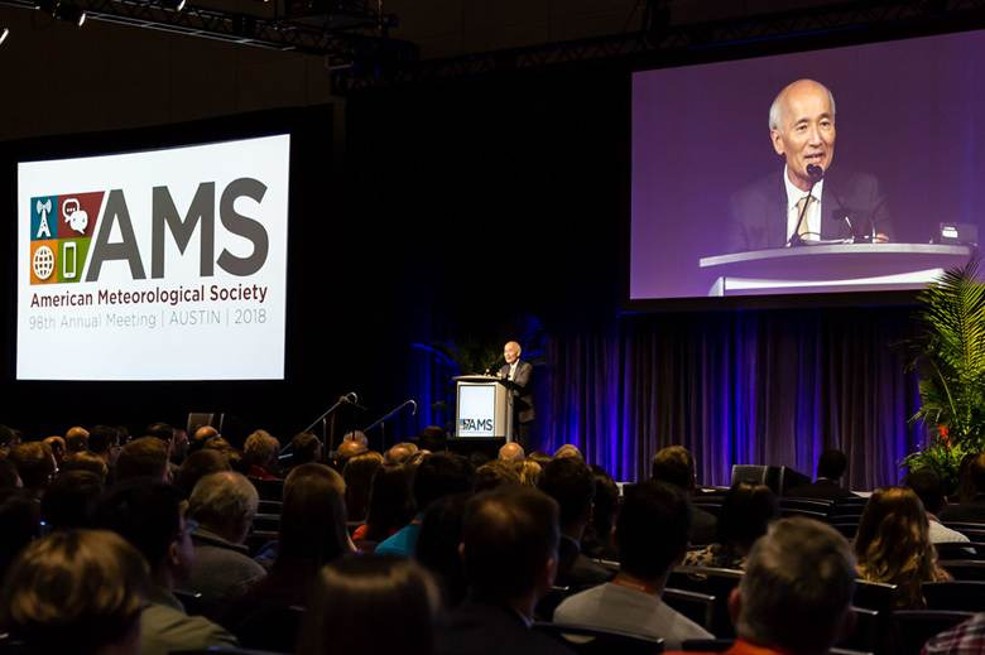
Dr. Wakimoto has served in an extraordinary series of influential positions — director of the NSF National Center for Atmospheric Research, NSF director for Geosciences, two-term AMS president, and currently UCLA vice chancellor for research — an almost unprecedented record for someone who has remained an active, innovative scientist throughout. His career offers a rare window into how visionary leadership and cutting-edge research can reinforce one another, making this symposium an inspiring and valuable experience for all attendees.
Learn more about the Roger M. Wakimoto Symposium, taking place at the AMS 106th Annual Meeting.