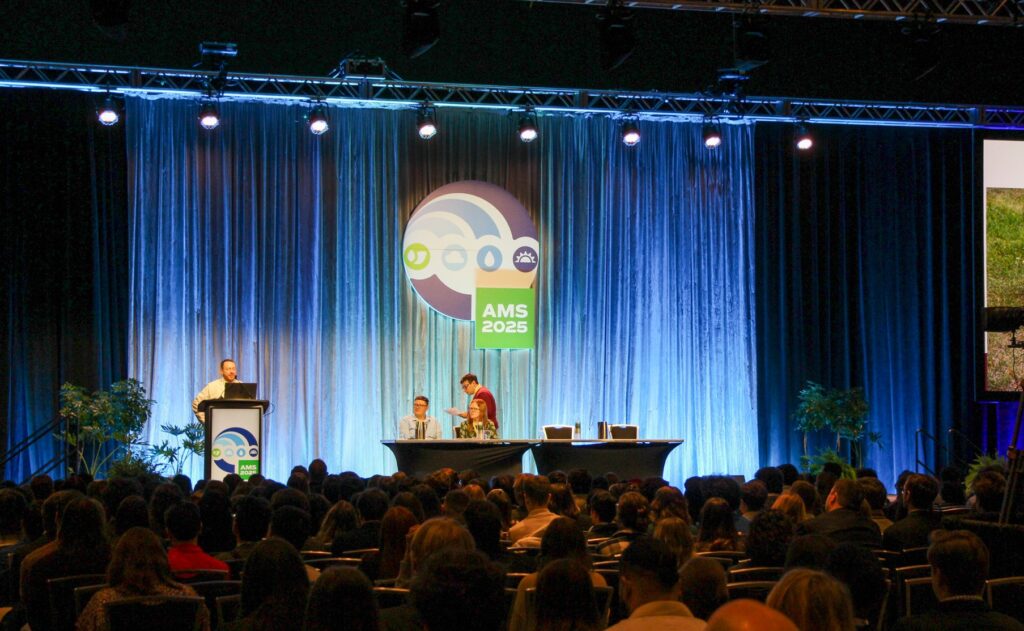
At the 2026 Annual Meeting, the AMS Student Conference will reach a notable milestone: its 25th anniversary. What began as an idea to create a space specifically for students within the AMS Annual Meeting has grown into an anticipated and influential event that encourages leadership, professional growth, and community within the weather, water, and climate enterprise.
Over the years, the Student Conference has introduced students to careers in meteorology and related fields and has fostered mentorship, amplified student voices, and created a peer-driven culture.
Laying the Foundation
From the very beginning, the Student Conference was envisioned as a collaborative, student-centered effort that relied on shared leadership and community investment.
Rich Clark, who was involved in the development and planning of the very first Student Conference in 2001, reflects on its origins and lasting purpose:
“I’m proud to have been involved in the development and planning of the first student conference and to see it grow to be what it has become—a featured event of the AMS Annual Meeting. Committees, planning, and positions of leadership all serve to bring people together where they can engage, recognizing that it takes a village, especially for nonprofits, and out of the combined peer-on-peer effort comes a greater good.”
The mindset of students learning from one another while being supported by the broader AMS community has remained central to the conference’s success.
Shaping Careers, Building Leaders
For many students, attending the AMS Student Conference is a pivotal moment, and often the first time they see the full scope of what a career in the atmospheric sciences can entail.
Gaige Kerr traces his professional trajectory directly back to his undergraduate experience at the conference:
“Attending the Student Conference as an undergraduate helped shape my research and career interests and exposed me to like-minded friends and colleagues who I never would have met otherwise. When the opportunity to volunteer on the Student Conference Planning Committee (SCPC) arose, I jumped on it because I wanted to help other students have similar, positive experiences as mine. Chairing the Student Conference felt like the next logical step in helping students have a positive, career-changing experience.”
The cycle of students benefiting from their experience and then giving back through leadership has been a defining feature of the conference over the years.
Melissa Piper echoes this growth, emphasizing how volunteering builds confidence and clarity at a critical career juncture:
“Volunteering with SCPC has allowed me to grow as a leader and communicator. I feel more confident now in my ability to work with others and be engaged in the AMS community as I leave school and enter the workforce. I have been able to explore numerous career path possibilities through the diverse sessions at the student conference and the professionals I have engaged with while volunteering with SCPC.”
Rising to the Moment
In 2022, student leaders faced an unprecedented challenge during the pandemic when they had to reorganize the conference in weeks amid rapidly changing circumstances.
Margaret Orr Hoeflich, one of the SCPC chairs that year, recalls the experience:
“For the 2022 Student Conference in Houston, we had roughly three to four weeks to completely reorganize the entire thing. We were so fortunate to have AMS be so supportive of the overwhelming student vote to be in-person despite the main conference going virtual. Students were so thrilled to be in person after COVID and it was truly a privilege to get to lead the effort that made it happen. Not to mention the organizational, planning, networking, and last-minute-pivoting skills we gained.”
The success of that conference showcased the adaptability, determination, and leadership capacity that the Student Conference cultivates.

Broadening Pathways and Perspectives
The Student Conference has expanded to reflect nontraditional pathways, interdisciplinary careers, and the priorities of a changing student body.
Zoey Rosen highlights the importance of representation and intentional programming:
“I wanted to make a difference and highlight a track for those that entered atmospheric science in a nontraditional path. We had the opportunity to plan a conference for the next generation of scholars that brought to the forefront what mattered to them in the weather, water, and climate enterprise.”
That forward-looking approach ensures the conference remains relevant, inclusive, and responsive to the needs of future scientists and professionals.
Kristy Carter points to how this structure strengthens the broader AMS community:
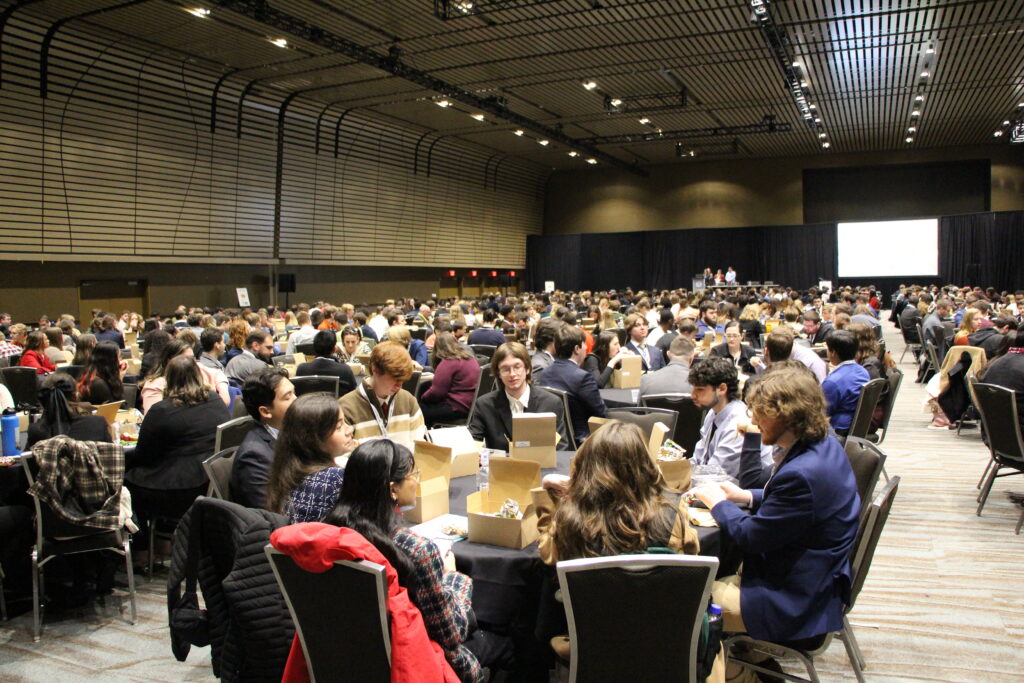
“Volunteering on AMS committees has really helped me understand the interworking of the AMS and gained an appreciation for all the AMS does, and can do, for our meteorology community. The AMS Annual Meeting is a phenomenal way to engage with fellow peers, and the conference set-up of the AMS Student Conference is geared towards facilitating this engagement among attendees so in future years you have other folks to connect with.”
What’s Next
As the Student Conference turns 25, many former chairs and committee members now serve as researchers, educators, forecasters, policymakers, and leaders across the enterprise. Looking back, they consistently point to the conference as a catalyst that shaped their careers, networks, and sense of belonging within AMS.
Looking forward, the conference will continue to evolve with new voices, challenges, and opportunities for students to lead while maintaining the core mission to empower students, build community, and strengthen the future of the atmospheric and related sciences.