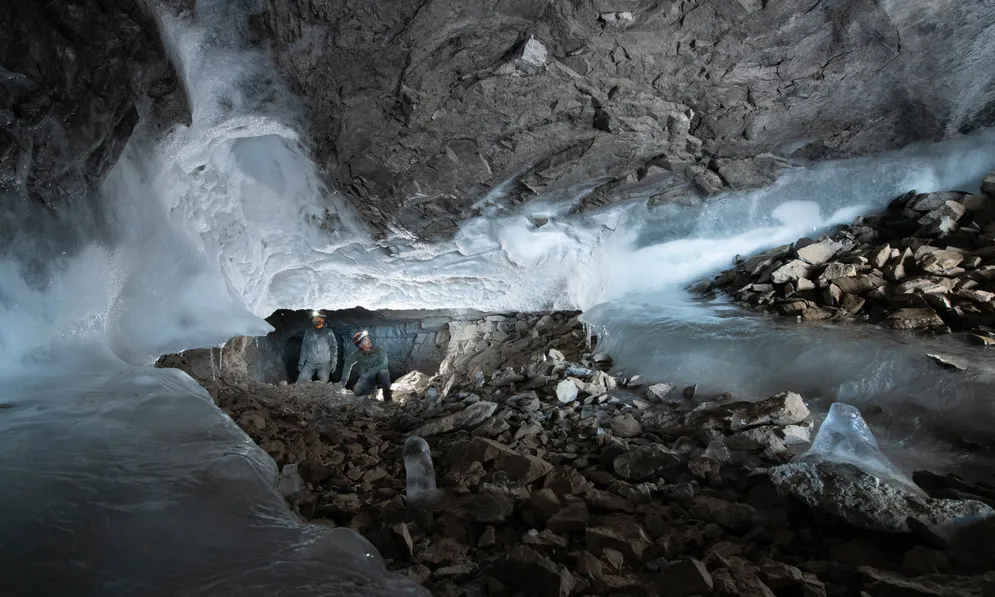
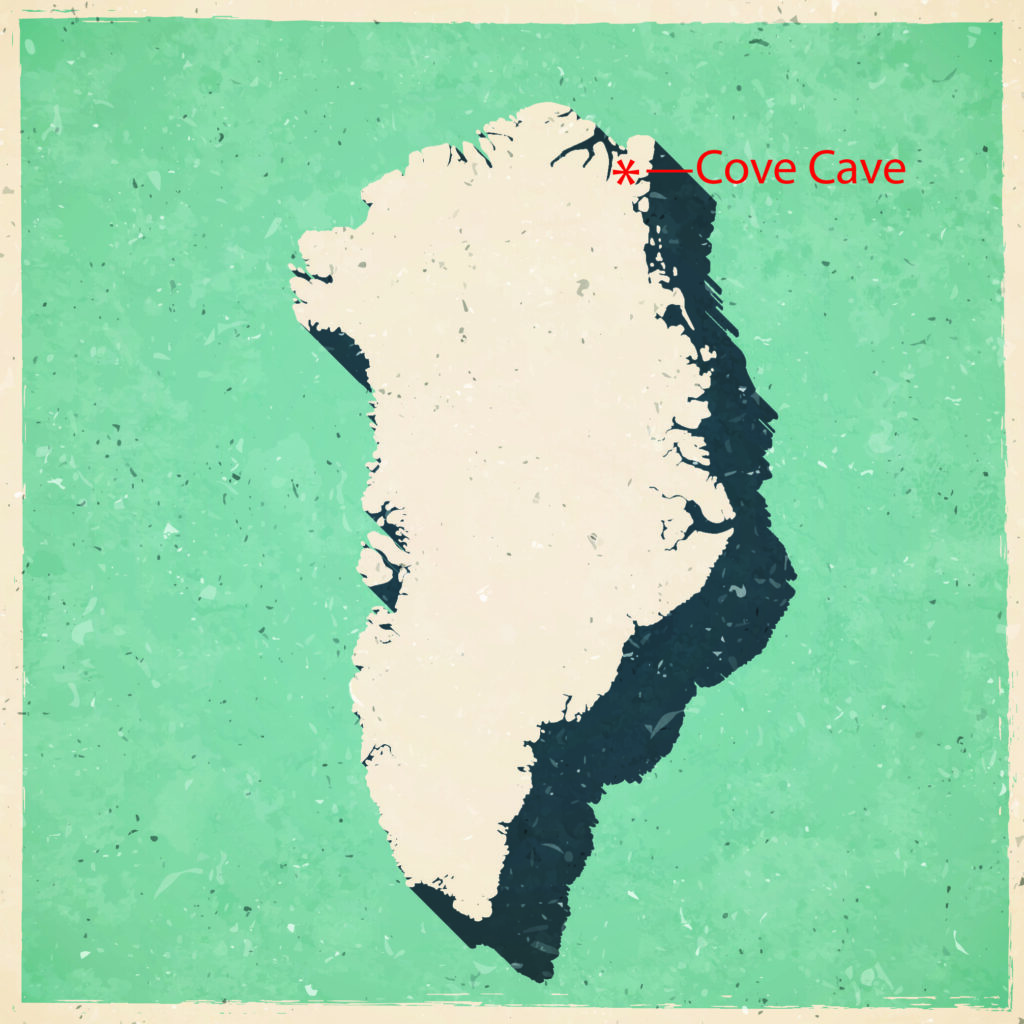
To learn more about the Arctic climate millions of years ago, a research team journeyed to Cove Cave on the far northern coast of Greenland—a location only accessible by small plane and hiking through uninhabited territory. There they found calcite deposits called speleothems that could only have formed when water was flowing and the ground was not frozen, indicating “that northern Greenland was once free of permafrost and much wetter than it is today,” notes Gina Moseley of the University of Innsbruck, lead author of an article about the study published in Nature Geoscience. Analysis of the speleothems showed that during the Late Miocene epoch, from approximately 11.6 million to 5.3 million years ago, there were periods of warm, humid conditions when average temperatures were around 14°C higher than today and atmospheric carbon dioxide concentrations were approximately 310 parts per million, significantly less than current levels. Between the warm periods, the climate got cooler and small glaciers formed. Moseley notes that the research “shows how dynamic this region is and how quickly environmental conditions can change,” adding that the Arctic “has never been a stable system.” Climate records of the High Arctic from the Miocene generally come from marine sediments, but the speleothems provide “the first high-resolution terrestrial record from this region, and it matches the marine data remarkably well,” Moseley says. “These deposits are like tiny time capsules.” [Source: University of Innsbruck]