By Aaron Price, AMS Director of Education
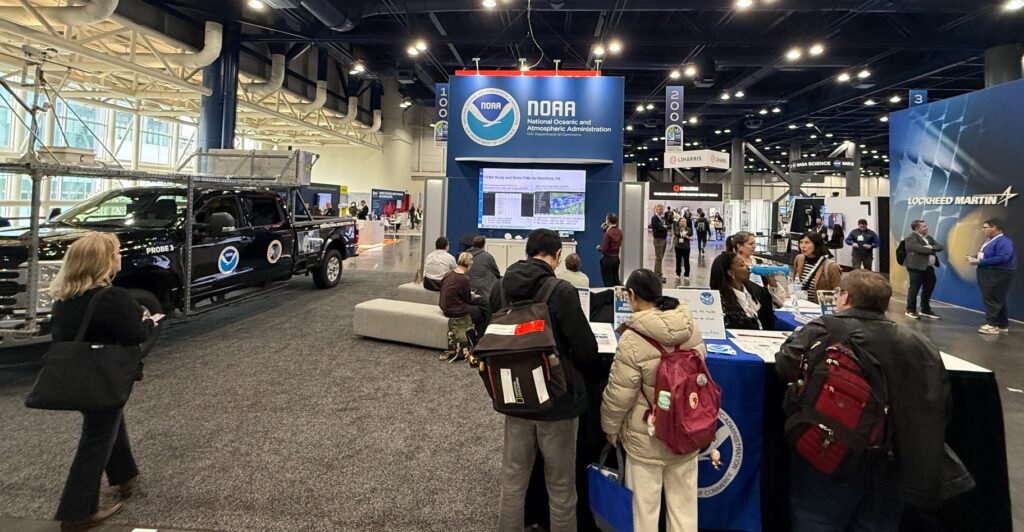
Welcome back to our live Weather with a Twist coverage of the AMS 2026 Annual Meeting in Houston, where the brightest superstars in the world of meteorology are meeting to bring you, and only you, the best and most fashionable forecasts this side of the Milan catwalks. Take a peak into the exclusive world of weather royalty …
We have trucks by Ford, backpacks by Dior, bespoke carpet by Luxeweave, and furniture by Ikea. The longest lines are for Wet Bulb coffee, and if you squint you may catch Jim Cantore autographing an anemometer.
But you’ll also find great science! Like this little tidbit about space weather…
Hawaiian Mass Ejections
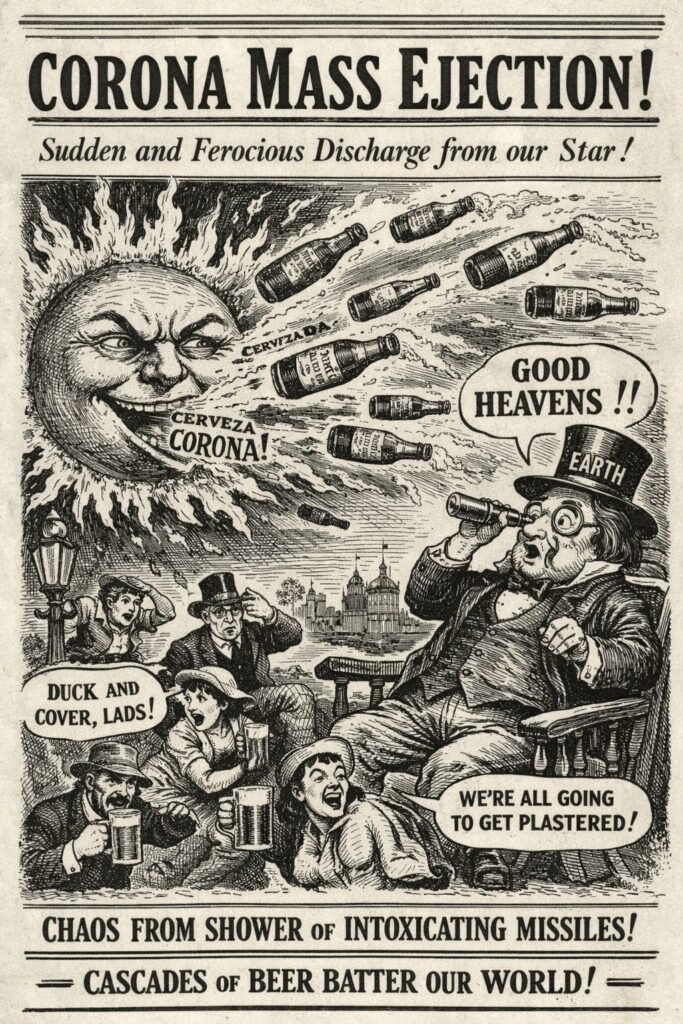
Space weather is about monitoring conditions around our planet that could affect us. This often involves activity originating from the Sun, including energetic particles, magnetic fields, and radiation. The most spectacular of these phenomena arecoronal mass ejections (CMEs)—sudden and large eruptions of solar plasma into the solar system.
CMEs form when twisted or stretched magnetic field lines in the Sun’s corona suddenly reconnect and relax, releasing enormous magnetic energy. Much of that energy is converted into kinetic motion, flinging trapped plasma outward along the newly reconfigured magnetic fields, much like a stretched rubber band snapping and throwing whatever it was holding. If a CME happens to be directed toward Earth, it typically arrives a few days later and disturbs Earth’s magnetic field. This can lead to aurorae, affect satellite orbits and power systems, cause power outages on the ground, and all sorts of fun stuff.
We have expensive satellites in orbit to monitor the Sun for these CMEs, and they work well. However, the Sun is really bright—especially in space. So the satellites have to shade themselves from the Sun’s surface so they can see the CMEs as they are emitted from the corona. The closest the satellites can see is about 3 solar radii from the Sun before they would be damaged or otherwise made useless by the brightness.
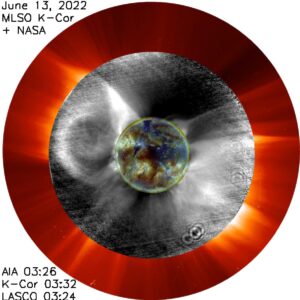
But this is one situation where ground-based observatories can do better. Berger et al. (2026) reported on CME observations made with the NCAR Mauna Loa Solar Observatory (MLSO) in Hawai’i. The MLSO has a special tool that allows them to see as close as 1.05 solar radii from the Sun’s surface. This allows them to see a CME 55 minutes before they are detected by spacecraft—giving us more advanced notice of incoming mayhem. The observatory issues near-real-time alerts to interested parties so they can prepare accordingly.
One catch: Hawaii sometimes experiences this dreaded thing known as nighttime, to the dismay of sun-worshipping tourists. And it’s even cloudy sometimes. Egads! So the researchers use this success to propose a network of similar stations to be established globally, to get around these annoying facts of life on Earth.
Driving in Snow Squalls
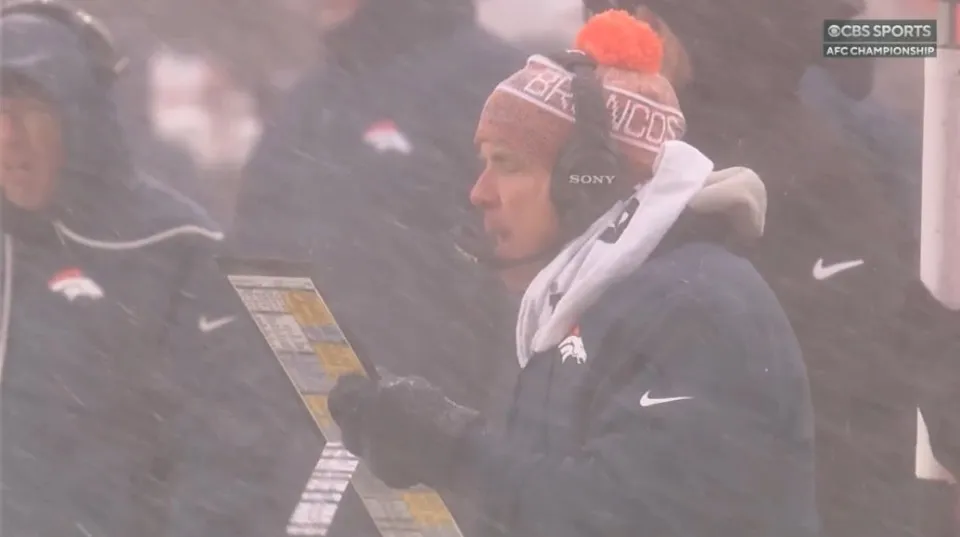
Snow squalls are brief, intense, and often unpredictable, and they can be especially dangerous for drivers. In 2018, the National Weather Service began issuing snow squall warnings directly to cell phones. Because a cell phone alert is a serious intervention, forecasters aim to use them only when absolutely necessary. But in this case they were being sent out too often. So about five years later, the warning criteria were tightened and forecasters have been exploring other technologies to get the message out, such as remotely controlled roadside signs.
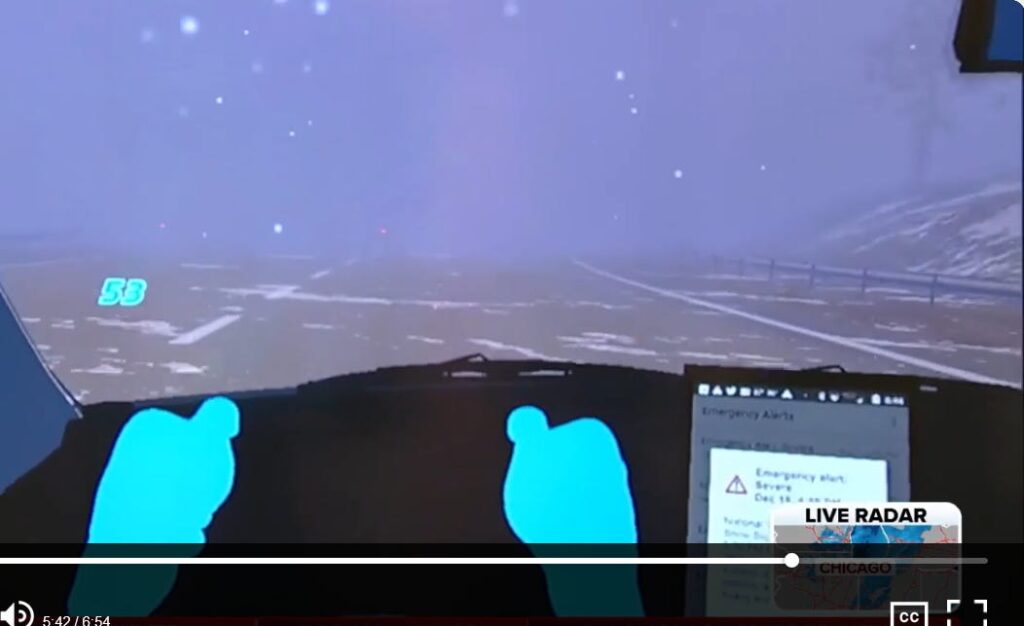
Bernhardt et al. (2026) tested the effectiveness of such signs, in both English and Spanish, by placing 216 participants in a Meta virtual driving simulator that led them into snow squall conditions. As participants drove through the simulation, they received warnings either via their cell phones or from roadside signs. The researchers found that drivers who reported more prior experience driving in winter weather paid less attention to both the alerts and the roadside signs, while those with less experience paid more attention to them.
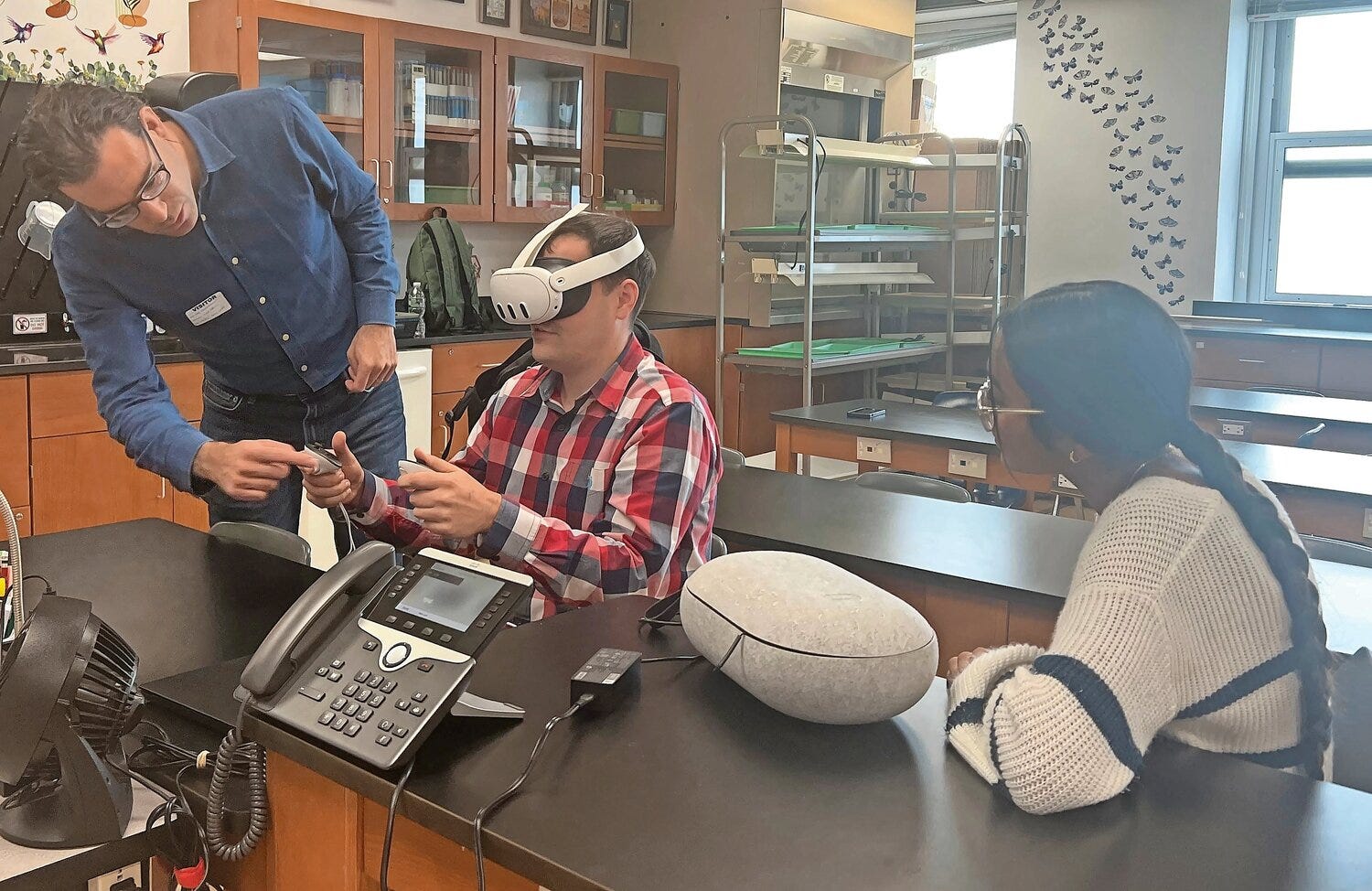
Try it yourself. The simulation software can be downloaded through the MetaQuest store.
Sou’easters
When I lived in New England, I loved nor’easters. I loved the cloudy, wet days of torrential rain and giant evergreens swaying back and forth in the wind. I loved the shaking house and rattling windows.
Nor’easters get their name from a strong northeast wind associated with them. Contrariwise, sou’easters are cold-season coastal low pressure systems that bring strong southeasterly winds with them. As with nore’easters, they can cause flooding and wind damage. Yet they are not studied nearly as much as their nor’easter cousins. As in, maybe not at all.
Using storm tracks, wind and tidal data from the Gulf of Maine Research Institute, and meteorological data from past storms, Venarsky et al. (2026) presented a post-2000 climatology of sou’easter events. They classified storms by where they formed, when they occurred, and what kinds of local damage reports they produced. Then they compared those categories using descriptive statistics and correlation tests to see which factors were related to more serious impacts.
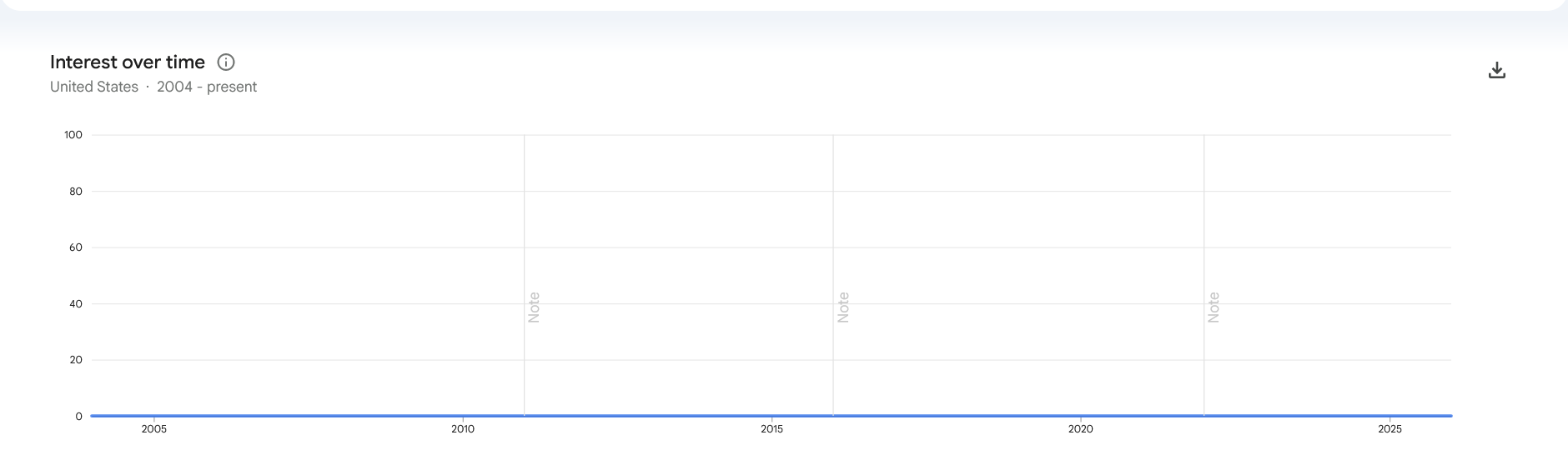
The results are… vague. Sou’easters form under a wide range of synoptic setups and have many different origin stories. They come from many places and all across the year. The only meaningful divider was local storm report type, which best captured differences in meteorological and hydrologic impacts (flooding). Weak correlations existed between some impact variables, but nothing close to a clean one-to-one relationship.
For me, this raises a question: Are sou’easters a thing? There may be a reason the name never caught on in New England culture—maybe they just don’t exist. They’re less a single storm type than a family resemblance. And recognizing that variability may be more useful than trying to pin them to a narrow set of patterns. And that’s what makes studies like this useful.
So let’s let Wikipedia make the final decision. Are sou’easters a thing?
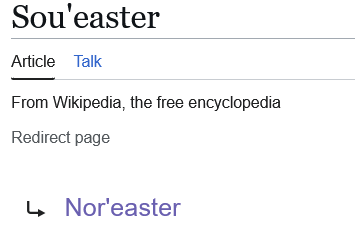
(sad trombone)
We are grateful to Lockheed Martin for a grant supporting this newsletter.

Our archive of WWAT articles is here.
During the preparation of this work, the author(s) used ChatGPT-5.2 to copyedit text. WWAT’s author(s) reviewed and edited the content as needed and take(s) full responsibility for the content of the publication.
Weather with a Twist is published by the American Meteorological Society.