“There go the people. I must follow them, for I am their leader.” —Alexandre Auguste Ledru-Rollin
Jack Townsend had an extraordinary career in federal service, spanning four decades (on either side of another 10 years in the private sector, at Fairchild Industries). He started his career in the military, crewing B-29’s during World War II, then did stints at NRL, NASA, and EPA in addition to 10 years of service as associate administrator of NOAA from 1967 to 1977 (the #3 NOAA position back then). During those years he displayed Ledru-Rollin’s quote on his office wall.
Turns out, that’s a useful perspective to bring to the current environmental headlines. Here’s why.
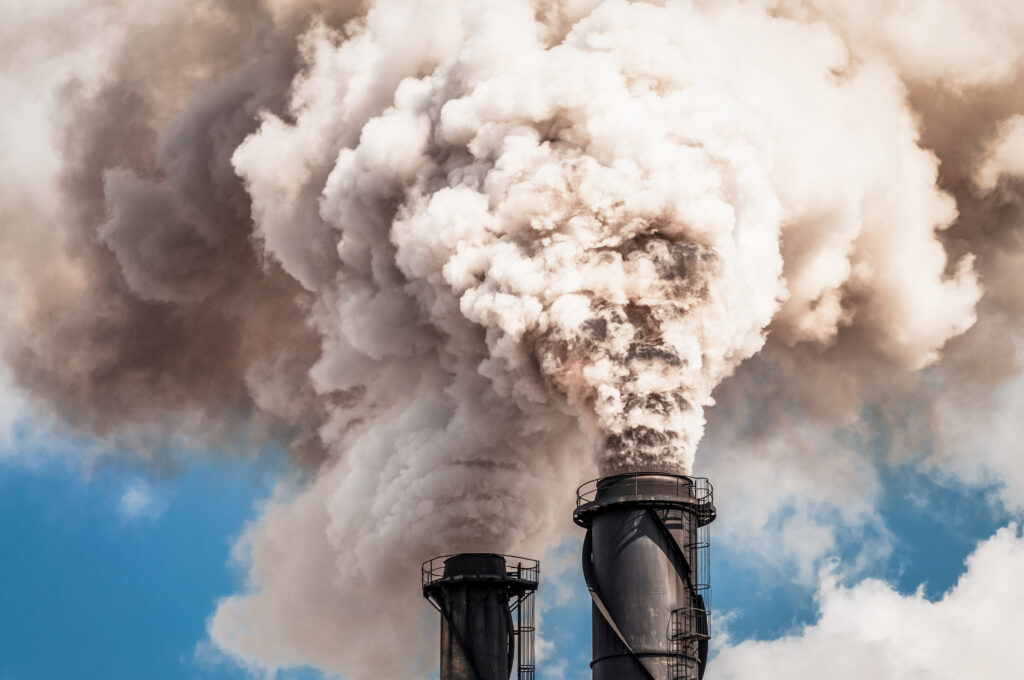
In 2009, after years of debate and litigation, the Environmental Protection Agency concluded, belatedly, that greenhouse gases were atmospheric pollutants threatening both the public health and the public welfare of current and future generations. It has been regulating emissions since under the Clean Air Act. The big environmental news this past week was the EPA repeal of that finding.
Here’s how a recent EPA press release framed the matter: …the single largest deregulatory action in U.S. history. In this final rule, EPA is saving American taxpayers over $1.3 trillion, eliminating both the Obama-era 2009 Greenhouse Gas (GHG) Endangerment Finding and all subsequent federal GHG emission standards for all vehicles and engines of model years 2012 to 2027 and beyond. The action also eliminates all off-cycle credits, including for the almost universally hated start-stop feature. EPA’s historic move restores consumer choice, makes more affordable vehicles available for American families, and decreases the cost of living on all products by lowering the cost of trucks. This major deregulatory process included substantial public input and robust analysis of the law following the U.S. Supreme Court decision in Loper Bright Enterprises v. Raimondo and West Virginia v. EPA.
The AMS responded to this week’s decision to rescind with a brief statement, expressing deep concern. The AMS statement reaffirmed the key scientific conclusions of climate change that led to the 2009 Endangerment Finding. It noted that the scientific evidence for these broad conclusions remains extensive, robust, and thoroughly vetted. It concluded that the repeal of the Endangerment Finding does not change the reality: (human-caused) “climate change…threatens human lives and well-being.”
The AGU issued a similar response, a bit more strident in tone, “denouncing” the decision, “condemning” it as “reckless and senseless” before going on to make comparable points. Other science-based NGO’s have followed suit. Meanwhile, The New York Times reports that the administration is doubling down and ordering the Pentagon to buy more coal-fired electricity.
Where do matters go from here? For openers, this being one of the more litigious societies in the world, it means a return to the courts. But longer term, a larger trend, a trend that began decades ago, that led to the 2009 result, and has continued to grow—namely, public desire for clean, renewable energy—will eventually carry the day.
Start with coal. In the seventeenth and eighteenth centuries, the transition from wood to coal as an energy source saved Great Britain’s forests. Coal fueled the Industrial Age, powering factories, ships, and rail. Though remaining abundant, coal’s myriad shortcomings—the hazards of mining, the cumbersome nature and toxic consequences of its distribution and use—have since proved its undoing. Here in the United States, the U.S. Navy transitioned from coal to an oil-based fleet from 1898 through the mid 1920s, over a century ago. In 1940, over 50% of U.S. homes used coal for heating (that was the heat source in three of my homes growing up), but that figure dropped to 0.1% by 2000. What’s more, coal-mining jobs have plummeted from a 1923 peak of over 800,000 to levels below 40,000 today. Gen-Z is not hanging out in coffee shops dreaming of and waiting for jobs mining coal.
As for other fossil fuels, their use worldwide seems to be following a similar trajectory, just from a belated start. Globally, 90% of the new electrical generating capacity put into place in 2024 was renewable. In China, which produces over half the world’s coal (and imports still more), coal accounted for 60% of electricity generation as recently as 2010, but that figure dropped to less than 50% in 2025, and is expected to drop further, to 32% by 2035. What’s more, China produces two-thirds of the world’s solar power generating capacity. Because of trade restrictions, most of this capacity is installed domestically, but China’s exports of solar, EV, and battery technology nearly tripled over the period 2020–23. Speaking of automobiles, EVs (including hybrids) accounted for 25% of global new-car sales in 2024. In China, over half the new cars sold were EVs. In Norway, the figure was 97%. Even in the United States, EVs make up 10% of new car sales. And here, that is in the face of a skimpy public-charging infrastructure—a picture that is rapidly improving.
Clean, renewable energy and all its fruits can’t arrive soon enough to suit 8 billion people, including the 340 million who live here in the United States. They will be served—largely on economic grounds. At this point, policy proclamations one way or the other are almost irrelevant.
Ledru-Rollin’s obscurity may be well deserved, but his quote holds a big lesson for leaders and leader-wannabes. It’s evident in other policy arenas, not just this one. Take the problem of the aging demographic in many countries in the world—especially the developed ones. Birthrates worldwide are plummeting at the same time life expectancies are rising. Current social safety nets for the elderly look to be inadequate for tomorrow’s needs. In that light, governments worldwide are attempting to provide incentives for new-family formation—but their efforts have been in vain. They are dwarfed by the disappearance of a big former incentive. In the past world of family farms and small businesses, children represented a necessary and inexpensive source of labor. They could be put to work for family benefit as soon as they were able, years before reaching adulthood. In today’s world, children remain a source of joy, but their education and support until adulthood represents a great cost that increasing numbers of young adult couples no longer see as affordable or sustainable. Raising a family looks more like a luxury to be enjoyed primarily by the wealthy.
Asian countries—China, Japan, Korea—are finding their policy measures fruitless. Until recently, western countries kept the problem at bay in part through immigration. But as immigration has declined worldwide, the problem has spread, even to the United States. The administration is talking up policy incentives, but these are widely believed to be too small to make a difference.
Another small example of Ledru-Rollin’s truth: desire paths. University administrators (the examples of Ohio State, Michigan State, and UC-Berkeley come to mind) use these to guide positioning of paved campus walkways. The recent East Coast snowfalls occasioned ad hoc emergence of desire paths on city streets. Even ant colonies are sufficiently “intelligent” to follow this rule, using pheromone trails to accomplish their tasks more efficiently.

Ledru-Rollin’s advice to world leaders who would seek to impose their will, versus first identify the public will and then serve it?
In the battle between you and the world, bet on the world.
A footnote: Speaking of Asian countries, and leadership and vision (both spot-on and misplaced), Vietnam comes to mind—but not just for the reasons you might think. In the 1950s, Pierre Mendes-France, an up-and-coming French politician, made a name for himself as prime minister by extricating France from the morass they had made of French Indochina—effectively handing the problem to America. (We know how that went.) Riding high, Mendes-France tried out a couple of other radical ideas on the French. One such? The French drank too much wine. That was unhealthy—especially for children. The French should drink more milk. Most French at that time saw this as a nonproblem. In their parliamentary system, Mendes-France was done in a few weeks. You can find a bit more detail in an LOTRW post from 2010.