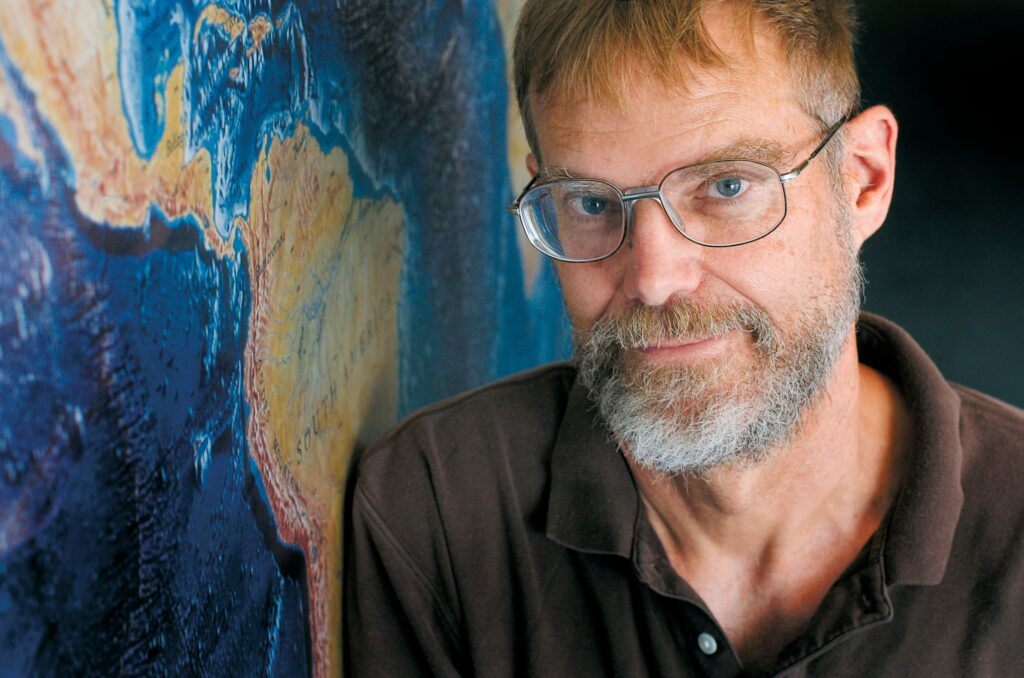
Robert C. Beardsley (1942–2025): Leader in Coastal Physical Oceanography
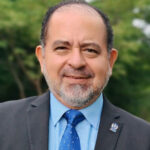
Robert (“Bob”) Beardsley, long a central figure in the continental shelf physical oceanography community, passed away from complications of Alzheimer’s disease on December 16, 2025. His long and productive career left a lasting mark through laboratory, theoretical, numerical, and especially observational approaches to science. He leaves a rich legacy of understanding across a range of coastal ocean processes, including tidal processes, internal waves, wind-driven currents, marine meteorology, and physical–biological interactions. His personal qualities helped launch many productive careers and led to numerous fruitful collaborations with scientists worldwide.
Bob was born in Jacksonville, Florida, into a navy family and experienced frequent moves during his formative years. He eventually enrolled at the Massachusetts Institute of Technology (MIT), where he earned a BS degree and then a PhD (1968) under the guidance of Harvey Greenspan and Joe Pedlosky. He was subsequently hired by the department and served on the faculty there until 1975 when, motivated by a desire to become more engaged in ocean observations, he moved to the Woods Hole Oceanographic Institution (WHOI). He worked there until his nominal retirement in 2005, and remained actively involved in ocean research and education for many years afterward.
Initially, Bob’s interests centered on laboratory experiments related to ocean circulation and waves. His “sliced cylinder” model of a western boundary current remains a landmark accomplishment. This laboratory work also led him to become one of the earliest figures in ocean numerical modeling. However, while at MIT, his interests in observations and the continental shelf were already coming to the forefront.
When Bob arrived at Woods Hole in 1975, the field was in an exciting state of flux. Moored current measurements were beginning to become operational, and the field’s theoretical underpinnings were taking shape, notably through the work of Adrian Gill, John Allen, and their students. As the observational database and dynamical understanding advanced rapidly, Bob emerged at the forefront of the effort. His initial work focused on waters near Massachusetts, examining topics such as responses to winds and wintertime cooling. But his vision was not limited to eastern North America. His broad view of the field and its phenomenology made him knowledgeable about a wide range of regional settings. He eventually made major contributions to understanding other environments, including western North America, the Amazon outflow, the East China Sea, and Antarctica. The quality of his work, the breadth of his vision, and his extraordinary interpersonal skills established him as a leader in the community by the end of the decade.
Bob’s first highly visible leadership role involved the 1981–82 Coastal Ocean Dynamics Experiment (CODE), a project focusing on wind-driven currents on the shelf north of San Francisco. This effort, directly or indirectly, included a who’s who of U.S. coastal oceanography, an accomplished and sometimes fractious group. Bob’s calm and caring approach held the project together, resulting in a dataset still regarded as the standard for coastal oceanography anywhere in the world. Even more significant were the discoveries and enduring advances—many involving Bob directly—in marine meteorology and in both regional and local aspects of wind forcing.
In the early 1980s, he became the first U.S. scientist to initiate and lead a sustained U.S.–China collaborative research program in the East China Sea and the Changjiang (Yangtze) River. This pioneering partnership led to multiple joint field programs over more than two decades involving the United States, China, Japan, and South Korea, while the scientific focus broadened to include the Kuroshio Current and its interactions with nearby shelf systems. Bob’s efforts helped establish an enduring scientific framework for cooperative research in the western Pacific.
The Global Ocean Ecosystem Dynamics program sought to understand how physical processes in the ocean affect the success of marine vertebrate and invertebrate populations. Bob played a leadership role in this effort through much of the program’s duration. He was especially engaged in the five-year study on Georges Bank, east of Massachusetts, where he had already been involved in work related to endangered right whales. He was known for diligently digging into the details of the resulting, novel datasets and extracting new insights and syntheses.
In addition to his leadership in basic research, Bob was instrumental in advancing the transition from fundamental research to societal applications. He played a central role in the development of the U.S. Northeast Coastal Ocean Forecast System, an operational coastal modeling system with horizontal spatial resolution approaching a remarkable 10 meters in places. The system enabled major advances in coastal hazard prediction, including forecasts of storm surge and coastal inundation. The same framework was also used to assess the transport and dispersion of radionuclides and other tracers associated with wastewater releases in the western Pacific. His leadership extended to complex real-world problems such as the search for the Air France Flight 447 wreckage and the impacts of offshore wind energy development. Across these efforts, Bob consistently demonstrated how rigorous physical oceanography could be translated into practical tools for environmental risk assessment, emergency response, and coastal management.
Bob was an enthusiastic and inspiring educator. He advised 16 doctoral students and 6 master’s students, and he mentored 12 postdoctoral scholars and investigators in addition to several early-career WHOI scientists. His passion for the science and his caring approach helped launch many productive careers.
Given Bob’s many achievements, he received numerous recognitions over the years. The Oceanographic Institution awarded him the Walter A. and Hope Noyes Smith Chair in 1996. Beyond Woods Hole, he was named a Fellow of the American Association for the Advancement of Science, the American Geophysical Union, and AMS.
As an undergraduate, Bob met his wife and soulmate, Sue, on a blind date. Their enduring marriage led to two daughters, Elizabeth and Jean, and four grandchildren. Bob was an avid runner, and he and Sue enjoyed their rustic houseboat during the summers. His interests outside the office included a range of outdoor activities, woodworking, and music—he played the baritone in the town band.
Bob’s intelligence, curiosity, clarity of understanding, drive, generosity, and kindness combined to make him the consummate leader in coastal physical oceanography as it became a quantitative, modern science. Anyone who met him came away impressed by who he was, both as a scientist and as a human being.
—K. H. Brink, Changsheng Chen, Glen Gawarkiewicz, Steven Lentz, Richard Limeburner, and John Whitehead