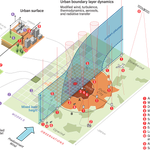
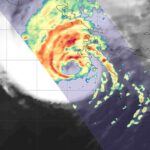
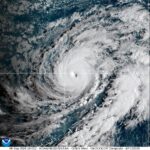
Jenni Louise Evans, a beloved member of the global atmospheric science community, passed away on April 3, 2025, at her home in Boalsburg, Pennsylvania, at the age of 63.
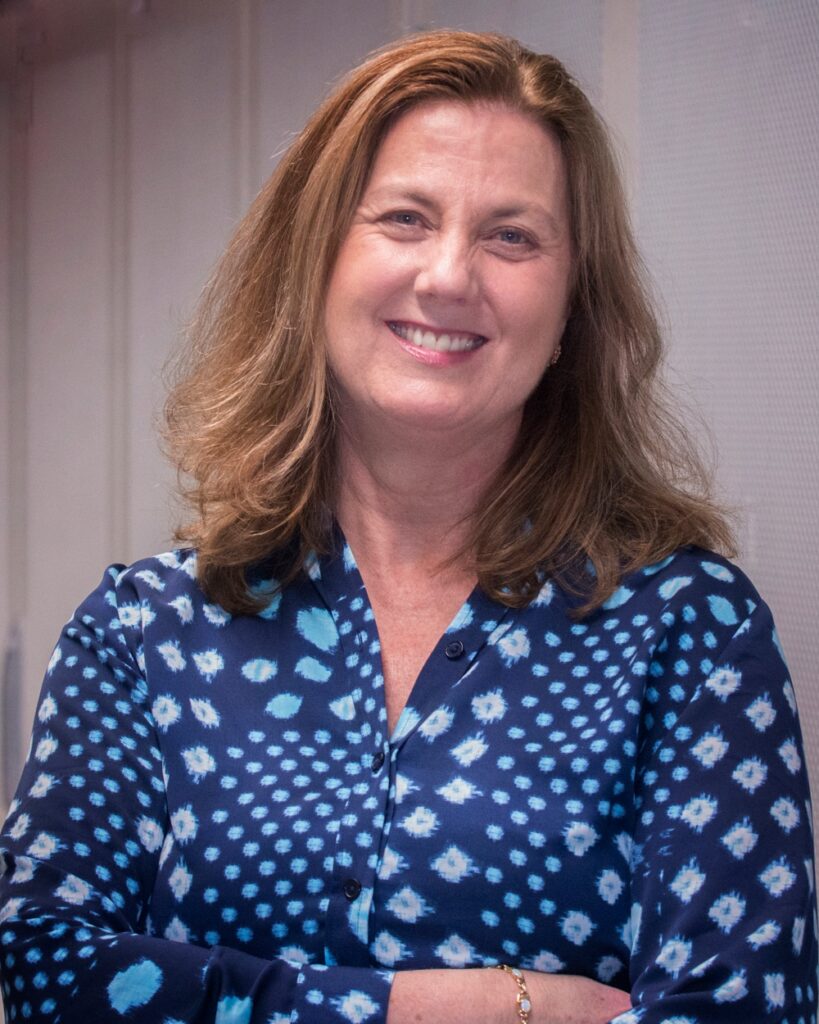
Jenni was a native of Melbourne, Australia. She earned her B.S. degree with honors in applied mathematics from Monash University in 1984. During her studies, Jenni was introduced to the application of mathematics to atmospheric science, which sparked her interest in formulating doctoral research to address practical and challenging issues related to the atmosphere, weather, and climate. Her early research pursuits focused on fluid dynamics, with an emphasis on observations and analyses of the planetary boundary layer.
While pursuing her doctorate, Jenni spent time at the Bureau of Meteorology Research Center in Melbourne, Australia, at the Naval Postgraduate School in Monterey, California, and the NASA Ames Supercomputing Center at Moffett Field, California. At each location during Jenni’s introduction to the broader atmospheric science community, her intellect, keen sense of curiosity, and her affable personality led to lasting collaborations and friendships. Jenni completed her doctorate in 1990 and launched her professional career as an atmospheric research scientist at the Commonwealth Scientific and Industrial Research Organization (CSIRO) in Melbourne, Australia.
Immediately at the start of Jenni’s career at CSIRO, she tackled the challenging topic of climate change and its impact on tropical cyclones, as well as the rapidly developing science of global climate modeling. As part of these early studies, in tandem with Jenni’s research on climate change impacts and extreme weather, her interest began to focus on structural characteristics and variability of tropical cyclones, which were topics she investigated during her doctoral research. That focus, combined with her growing interest and desire to be an educator and mentor to students and early-career scientists, led her to a position as an assistant professor at Pennsylvania State University (PSU) in 1992. Jenni became a tenured associate professor in 1998 and a full professor in 2005. Throughout her academic career, Jenni believed wholeheartedly in the value of effectively combining teaching, research, and service.
Jenni was continually and deeply committed to education and mentorship. It was a priority for Jenni to provide her students and postdoctoral collaborators with constant opportunities for success. She ensured that each student and postdoctoral collaborator was exposed to the broad aspects and challenges of research, helping them find what excited them most. Jenni was always accompanied by her students to conferences, visits, and research field projects, ensuring they had opportunities to present their research and actively participate in collaborations. She understood that her responsibility and joy as a mentor did not end with a graduation but extended beyond to help each mentee navigate career choices and paths that best suited them. Jenni was a tireless advocate for diversity and inclusion in science, especially concerning early career women in the geosciences.
Jenni’s dedication to education and mentoring was matched by her desire to give back to her community, her institution, and AMS through various forms of service. Jenni joined AMS while an undergraduate in Australia and served AMS in numerous roles, culminating in her election as the centennial president in 2018. During her tenure as AMS president, Jenni implemented her vision of expanding the long-standing AMS tradition of service to society by challenging members to do even more to be leaders in building societal resilience, while incorporating social justice into their actions related to solving complex challenges associated with weather, water, and climate hazards. Jenni was also an elected AMS councilor from 2005 to 2008 and served as a member and chair of the Tropical Meteorology and Tropical Cyclones Committee; the Nominations Committee for President and Councilors; as a member of the Editorial Board for the Bulletin of the American Meteorological Society; as Monthly Weather Review editor; and on the Awards and Fellows Nominations Committee.
Amid an enduring period of productive research and rewarding mentorships, Jenni served her university in many leadership positions. She was appointed interim director of the Earth and Environmental Systems Institute in 2013, acting director of the Institute of Energy and the Environment from 2014 to 2015 and interim director of the Institute for CyberScience (ICS) in 2016. She was then appointed director of ICS, which was renamed the Institute for Computational and Data Sciences, from 2019 until retiring in 2024. Jenni’s success in all these positions was a testament to her extraordinary interdisciplinary background and scholarship.
Jenni served the broader atmospheric science community through participation in numerous committees, panels, boards, and governance. Jenni served as a subject matter expert on hurricane catastrophe modeling for the states of Florida, Hawaii, Massachusetts, and South Carolina. Because of her experience, organization, and leadership, Jenni was often called to lead and serve on panels for the National Science Board of the United States and other nations, the World Meteorological Organization, the National Academies of Science and Engineering, the National Science Foundation, National Aeronautics and Space Administration, and the National Oceanic and Atmospheric Administration.
Jenni’s research was primarily focused on tropical cyclones, their formation and decay, extratropical transition, landfall, and the impacts of climate change on such events. During one period in her research, a particular complex and important aspect of the tropical cyclone lifecycle within the spectrum of atmospheric cyclonic systems became evident to Jenni and her team of students and collaborators. One of Jenni’s PhD students, Bob Hart, conceptualized, researched, and then implemented a real-time web page from scratch for the cyclone phase space (CPS) in the last month of his PhD degree program and the month that followed. The CPS diagnoses the temporal evolution of the three-dimensional structure of a tropical cyclone within a continuum of atmospheric circulation structures. Following the publication of the CPS, it became a widely used tool for diagnosing and forecasting tropical cyclones worldwide in research and operations. Bob’s independent creation and resulting papers as sole-author or co-author, ended up forming the basis for several of Jenni’s subsequent graduate students’ theses and her own later publications.
Jenni’s significant research contributions also addressed general tropical meteorology including organized convection in the tropics and its interactions with monsoon systems and atmospheric wave circulations. Additionally, Jenni and her team defined the comprehensive life cycle characteristics of subtropical cyclones. Jenni contributed her broad expertise in tropical meteorology to an innovative and interactive educational textbook on the subject, coauthored with Arlene Laing through the UCAR/COMET Program.
Jenni continually demonstrated her interest, knowledge, and curiosity about interdisciplinary topics, particularly the application of novel methods to examine cross-thematic research areas. Examples include the impacts of climate change on water, food, and energy security, as well as the physically based synthesis of ensemble forecasts. In all these endeavors, Jenni formed partnerships across university departments to advance and apply methods in statistics, machine learning, and computation, thereby enhancing the understanding of high-impact weather and its prediction.
A particularly innovative interdisciplinary accomplishment was Jenni’s collaboration with music professor Mark Barolla to transpose data that defined the physical characteristics of a tropical cyclone and its environment to musical notes. Jenni and Barolla utilized this unique technique of sonification to represent changes in the tropical cyclone environment and structure, allowing the ear to augment the eye in discerning trends in data that may not be as easily perceived by the eye alone.
Throughout her career, many honors have been bestowed upon Jenni. Highlights include being honored as a Fellow of AMS, a Fellow of the American Association for the Advancement of Science, and a Monash University Fellow. Jenni was also awarded a prestigious NSF CAREER Award.
Beyond Jenni’s brilliance in embodying the spirit of teaching, research, and service, Jenni was known for her creativity, soul, humor, humility, style, and generosity. It was not possible to be greeted by Jenni without a full “bear-hug” embrace, in which one could feel the transfer of her spirit and warmth. She never shied from offering encouragement to aspiring researchers or maintaining close personal and professional relationships with longtime colleagues and friends.
Just as Jenni lived and gave of her generous heart and loyalty, she was equally and deeply loved by the countless students, colleagues, and friends she made and inspired throughout her career. She leaves behind her life partner, Bruce Lord, and is also survived by her parents, sisters, and numerous beloved nieces and nephews in Australia. Although Jenni lived in the United States for over 30 years, she and Bruce traveled to Australia at every opportunity and stayed firmly connected to her Australian family. Outside her professional life, Jenni was an avid runner, participating in many marathons. She enjoyed running and hiking with groups traveling along the forest trails of central Pennsylvania. She and Bruce enjoyed their abundant garden, which contributed to delicious meals served to friends and family in their inviting home. They also took great delight in the multiple generations of Vizsla dogs that shared their companionship, forest strolls, and warmly greeted all who came to visit. Jenni Evans leaves behind a tremendous legacy on all who knew her on multiple levels. Jenni strove to make the world a better place and lived in a manner consistent with what Gibran wrote in “The Prophet”. That is, “Living is determined not so much by what life brings to you, as by the attitude you bring to life.”—Patrick Harr.