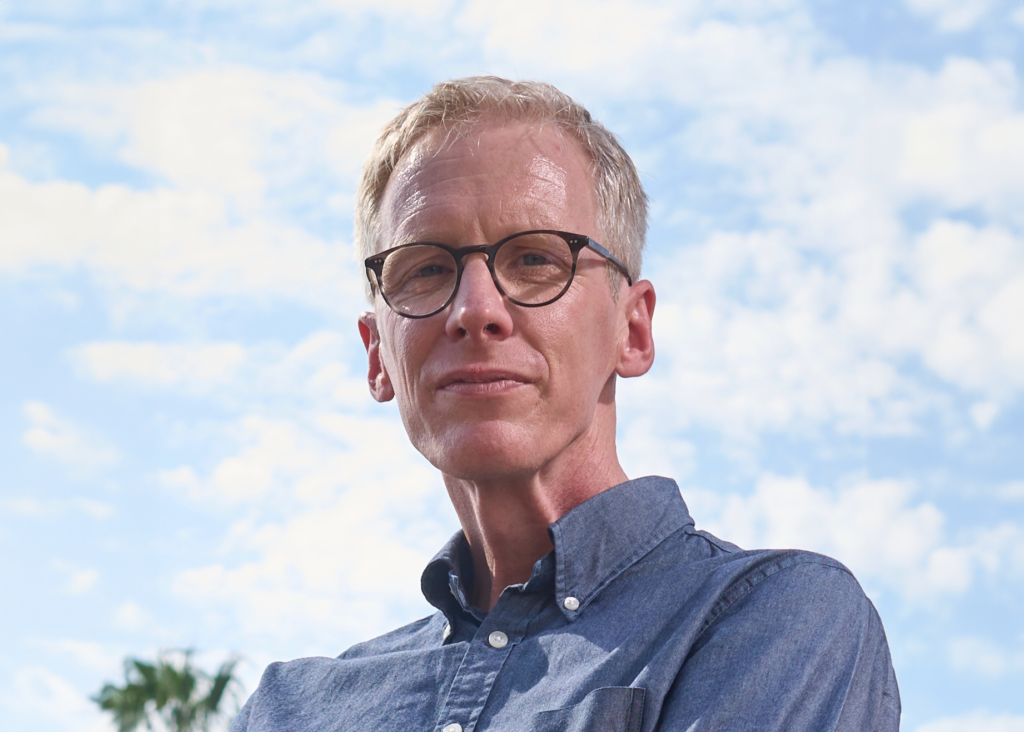
Tapio Schneider is the 2026 recipient of the Jule Charney Medal, recognized “for pioneering research on atmospheric dynamics and climate change and leadership in innovative climate model development.”
The American Meteorological Society’s Jule Charney Medal is granted to individuals in recognition of highly significant research or development achievement in the atmospheric or hydrologic sciences.
Tapio Schneider is the Theodore Y. Wu Professor of Environmental Science and Engineering at the California Institute of Technology (Caltech) and a research scientist at Google. His work focuses on the physics of the atmosphere and climate, spanning scales from cloud microphysics to global circulations. He leads the Climate Modeling Alliance (CliMA), a multi-institutional initiative to develop a next-generation Earth system model that leverages advances in machine learning and data assimilation to reduce uncertainties in climate projections.
Schneider received his PhD from Princeton University in 2001, following undergraduate studies in physics at the University of Freiburg in Germany.
AMS Headlines spoke with Schneider about his journey, the work behind the recognition, and what lies ahead.
What first sparked your interest in the field?
I grew up fascinated by the natural world and curious about how it works. As a kid, I was drawn to the natural sciences—chemistry, mineralogy, and physics—and loved experimenting in our basement and going on geological field excursions. I decided to study physics as an undergraduate and found it fascinating. I loved learning about thermodynamics, classical mechanics, and quantum mechanics and how they explain everyday phenomena.
As I advanced in my studies, however, the topics became increasingly removed from daily life, often focused on extreme conditions like near absolute zero temperatures or very high energies. I realized I wanted to work on physics with a more direct connection to everyday life, what I think of as physics at the energy scale of sunlight on Earth. The atmosphere was a natural fit.
It also helped that atmospheric science is a relatively young field, where individuals can still make a significant impact early in their careers. My interest was further shaped by my experience as a competitive cross-country skier. I could see firsthand that snow conditions were changing. Races were being moved, and we were chasing snow more often. That sparked my curiosity about global warming and natural climate variability, such as the North Atlantic Oscillation, and ultimately led me to apply to graduate school.
What does receiving this AMS award mean to you?
It is a great honor to receive the Charney Medal. Jule Charney laid the foundations for much of what we do in atmospheric science today, from numerical weather prediction to our understanding of atmospheric dynamics. He exemplified the unity of foundational and applied science that I find so compelling about this field.
I also see this recognition as reflecting the work of the many students, postdocs, and collaborators I have had the privilege to work with over the years. What makes an award like this especially meaningful is that it comes from peers who took the time to nominate me, and I am very grateful for that.
How would you describe your work to a broad audience?
I try to understand what controls weather and climate—from why it rains where it does, to how clouds form and influence Earth’s energy balance, to how these processes may change as the planet warms.
More recently, I have been working on building a new climate model from the ground up, designed to take advantage of modern computing and machine learning. The goal is to make climate projections more reliable and better suited to answering the questions society is facing.
What question has driven your work most?
Early in my career, I focused on “why” questions about large-scale atmospheric dynamics—for example, what controls the strength and extent of the Hadley circulation and how it influences the distribution of rainfall and arid regions.
More recently, my focus has shifted to clouds. Clouds are the largest source of uncertainty in climate projections, and understanding how they respond to warming is essential for predicting how much the Earth will warm in the coming decades.
What excites you most about the future of the field?
We are at a transformative moment. Advances in artificial intelligence, machine learning, and computational power are opening up entirely new ways to build and improve climate models and to understand the climate system.
With CliMA, we are working to combine physical understanding with data-driven methods. I believe this approach will lead to a step change in the accuracy of climate projections in the coming years and give us much better tools for understanding how Earth’s climate system works.