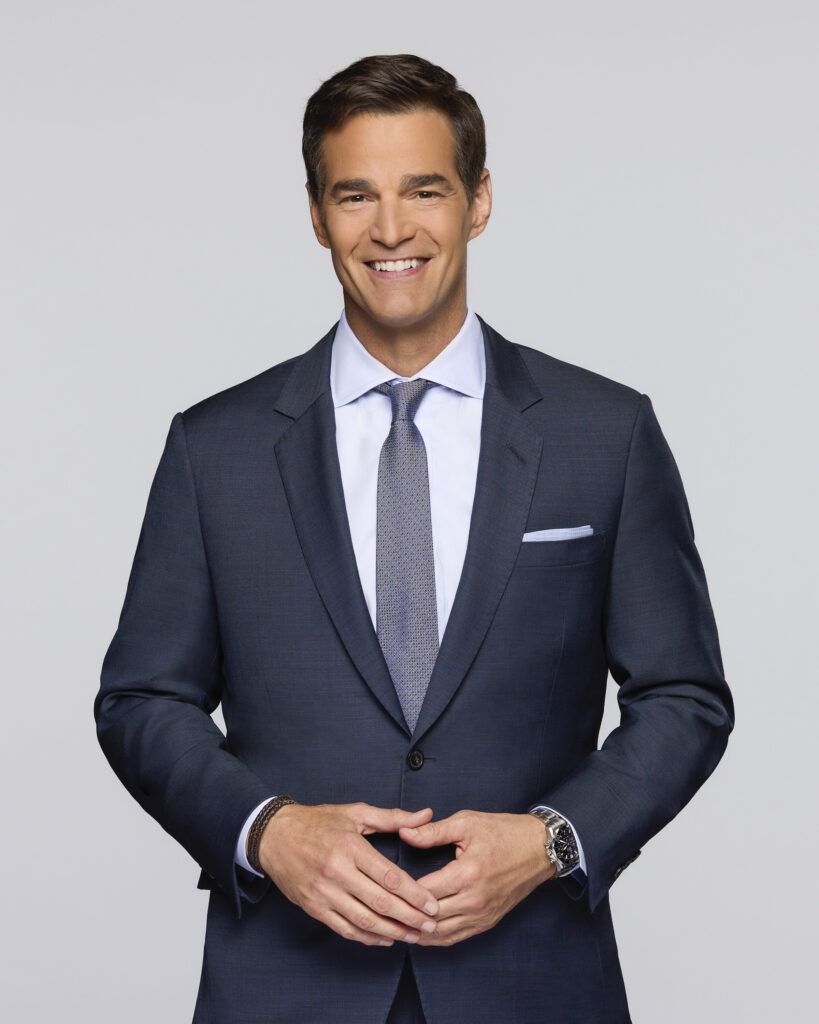
For more than three decades, Rob Marciano has brought weather and science to audiences through broadcast journalism. A meteorologist and science reporter, Marciano earned the AMS Seal of Approval in 1994 and is now a Certified Broadcast Meteorologist (CBM) and member of the AMS Board of Broadcast Meteorology.
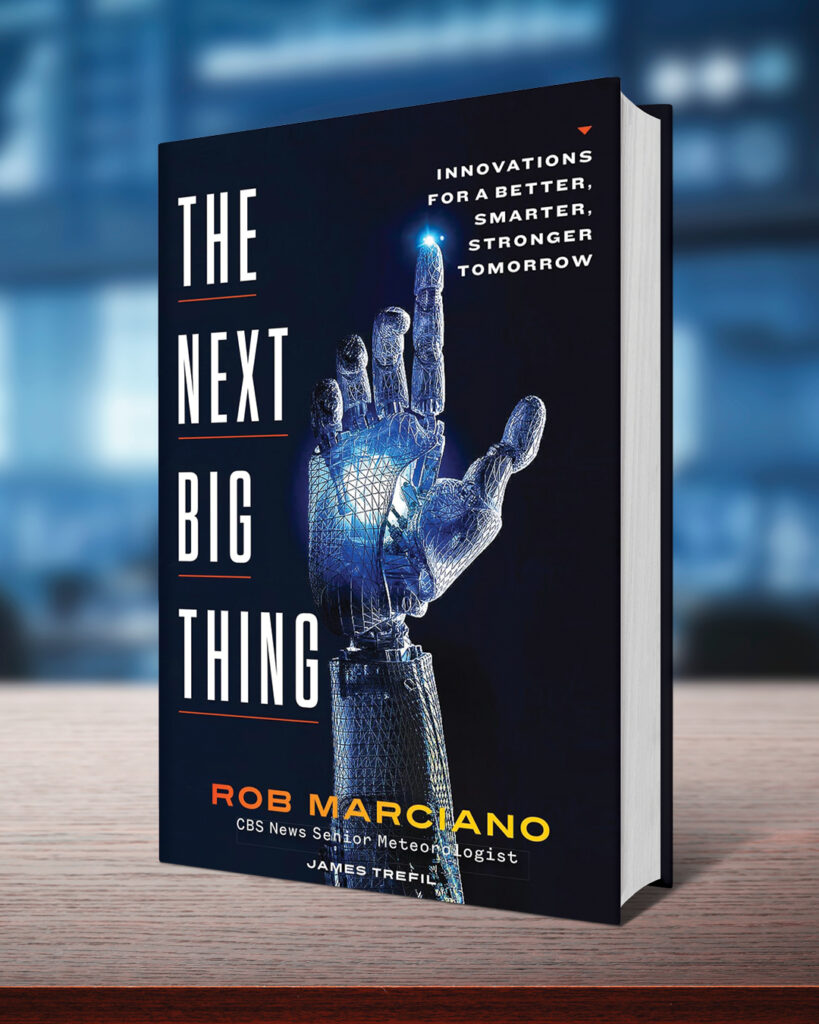
Marciano’s career has taken him well beyond forecasting the weather. His work has included reporting on science and technology and exploring innovations that could shape the future. His latest book, The Next Big Thing: Innovations for a Better, Smarter, Stronger Tomorrow, examines emerging technologies in energy, electricity, infrastructure, and information.
For Marciano, the AMS credential has represented more than a professional distinction. It has reinforced the responsibility that comes with communicating science to the public and the importance of getting the science right.
Early Career and the CBM
What first inspired you to pursue meteorology, and how did that eventually lead you into broadcasting?
Like a lot of kids growing up in the Northeast, I was obsessed with snow and I was a very curious kid. I remember lying in the backyard as the snow came down on top of me, looking up into the falling flakes and wondering, “How does this happen, and why not every day?”
Snowfall was my nirvana, and I craved winter. I’d watch the local newscasts for weather and sports every night. At some point, probably around eighth grade, I knew I wanted to be a meteorologist. As I learned more about the science and the different disciplines in the weather industry, communication was the area I was most drawn to… watching a weather broadcaster deliver important, often life-saving information during big events looked thrilling and fulfilling. I wanted to have that direct connection with other people and the community.
Why was earning the AMS Seal of Approval, and later the CBM, important to you?
I earned the original AMS Seal of Approval in 1994, more than 30 years ago, and I was so proud. There were only a few weathercasters with AMS Seals in the New York City and Connecticut markets when I was a kid, so it stood out as, “This guy knows what he’s talking about.”
So it was important to me to get my degree and apply for the Seal as soon as possible. The CBM program now gives us an added level of credibility and accountability as broadcast professionals.
I fully support the CBM program, and I’m proud to serve as a current member of the AMS Board of Broadcast Meteorology.
How has the CBM credential influenced your work throughout your broadcasting career?
The credential reinforces the responsibility we have as broadcast meteorologists. We’re not just delivering information; we’re communicating science that can influence decisions people make about their safety and their lives. Having that professional standard, and being accountable to it, matters.
Broadcast meteorologists wear many hats—as scientists, communicators, and public educators. How do you balance those roles?
The key is remembering that the audience doesn’t necessarily need to know everything that we know. They need to understand what matters to them. Our job is to take complicated science and make it useful and understandable without sacrificing accuracy. That balance—being accessible while respecting the science—is at the heart of good science communication.
Making Science Understandable
One hallmark of your career has been making complex science understandable for broad audiences. What’s your philosophy for communicating difficult scientific concepts?
Start with the basics and build from there. You have to understand your audience and meet them where they are. The goal isn’t to show people how much you know. It’s to help them understand something they didn’t understand before. If you can make a complicated concept relatable, people are much more likely to engage with it.
What lessons from weather forecasting have translated into reporting on broader science and technology topics?
Weather is a great training ground because you’re constantly taking complicated information and making a decision about what people need to know. You’re dealing with uncertainty, probabilities, data, models, and rapidly changing information.
Those same skills translate well to science and technology reporting. You have to understand the science, ask good questions, recognize what you don’t know, and then explain it in a way that is accurate and meaningful.
The Next Big Thing
What inspired you to write The Next Big Thing?
The Next Big Thing is an awesome collaboration with National Geographic, which proposed the idea to me in 2022. National Geographic wanted me to use my science reporting to help explain some of the more complex technology we use every day, then explore the most groundbreaking innovations now being developed that we’ll all be using in the future.
I was teamed with James Trefil, a brilliant physics professor, who helped write the technical details that were outside my scope. I learned a ton from Jim and all the experts I got to meet. It was such a rewarding experience.
Why did you choose to focus on innovations in energy, electricity, infrastructure, and information?
These are areas that are going to have a profound impact on how we live. They’re interconnected, too. How we produce energy affects transportation and infrastructure. How we process information affects virtually everything. In the end, we had a myriad of subtopics that needed some tent poles to give the book some connective flow. Energy, electricity, infrastructure, and information are the realms of science that encompass nearly everything we use as humans, including what we drive, live in, work on, play with, and build. I wanted readers to see not only what the newest innovations are, but why they matter and how they could make our lives better.
Your book takes an optimistic view of scientific innovation. Why do you think hopeful science stories are especially important today?
There are plenty of reasons to be concerned about the future, but there are also incredibly smart people working on incredibly difficult problems. I think it’s important to show that side of science. Innovation isn’t magic, and there are no guarantees, but there are real breakthroughs happening that could help us build a better, smarter, stronger future.
How did collaborating with physicist James Trefil shape the book?
Jim was invaluable. I could bring the reporting and storytelling side, while he could dig into the physics and make sure the scientific explanations were accurate and understandable.
That combination made the book much stronger. I learned a tremendous amount from him, and his expertise helped us explain some pretty complicated ideas without overwhelming the reader.
Weather, Climate, and Innovation
As weather becomes more impactful in people’s daily lives, what innovations are you most excited about for improving forecasting?
Two things really excite me about where weather forecasting is going. The first is artificial intelligence. The new AI-enhanced models are already blowing away traditional numerical models. Learning machines that can sort through decades of data and recognize patterns and analogs is nothing short of awesome. It’s like bringing together hundreds of meteorologists spanning dozens of decades to develop a forecast. Mind-blowing!
And what I love most about it is that this new technology is actually bringing us back to the art of weather forecasting. We’ve all gotten too caught up in merely reading numerical models. Ironically, in some ways, AI is taking us back to the good old days of forecasting the weather.
The second is not in the book, but I plan on doing a story on it: GSBs, or Global Sounding Balloons. These are autonomous, long-duration weather balloons that can fly for weeks at varying altitudes, latitudes, and longitudes, filling in data gaps left by traditional land-launched balloons. Weather computers are only as accurate as the data input. More data yields more accuracy. Bring on the balloon bots!
How do you see artificial intelligence changing meteorology over the next decade?
AI is going to fundamentally change the way we forecast. We’re already seeing how powerful these models can be, and I think we’re just at the beginning.
But I don’t think AI eliminates the meteorologist. If anything, it gives meteorologists better tools and more information to work with. The human expertise—understanding the atmosphere, recognizing unusual situations, communicating uncertainty—will remain incredibly important.
Are there innovations you encountered while writing the book that you believe the meteorological community should be paying close attention to?
Absolutely. AI-enhanced forecasting, new observing technologies like Global Sounding Balloons, and using drones to gather hard to get data in dangerous spots, are the areas where exciting things are happening. The common thread is data. Better observations and better ways of processing that information can lead to better forecasts. That’s a pretty exciting place to be.
The Future of Broadcasting
How do you think the role of the broadcast meteorologist will evolve over the next 10 to 20 years?
The platforms will continue to change, but the fundamental need for trusted science communication won’t. People will still need someone who can explain what’s happening, what it means, and what they should do about it. The difference is that meteorologists will increasingly have to communicate across many different platforms and formats.
What skills should the next generation of broadcast meteorologists develop beyond forecasting?
Creativity, ingenuity, flexibility, and the ability to self-promote. You have to be able to engage viewers regardless of the platform. The days when you simply appeared on television at a prescribed time and delivered a forecast are dying, if not dead already. You have to understand how audiences consume information and be able to tell compelling stories wherever they are on earth or beyond.
Do audiences increasingly expect meteorologists to explain not just the weather, but the science behind climate, technology, and resilience?
Yes. People are curious, and they’re encountering science and technology in their everyday lives. They want to understand it. That creates a tremendous opportunity for meteorologists. We already have the scientific background and the communication skills. We can use those skills to help people understand a much broader range of scientific issues.
Personal Reflections
Looking back on your career, what are you most proud of?
I’m proud of the opportunity I’ve had to make science accessible to people who might not otherwise engage with it. Reporting from the field IN the weather is what I truly love. Feeling and seeing the power of mother nature first hand is visceral. At times a sensory overloading, humbling experience. And one that can toe the line of hypocrisy if not done with respect and caution. Showing and telling the stories of the people and communities impacted by damaging weather is key to making the human connection and garnering empathy from viewers outside the storm zone.
Whether it’s explaining a forecast, reporting from the field, or exploring a new technology, the goal is the same: Help people understand and have a better sense of the world around them a little better.
If readers take away one message from The Next Big Thing, what do you hope it is?
We’re living in one of the most challenging, yet exciting, moments in human history. I hope they come away excited about the future. With our mastery of science and engineering, the possibilities for our future are endlessly promising. There are extraordinary innovations being developed right now. Some will work, some won’t, and some will take longer than we expect. But the people working on these problems are pushing the boundaries of what’s possible.
That’s something worth being optimistic about and celebrating!
The Next Big Thing: Innovations for a Better, Smarter, Stronger Tomorrow is available through Penguin Random House.