Wildfires are a growing challenge across North America, especially with the confluence of climate change and urban spread into formerly natural areas. Cross-border smoke events, disastrous fires in major cities, rising risk, and more have put Americans on alert. At the 2026 Joint AMS Washington Forum and Summer Community Meeting (AWF/SCM) session, “Fire Weather, Technology and Risk: State of the Science and Opportunities,” panelists discussed advances and challenges in the field of fire weather, fire prediction, and damage mitigation.
Note: Most sessions at the AMS Washington Forum and Summer Community Meeting take place under a modified Chatham House Rule to encourage smooth and open discussion among attendees. For that reason, panelist remarks are not attributed to a specific person in this article.
Where Fire Science Stands Today
Large, destructive wildfire events are on the rise in the United States, and fires at the urban-wildland interface pose increasing challenges to human safety. A recent paper in the Bulletin of the American Meteorological Society finds that the area of boreal and western U.S. forest burned per year has increased threefold since 2000, and smoke has increased over much of North America. Climate change-induced aridity appears to be the major underlying cause.
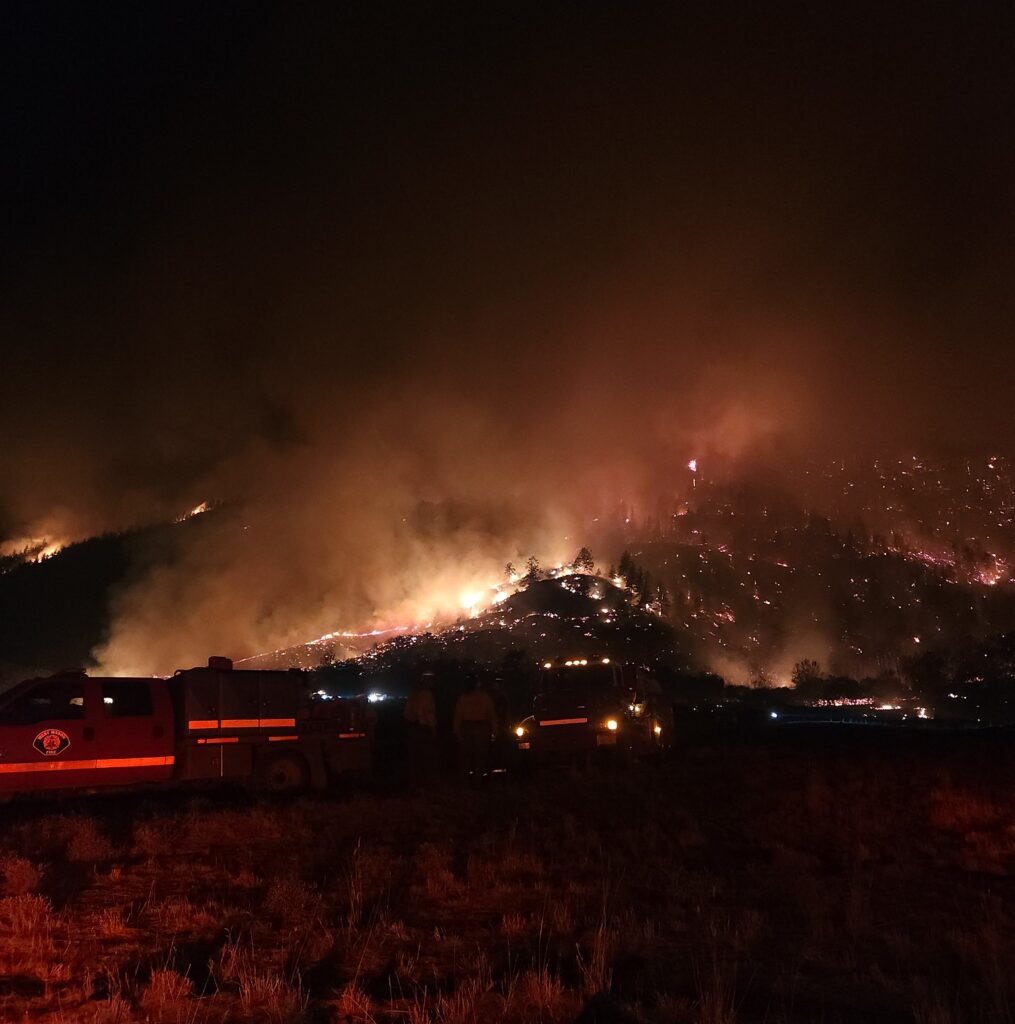
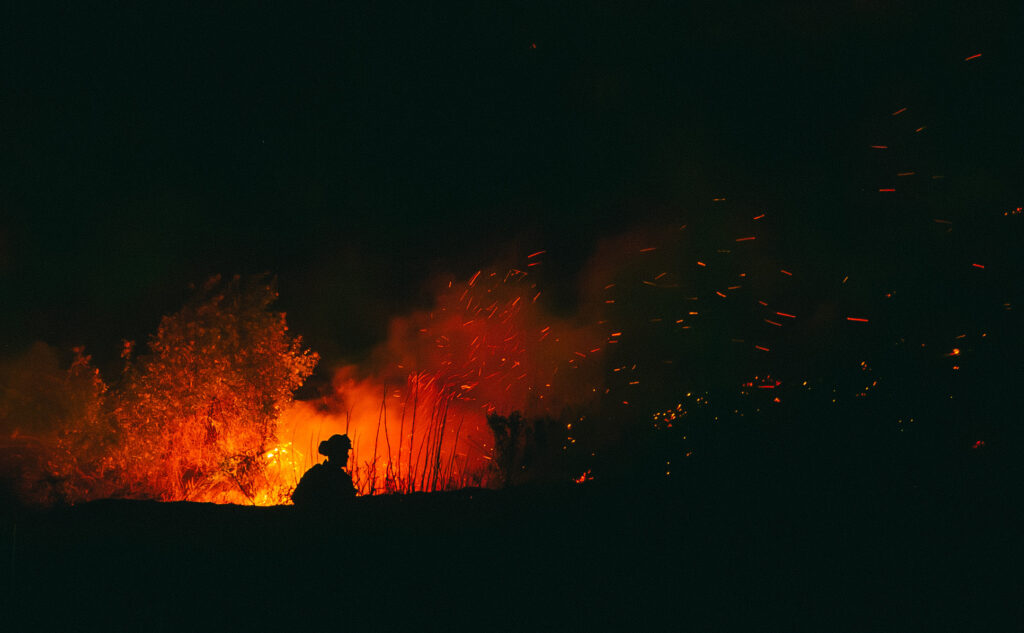
In addition to increasing temperatures and dry fuel availability, AWF/SCM panelists noted, climate change may also be making fires harder to fight. Firefighters used to rely on fires “laying down” after dark, when suppression efforts could make more progress, but that behavior has changed. Nowadays, fires can stay very active no matter the hour, leaving people and resources exhausted.
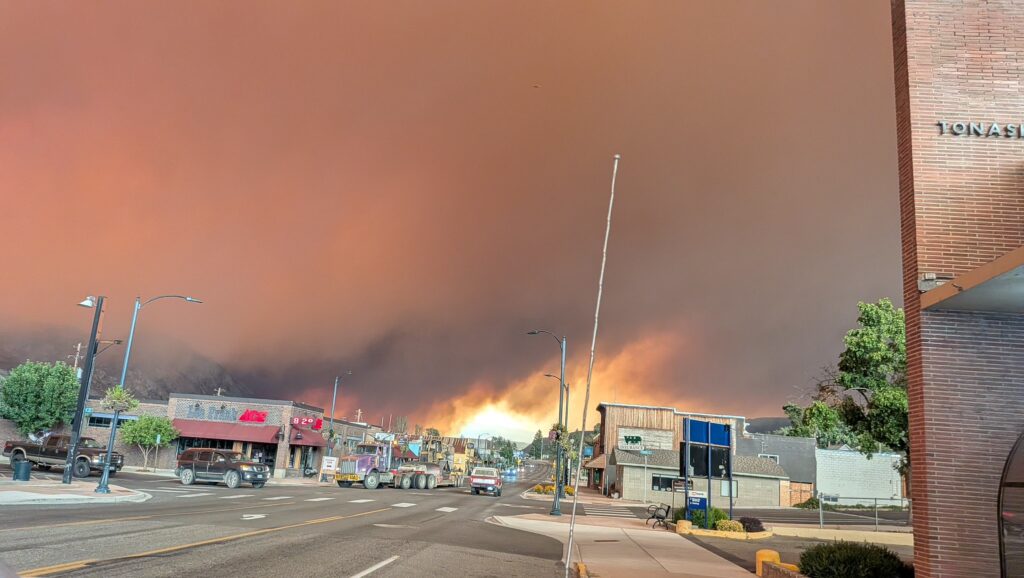
>>Night view of the Sinlahekin Fire in Washington state, July 2026 [Photo source: CAL FIRE on Flickr, CC By-NC 4.0]
On a more hopeful note, our understanding of fires is growing every day. Fire weather forecasting began to be formalized around 60 years ago, but research on the topic has rapidly proliferated within the past decade, including research on the effects of climate change on fire. Fire warnings based on satellite observations are currently being tried in grassland regions. Many researchers are also investigating compound heat and smoke events, refining fire-danger rating systems, and applying artificial intelligence (AI), machine learning, and other advanced technology to solving fire-related problems.
Fragmentation remains a major challenge in the field, said panelists. There are many different models of fire spread, for example, and while ensemble modeling has improved accuracy, relatively few forums exist for discussion about when and how to use different modeling tools, and how to improve them.
Smoke and fire forecasting and preparedness require coordinated efforts to understand not only weather conditions when a fire is happening, but preconditions like fuel amounts and type (for example, a lot of plant fuel builds up when you have a prolific growing season followed by drought), and the potential for thunderstorms in a given area. Small programs at agencies like the U.S. Forest Service are assisting with these efforts, but panelists said that more coordination is sorely needed. Once a fire gets going, challenges remain when it comes to understanding what exactly is burning in a given area at high resolution, and exactly how hot it’s burning, which in turn affects how buoyancy and the distance particulates will travel.
Federal Conversations
Federal assistance with fire science is a mixed picture, noted the panel. Some legislators and agencies have been working on initiatives for government-wide collaboration on this topic, although those efforts have largely stalled in a Congress where progress on most issues is slow. However, members on both sides of the aisle have introduced many bills regarding fire science. Legislators are also showing interest in AI for fire prediction, and in ensuring the pipeline supporting human talent, observations, and rigorous analysis.
However, there is deep concern among many members of Congress about the loss of staff and the hollowing-out of fundamental research across agencies. Advancement is slowing, and the STEM talent pipeline has been deeply affected, with major reductions in PhD admissions among both international and domestic incoming students at U.S. universities.
Wildfires and Public Safety
Despite the proliferation of fire weather research data in recent years, translation of forecasts and risk to public use still remains a challenge. Fire alert systems may have few signups, people may not seek out information about fire and smoke risks, and what they do find may be confusing. For example, a person exploring fire risk to their home will likely come across multiple different risk maps from public agencies, insurance companies, and others.
The elimination of NSF support for many social sciences also poses major problems: Fire risk is a very human issue, and social science is required to understand how humans can make better decisions in response to that risk. It also helps us understand how to get risk information to people in a diverse information landscape. Panelists discussed how the current moratorium on many social science terms (words such as “civil society” and “communities”) in federal grants stymies much of our progress in areas of human impact and research translation.
A particular rejection of language and research relating to marginalized people may endanger populations already at increased risk, including those at the wildland-urban interface. For example, panelists noted that Black and Brown people are significantly more affected by fire and smoke based on where they live (the more polluted, but less well-monitored, leeward sides of cities, for example), their work (more likely to be outdoors), etc. Rural U.S. populations also experience a great deal of risk, and smoke monitoring in such areas is limited. The federal government is no longer funding programs studying these issues and helping mitigate them.
Panelists highlighted the importance of bringing all parties to the table to mitigate fire and its impacts—from state governments to insurers and members of the public.
Insurance companies are paying particular attention to wildfire risks, especially destructive urban conflagrations, and need research data on how to mitigate losses and protect lives and property. People’s lives are directly impacted by insurance premiums, and companies are trying to design incentive programs that effectively encourage people to mitigate risk. Yet those conversations can be difficult given the combative relationship many people have with their insurance company. This issue is compounded by the fact that in more urban areas, there is only so much one can do to affect one’s fire risk when surrounded by other properties that may not be taking similar precautions.
Private sector groups are negotiating with regulators around limiting fire and smoke risks to properties and the people who occupy them. However, different states have different regulatory structures (California being the most maximalist) and different awareness of risk. Eastern states may be at particular risk for disaster, as they may have little risk-management infrastructure for wildfires, yet high potential fuel loads, especially with incidents like Hurricane Helene that left many dead trees.
Taking the Next Steps
Despite many recent gains, AWF/SCM panelists agreed that fire research faces key challenges when it comes to limited budgets, fragmented efforts, and turning science into improved human safety. Some of those challenges are best met by coordinated efforts—which is why, immediately following the AWF/SCM, the AMS Policy Program hosted a workshop in Washington, D.C., on wildfire smoke and health. With support from the National Science Foundation, the workshop brought together emergency managers, health professionals, broadcasters, fire weather researchers, and more to discuss opportunities for collaboration and shared pathways forward.
Participants heard updates from speakers across different areas of the enterprise, learning about efforts in fire mapping, communication, and more, particularly related to wildfire smoke. They also broke into working groups to determine action steps in key areas moving forward.
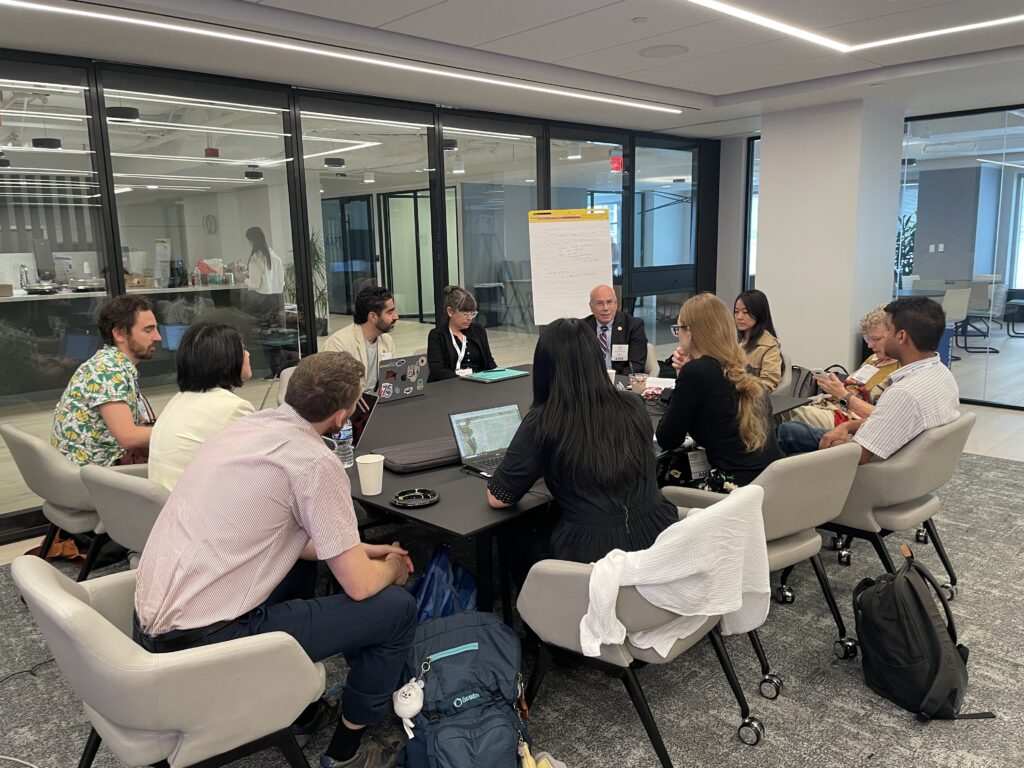
The groups discussed issues as varied as smoke forecasting in complex terrain, the sharing of smoke resources from experienced western U.S. fire managers to those further east, funding and interagency coordination, data access, novel ways to translate smoke information for the public, and the need for more platforms for the wider community to collaborate—not just among scientists and emergency managers, but also NGOs, medical professionals, the tech sector, and more.
During the last session of the two-day workshop, participants expressed excitement at the possibilities for new collaborations. “A lot of us didn’t know what anyone else in the room [had been] doing,” noted one person. With innovative work ongoing among government, social scientists, atmospheric science, NGOs, weather app makers, and more, “there are opportunities to get people together to find out what the needs are, and who can help fill those needs.”
About the AMS Washington Forum and Summer Community Meeting
The AMS Washington Forum and Summer Community Meeting center crucial discussions on issues of major impact across the weather, water, and climate enterprise. Bringing together leaders, professionals, and students from all sectors, the meetings offer frank discussion and foster important collaborations. They also offer attendees the opportunity to network with prominent figures in the public, private, and academic sectors; engage with Congress; and hear from leaders at federal agencies. Given the rapidly changing policy landscape, AMS held these 2026 meetings as a joint conference in Washington, D.C., and online. The theme of the meetings was “Capturing our Enterprise,” focusing on taking stock, addressing challenges, and sharpening a shared vision of the future across all weather, water, and climate fields. View the meeting program here.