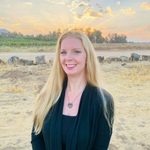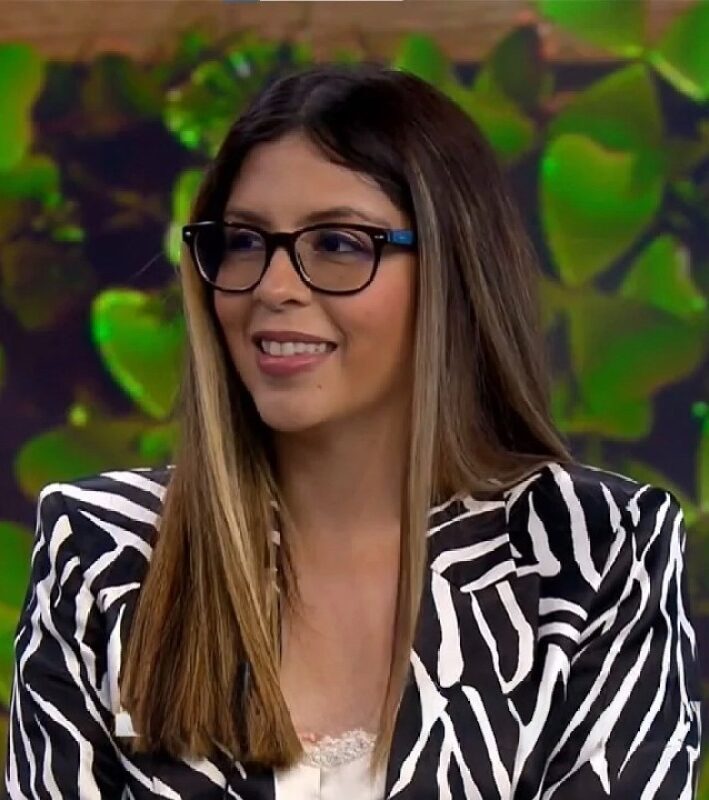
September is Hispanic & Latino/a Heritage Month. In this post, we spotlight the exceptional career of one of our community members: Marcela Loría-Salazar.
Marcela Loría-Salazar is an assistant professor in the School of Meteorology at the University of Oklahoma. Her research focuses on understanding atmospheric processes that affect air composition, including emissions from urban areas, wildfires, prescribed burns, agricultural activities, and dust. She integrates aerosol and trace gas measurements, satellite observations, weather data, numerical modeling, deep learning, and big data assimilation to improve air quality forecasting and exposure assessments. Loría-Salazar has extensive expertise in characterizing fundamental aerosol properties, including the physical, chemical, and optical characteristics of smoke and dust particles, and their impacts on air quality, weather, climate, and human health. She also has significant experience leading field campaigns and developing atmospheric instrumentation.
Loría-Salazar contributes to major research initiatives, including NASA’s PACE Mission Early Adopter Program, NOAA’s Pathfinders Initiative, the Cooperative Institute for Severe and High-Impact Weather Research and Operations (CIWRO), and the SPARTAN Global Network. She currently serves on the National Academies of Sciences, Engineering, and Medicine (NASEM) Committee on Prescribed Burning, where she provides expertise on the interactions among prescribed fire, air quality, ecosystem management, and public health. Her accomplishments include receiving the NASA Earth and Space Science Fellowship and research awards from both the University of Nevada, Reno, and the University of Oklahoma. Loría-Salazar earned her BS in meteorology from the Universidad de Costa Rica and her MS and PhD in atmospheric sciences from the University of Nevada, Reno.
What are a few highlights from your career?
Some of the highlights of my career have been developing an interdisciplinary research program focused on air quality, aerosols, and environmental health; contributing to national scientific assessments; mentoring undergraduate and graduate students; and building collaborations that connect atmospheric science with public health and community needs. Another highlight has been seeing my research contribute to a better understanding of how air pollution affects vulnerable populations and how science can inform decision-making.
Moving to different places throughout my career has also been an invaluable experience. Living and working in different regions has given me the opportunity to learn from diverse communities, perspectives, and cultures. These experiences have helped me approach scientific challenges from multiple angles and better understand how research can address local needs and positively impact communities.
What are you most proud of in your professional life?
I am most proud of the students I have mentored and the impact they are beginning to have in science and society. Publications, grants, and awards are important, but nothing compares to seeing students develop into confident scientists, professionals, and future leaders.
I am also proud to have contributed to research that addresses real-world challenges related to air quality, environmental justice, and public health. In addition, serving on a National Academies of Sciences, Engineering, and Medicine (NASEM) committee focused on improving our understanding of prescribed fire, wildfire smoke, and their impacts was a significant professional milestone. The committee’s work seeks to strengthen the scientific foundation for better understanding fire and smoke behavior, improve forecasting and modeling capabilities, and support land management decisions that balance ecosystem resilience, public health, and air quality. It was an opportunity to help ensure that scientific evidence informs decision-making, policy, and future research priorities.
Equally important, I am proud to have helped bridge the gap between science and society by communicating atmospheric science to the public. I believe scientists have a responsibility not only to advance knowledge but also to ensure that communities understand the value of clean air, the health impacts of air pollution, and the actions individuals, communities, and policymakers can take to protect this fundamental right for future generations.
Have things changed for Hispanic & Latino/a meteorologists or scientists over the years? What still needs to change?
There has been meaningful progress in the visibility and representation of Hispanic and Latino/a scientists in meteorology and atmospheric science. However, there is still work to do, particularly in increasing representation in leadership positions and expanding mentorship opportunities.
I also believe we need to connect with Hispanic and Latino communities at earlier ages. Many children never have the opportunity to meet a scientist or see someone who shares their background working in science. By engaging students early, we can help them realize that a career in science is possible and that they belong in this field.
My hope is that future generations will not only see themselves represented in atmospheric science but also feel empowered to become leaders, mentors, and advocates for their communities.
Are there other Hispanic & Latino/a meteorologists/atmospheric scientists who have particularly influenced or inspired you?
Unfortunately, I did not have the opportunity to meet many Hispanic and Latino/a meteorologists or atmospheric scientists before building my career in the United States. Growing up in Costa Rica, I had a father who was one of my greatest inspirations and played an important role in nurturing my interest in science.
From a young age, I was also inspired by Franklin Chang Díaz. Seeing someone from a similar cultural background achieve so much in science and space exploration helped me believe that a career in STEM was possible.
Today, I am inspired by the growing community of Hispanic and Latino scientists who continue to open doors for future generations through their research, leadership, mentorship, and service. Their work reminds me of the importance of representation and of creating opportunities for those who will come after us.