2027 Edward N. Lorenz Teaching Excellence Award Winner
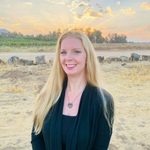
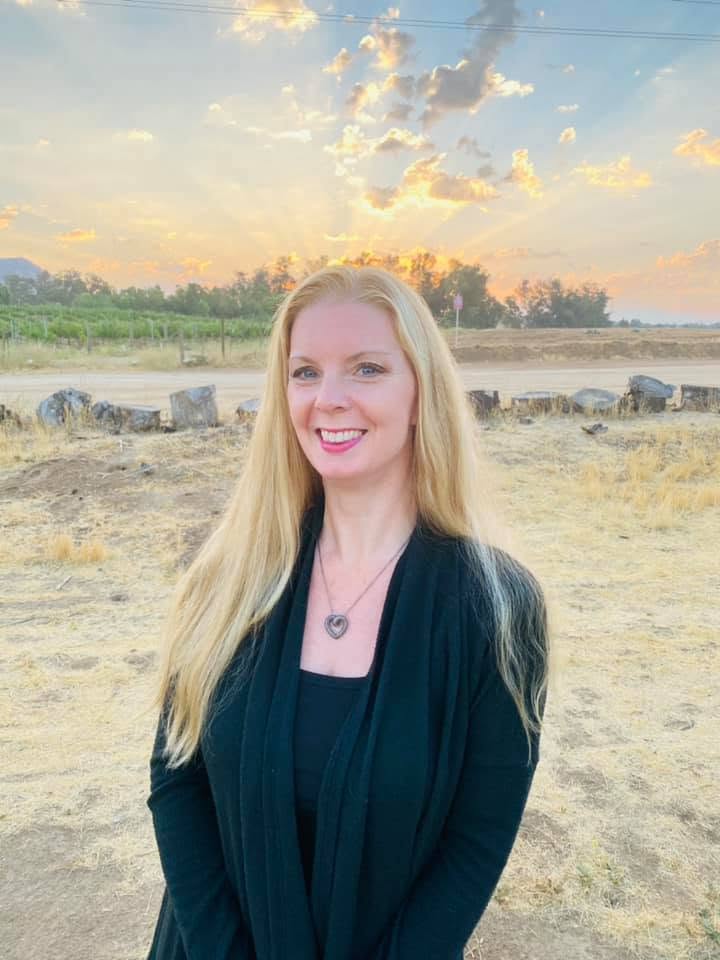
For Jennifer D. Small Griswold, teaching atmospheric science has always been about more than conveying scientific knowledge. It is about helping students discover their curiosity, recognize their potential, and find their path into the field. That philosophy is at the heart of her work and a central reason she has been selected to receive the 2027 Edward N. Lorenz Teaching Excellence Award.
“Teaching and mentoring have always been central to how I see myself as an atmospheric scientist,” Small Griswold says. “Some of the most rewarding moments of my career have come from helping students discover atmospheric science, gain confidence in their abilities, and find their own paths in the field.”
A professor and chair in the Department of Atmospheric Sciences at the University of Hawaiʻi at Mānoa, Small Griswold’s career has spanned atmospheric research, education, mentoring, outreach, and academic leadership. She earned bachelor’s degrees in meteorology and environmental science from Rutgers University before completing a PhD in Earth and Planetary Sciences at the University of California, Santa Cruz, where she studied clouds and cloud microphysics. She then spent three years as a postdoctoral researcher at NASA’s Jet Propulsion Laboratory before joining UH Mānoa in 2012.
Her own path into atmospheric science began with a childhood fascination with weather. Growing up in New York on Staten Island overlooking Raritan Bay, she watched summer thunderstorms move across the water and wondered how people could anticipate what was coming. At about 13, she took a Weather for Boating course as part of her high school sailing experience and was hooked.
“I remember being about 13 years old and explaining the adiabatic lapse rate to a group of adult sailors and thinking, ‘This is what I want to do,’” she recalls.
Looking back, Small Griswold realizes she discovered something else that day, too: a love of teaching.
“I thought I had discovered my passion for meteorology, but I had also discovered my passion for teaching meteorology.”
Connecting Science to Place
At UH Mānoa, Small Griswold has explored how atmospheric science can be taught in ways that connect with students’ lived experiences and the communities around them.
One example is Pacific Climates and Cultures, a course she developed that examines weather and climate through atmospheric science alongside history, culture, Indigenous knowledge, poetry, music, oral histories, and contemporary events.
She is also working to broaden climate education through the development of an interdisciplinary Climate Science and Society undergraduate certificate, reflecting her belief that climate change requires perspectives from fields including health, economics, policy, and planning.
Some of the most meaningful measures of her teaching, she says, cannot be found on a résumé. They are the former students who go on to become scientists and professionals, or who reach out years later to share a weather photograph or an observation sparked by something they learned in her classroom.
“Those connections mean a great deal to me.”
Mentors Who Made a Difference
Small Griswold’s approach to teaching and mentoring is rooted in her own experiences as a student.
As a first-generation college student at Rutgers, she credits Barbara Goff with encouraging her to pursue graduate school and helping her navigate an unfamiliar academic world.
“Sometimes a mentor’s most important role is simply helping someone see a path they didn’t know was available to them,” she says.
During graduate school, scientists Sonia Lasher-Trapp and Susan van den Heever provided important examples of women succeeding in cloud physics. Her PhD advisor, Patrick Chuang, also had a profound influence on the scientist and mentor she would become, encouraging her interests in science education and pedagogy and giving her opportunities to teach.
“What I appreciated most about Patrick’s mentorship was that he saw his students as whole people, not simply as people who were there to produce research papers,” she says.
That philosophy now informs how she mentors her own MS and PhD students and postdocs: understanding what they are passionate about and helping them become the scientists—and people—they want to be.
Building Pathways into Science
Her commitment to mentorship extends beyond university students. During graduate school, Small Griswold became involved with Expanding Your Horizons, a program encouraging young women to pursue STEM careers. After receiving an NSF CAREER Award, she brought the program to Hawaiʻi and founded Expanding Your Horizons–Hawaiʻi, introducing middle-school girls, including Native Hawaiian and Pacific Islander students, to women scientists and STEM opportunities.
She later became part of the first team at UH Mānoa to receive an NSF ADVANCE grant focused on gender equity. Through the Advancing Kaulike project, the team examined the experiences of STEM faculty and explored ways to create a more equitable and supportive environment for scientists.
For Small Griswold, encouraging women to enter science is only the beginning.
“We also need to create environments where they are supported, mentored, given opportunities to succeed, and ultimately able to become the scientists and leaders they want to be.”
Preparing the Next Generation
Today, curiosity continues to drive Small Griswold as both a scientist and educator. Her research remains focused on clouds and the complex interactions among clouds, aerosols, precipitation, and climate. As an educator, she is increasingly interested in preparing students to address environmental challenges that cross disciplinary boundaries.
She sees artificial intelligence as both an opportunity and a challenge for atmospheric science education. Rather than simply prohibiting students from using AI, she believes educators need to teach students how to use it responsibly while preserving the learning that comes from solving problems, interpreting data, writing code, and developing their own understanding.
“Ultimately, we need to prepare students not just to use these new tools, but to have enough scientific understanding to know when the tools are right, when they’re wrong, and what questions they should be asking in the first place.”
Her advice to students and early-career professionals is equally focused on curiosity: stay curious, embrace a path that may not be perfectly linear, develop strong scientific and technical skills, and learn to communicate, collaborate, and listen.
“You don’t have to be the person in the room who already knows everything,” she says. “Science advances because someone is willing to say, ‘I don’t understand this yet, let’s figure it out.’”
For Small Griswold, the Edward N. Lorenz Teaching Excellence Award is ultimately a recognition of something larger than her individual accomplishments.
“Publications, grants, and scientific discoveries are important measures of our contributions, but our impact also includes the students we teach and mentor and the environments we create for the next generation of scientists.”
She is especially grateful when former students return to tell her that something they learned changed the way they see the atmosphere or the world.
“To me, that is one of the most powerful things education can do: cultivate a sense of inquiry that stays with someone long after the course is over.”