Cheryl Nelson on Life, Career, and Resilience
In meteorology, a wind shift tells you something has changed. The wind has changed direction, and that shift can reveal a lot about what may be coming next.
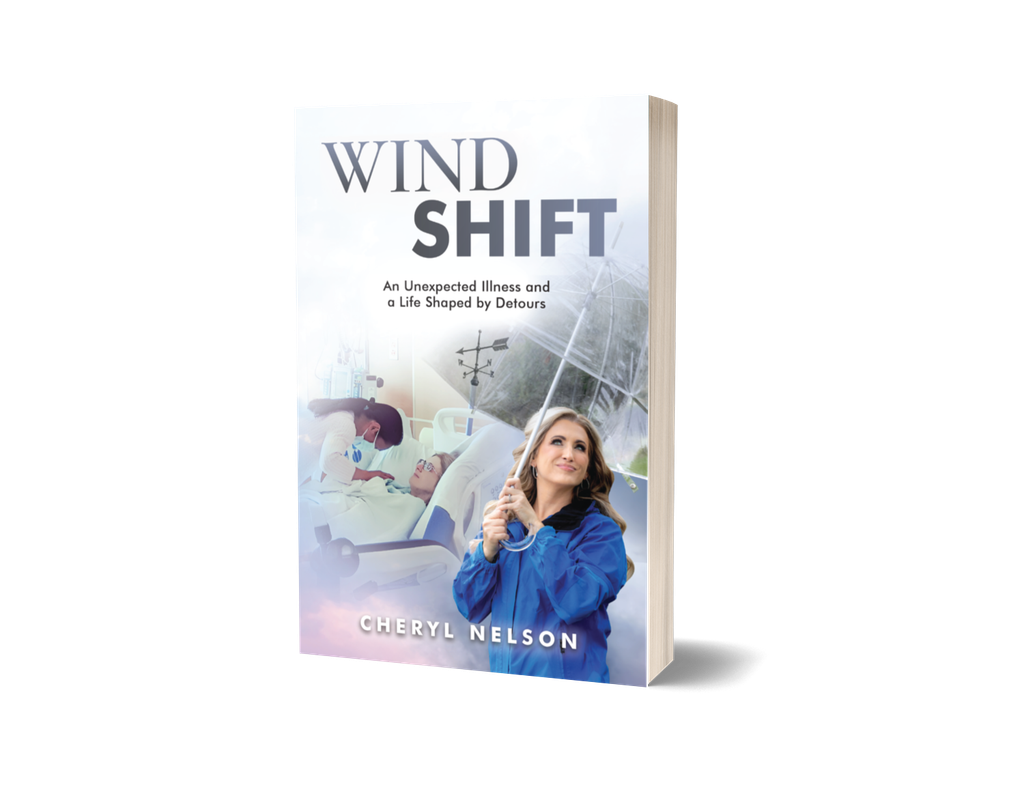
For Cheryl Nelson, the phrase has taken on a deeper meaning. Her new book, Wind Shift: An Unexpected Illness and a Life Shaped by Detours, reflects on the unexpected turns that have shaped her professional and personal life, including a serious illness that forced her to confront uncertainty from the other side of the forecast.
“Life has its own wind shifts,” Nelson says. “Sometimes you see them coming and have time to prepare. Other times, they happen so quickly you barely have time to catch your breath.”
Nelson has spent nearly 25 years working, many of those years in broadcast meteorology. Her fascination with weather began as a child. She and her cousin Jenny would record weather broadcasts on cassette tapes during summer visits, and Nelson even kept a thermometer outside her bedroom window.
“I knew that if the sun was shining directly on it, the temperature could read higher than it really was,” she says. “Apparently, I was already worrying about forecast accuracy at a pretty young age.”
But it was snow that really captured her imagination. After moving from Connecticut to Richmond, Virginia, at age 9, Nelson lived along the I-95 rain/snow line.
“The excitement about possibly getting snow made me want to understand the science behind it,” she says. “Plus, nothing is more magical than a fresh blanket of sparkling snow.”
That childhood fascination became a career, but what kept Nelson passionate was the opportunity to connect science with people.
“Weather isn’t just about the science. It’s about communicating information that can affect someone’s home, their family, their travel plans or even their safety,” she says. “I loved being able to take something complicated and make it understandable and useful.”
Finding Opportunity in the Detours
Nelson’s career did not always follow the path she envisioned. Those detours taught her that an unexpected change does not necessarily mean she is headed in the wrong direction.
“You can work hard, have a plan (and I am a planner!) and still end up somewhere completely different,” she says. “That doesn’t mean you failed. Sometimes you just have to be willing to see what the detour has to offer.”
That lesson took on new significance during a life-threatening illness she battled in 2022. Nelson notes that meteorologists are accustomed to working with incomplete information, communicating uncertainty, and adjusting forecasts as new information arrives.
“During my illness, I had to do that in a completely different way,” she says. “There were so many unknowns, and my condition kept changing. I had to learn to take things one day, and sometimes one hour, at a time.”
The experience also created a striking reversal of roles.
“In my career, I was usually the person explaining the uncertainty. In the hospital, I was the person waiting for the answers.”
After years of telling people what weather was coming and how they could prepare, Nelson found herself hospitalized with no idea what the next day would bring—or whether she would survive.
“It really changed my understanding of preparedness,” she says. “I still believe in preparing for what you can. But I’ve learned that preparedness isn’t about controlling the outcome. Sometimes it’s about being mentally and emotionally prepared to adapt when the plan completely changes.”
Being on the receiving end of frightening and uncertain information also changed the way Nelson thinks about communication.
“People don’t necessarily need you to make everything sound okay. They need you to be honest, clear, and human. Some empathy certainly helps too,” she says. “That all stayed with me, and I think it made me a better communicator.”
Adapting to a Changing Profession and Life
Nelson sees adaptability as essential not only in navigating personal challenges, but also in a meteorological profession that continues to evolve.
“I’ve learned that you can spend a lot of energy fighting the fact that something has changed, or you can start figuring out what to do next,” she says. Her approach is to ask: “What can I control? What do I still have? And where can I go from here?”
Meteorology and local television news are changing alongside technology, platforms, audiences, and expectations. For Nelson, adapting does not mean abandoning who you are.
“I think the people who are willing to adapt while still staying true to themselves are the ones who do best,” she says. “And those who may not be willing to adapt, can also pivot. There is nothing wrong with changing directions or going down a new path.”
Throughout those changes, professional relationships have remained an important source of support.
“Meteorology is a relatively small community, and I’ve been fortunate to build relationships with people who have been there through very different chapters of my career,” Nelson says.
Among those relationships are her Penn State academic advisor, Jon Merritt, and John Bernier, the chief meteorologist with whom she interned in Richmond.
“Their support has meant, and still means, so much.”
Her illness also transformed the way she thinks about work–life balance. Before becoming sick, Nelson says, she was accustomed to pushing through stress, always moving on to the next deadline or opportunity.
Then she spent eight weeks in the hospital, dropped to 87 pounds and was sidelined for months.
“That changes your perspective very quickly,” she says. “I still love working. I’m still ambitious. But I understand now that work is part of my life, not my entire life. Work should never be 100% of your life. Life is too short for that. Be happy. Say yes to truly living.”
A New Definition of Success
Nelson’s definition of success has changed, too.
“Before my illness, success was much more tied to achievement for me—what I was accomplishing, where I was working, and what I was building,” she says. “After my illness, it became much more about being present for my life.”
While recovering in the hospital, Nelson began planning an around-the-world trip. If she survived, she wanted to see the world.
“It also made me realize there is a difference between building a life and actually living it,” she says. “I still have goals. I still want to accomplish things. But now I want my entire life to be full, not just my résumé.”
That realization helped Nelson see herself beyond her professional identity.
“We spend so much of our lives being the meteorologist, the communicator, the expert. For me, that identity became a huge part of who I was,” she says.
When she could no longer work, she had to figure out who she was outside of those roles.
“I’m an imperfect human being. A wife, cat mom, daughter, sister, aunt, relative, friend, colleague, volunteer, and traveler,” she says. “And at the end of the day, I’m just Cheryl, trying to figure it all out, just like everyone else.”
Nelson hopes that message resonates with readers, particularly those experiencing their own career or life detours.
“It’s okay to lose your direction for a while. You can find your way again—and sometimes you come out of it knowing yourself better than you did before,” she says.
She also encourages students and early-career meteorologists not to feel pressured to have everything figured out.
“I wish someone had told me that I didn’t have to have everything all figured out at 22 years old,” Nelson says.
Her advice is straightforward: “Learn the science. Become a good communicator. Work hard. But also be willing to try things that weren’t part of your original plan. Don’t just focus on the end goal, really enjoy the journey.”
And don’t compare your timeline to someone else’s, she adds. “Your path may look completely different, and that’s okay.”
Ultimately, Nelson hopes Wind Shift reminds her meteorological colleagues that they are more than their jobs and that the unexpected does not always have to be feared.
“Sometimes it changes your life in ways you never could have imagined.”
Her advice to the AMS community draws directly from the language of forecasting.
“Prepare for what you can, but don’t waste your life trying to control what you can’t.”
Meteorologists understand that a forecast is never a guarantee. They make the best prediction they can with the information available and adjust as conditions change.
“Life isn’t much different,” Nelson says.
“You can have a plan. You should have a plan. But when the wind shifts, don’t spend so much time wishing it hadn’t that you miss where it’s taking you.”
“I’m grateful to still be here to share my story with you.”
Wind Shift: An Unexpected Illness and a Life Shaped by Detours will be available on October 13. Sign up to be among the first to read it at https://www.preparewithcher.com/wind-shift.