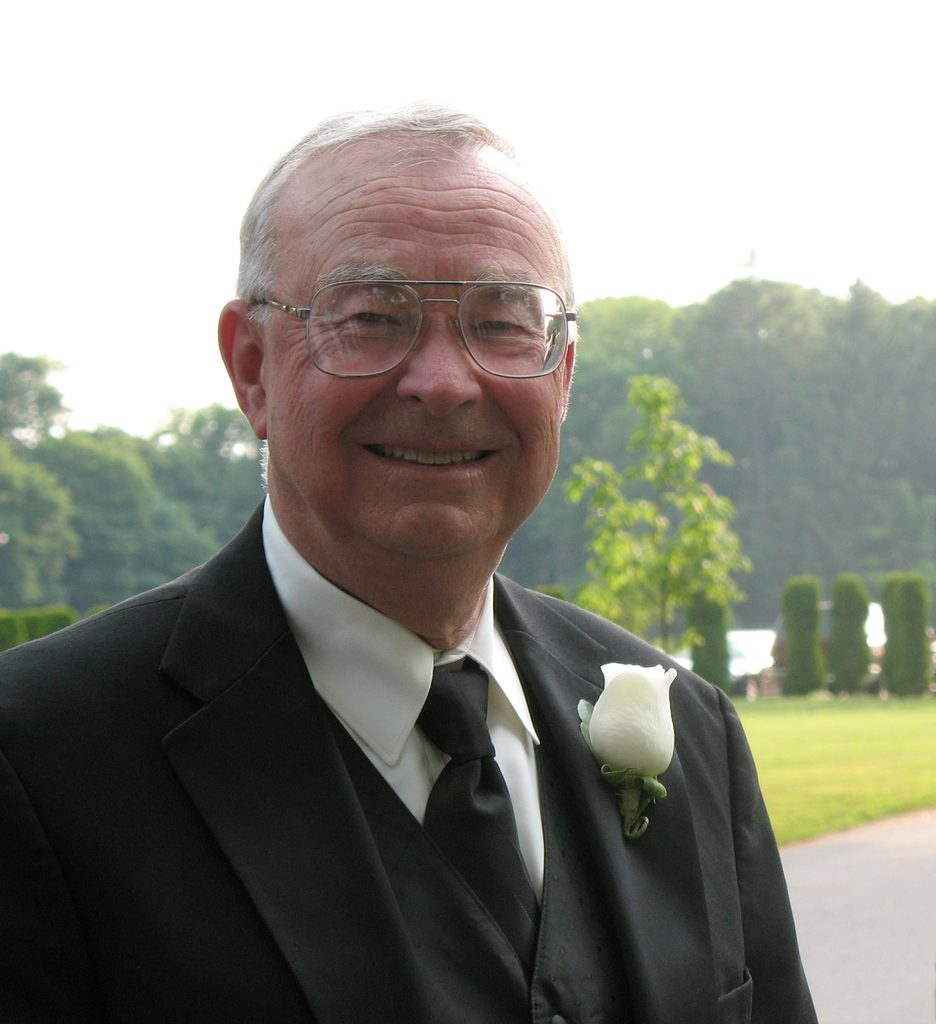
Donald Earl Aylor, a pioneering biometeorologist whose research helped advance understanding of how weather and atmospheric conditions influence the spread of plant diseases, died after a long and distinguished career in science. He was a longtime member and Fellow of AMS and a recipient of the AMS Outstanding Achievement in Biometeorology Award.
Born December 22, 1940, to Raymond Gordon and Hazel Caroline Aylor in Hunt, New York, Aylor grew up in a close-knit family in a small farming community in rural western New York. The fourth of five children, he developed a natural curiosity at an early age, a trait that occasionally prompted the familiar warning that “curiosity killed the cat.”
His academic interests gravitated toward science and mathematics during secondary school. Summers spent working on local dairy farms, where he milked cows, cultivated corn, and baled hay, also giving him a lifelong appreciation for farmers, agriculture, and the land.
Aylor attended the newly established State University of New York at Oyster Bay, which later became SUNY Stony Brook. There, he met Ruthann Brody, whom he would marry on June 7, 1964, the same day they graduated. After earning his B.S. degree in engineering, Aylor received a four-year National Science Foundation Traineeship and began graduate study in space science engineering at SUNY Stony Brook.
From Engineering to Biometeorology
A chance laboratory experiment redirected the course of Aylor’s career. During a weekend experiment involving a vacuum chamber, he placed a leaf from a jade plant—a gift from Ruthann—inside the chamber. Expecting the leaf to burst under the conditions, he was surprised when nothing happened.
His curiosity led him to the Connecticut Agricultural Experiment Station (CAES) in New Haven, where scientists were studying the plant structures known as stomata, which regulate the exchange of gases and water between plants and the atmosphere. The visit ultimately led Aylor and Ruthann to move to Connecticut, where he accepted a position at CAES. He would spend more than 37 years there pursuing the scientific questions that had captured his interest.
Aylor’s early research at CAES included studies of outdoor sound attenuation by vegetation and Southern corn leaf blight. He helped develop a groundbreaking computer model of the disease, establishing a method for predicting its spread based on regional weather conditions.
His research later expanded to other important plant diseases, including apple scab, tobacco blue mold, and potato late blight. He also conducted extensive studies of corn pollen dispersal and collaborated with scientists across the Station on a wide range of problems at the intersection of plants, weather, and the environment.
A Career of Leadership and Recognition
In addition to his research, Aylor served in leadership roles at CAES. He was department head of Ecology and Climatology from 1972 to 1980 and department head of Plant Pathology and Ecology from 1980 to 2007.
His scientific accomplishments earned broad recognition. He received a prestigious Guggenheim Fellowship in 1980, which took him and his family to England for six months. He was named a Distinguished Alumnus of SUNY Stony Brook and received the American Meteorological Society’s Outstanding Achievement in Biometeorology Award.
Aylor was elected to the Connecticut Academy of Science and Engineering and was named a Fellow of the American Association for the Advancement of Science, the AMS, and the American Phytopathological Society.
In 2007, Connecticut Governor Jodi Rell proclaimed April 1 as Donald E. Aylor Day in the state. The family, with a sense of humor befitting Aylor’s curiosity and personality, never minded that the honor fell on April Fool’s Day.
After retiring from CAES in 2007, Aylor continued his scientific work, contributing to research projects and completing his book, Aerial Dispersion of Pollen and Spores, published in 2017. The book reflected the breadth of his career and his longstanding interest in understanding how atmospheric processes transport biological material through the environment.
Family, Curiosity, and a Life Well Lived
For all of Aylor’s professional accomplishments, his greatest pride was his family. He and Ruthann welcomed their son, Adam, in 1969 and their daughter, Rachel, in 1972. When Rachel was old enough to be “back-packable,” the family resumed the hikes through woods and parks that Don and Ruthann loved.
Beyond science, Aylor enjoyed soccer, hiking, fly fishing, marksmanship, motorcycle riding, camping, and driving his sports car at racetracks throughout the Northeast. He and Ruthann traveled extensively, visiting Europe, New Zealand, South America, and destinations throughout the United States and Canada. They shared a love of learning about different cultures, particularly through their cuisines.
Aylor’s life brought together scientific curiosity, a deep respect for agriculture and the natural world, and a commitment to family. Although he dedicated more than four decades to research and made lasting contributions to biometeorology and plant disease science, he considered his most important accomplishments to be marrying Ruthann and raising their two children, Adam and Rachel.
His curiosity may have first been a childhood trait, but it became the defining quality of a remarkable scientific career—one that connected weather, plants, agriculture, and human understanding in ways that continue to resonate.