“Lastly, I would address one general admonition to all—that they consider what are the true ends of knowledge, and that they seek it not either for pleasure of the mind, or for contention, or for superiority to others, or for profit, or fame, or power, or any of these inferior things, but for the benefit and use of life, and that they perfect and govern it in charity. For it was from lust of power that the angels fell, from lust of knowledge that man fell; but of charity there can be no excess, neither did angel or man ever come in danger by it.”—Francis Bacon
In 2010, when I was leaving church service one day, a friend said to me, “Bill Hooke, you should start a blog.”
!!!
I went online—to discover that in a world population of some 8 billion people, there were a mere 200 million blogs. That’s one out of every 40 people. Clearly a crowded literature form! Hardly necessary to save it from extinction.1
But later that same week, it came to me that blogging might help me with an abiding problem. For a number of years, I’d been wanting to write a book, but procrastinating.2 With the possibility of a blog in mind, I made myself a PowerPoint outline of the material I wanted to cover and found it could be organized into about 7 or 8 big headings and a total of 70-80 bullets. I thought to myself: if I blogged on the bits and pieces of the book, at about 800 words per post, then one day, after perhaps 70-80 posts, I’d have the book. If I did a post or two a week (I know, ambitious!) it would take me something like a year or two.
Four years and some 700 posts later (obviously a flawed prediction, exacerbated by poor planning and execution), I was done: The 2014 book Living on the Real World (LOTRW) was the result.
Why the title? Well, our parents and others have admonished all of us from birth to live in the real world—that is, to see things as they truly are, and to act accordingly. We shouldn’t wallow in delusion or, for that matter, extremes of either optimism or pessimism. Reality-based thinking is the sweet spot. And for my purposes, a very important reality is that we live on the very thin layer at the earth-ocean-atmosphere interface—not in Earth’s interior. Moreover, we’re not going to resettle on other planets in numbers large enough to matter any time soon. An early post on the blog was entitled “We’re earthlings, until death do us part.”
I didn’t want to confine the blog to variations on the theme of “this is the way the world works.” I wanted, and still want, to explore why those realities matter. It would be necessary to connect these to the human condition. And here my guide has been this observation of Francis Bacon that I’d come across years ago.
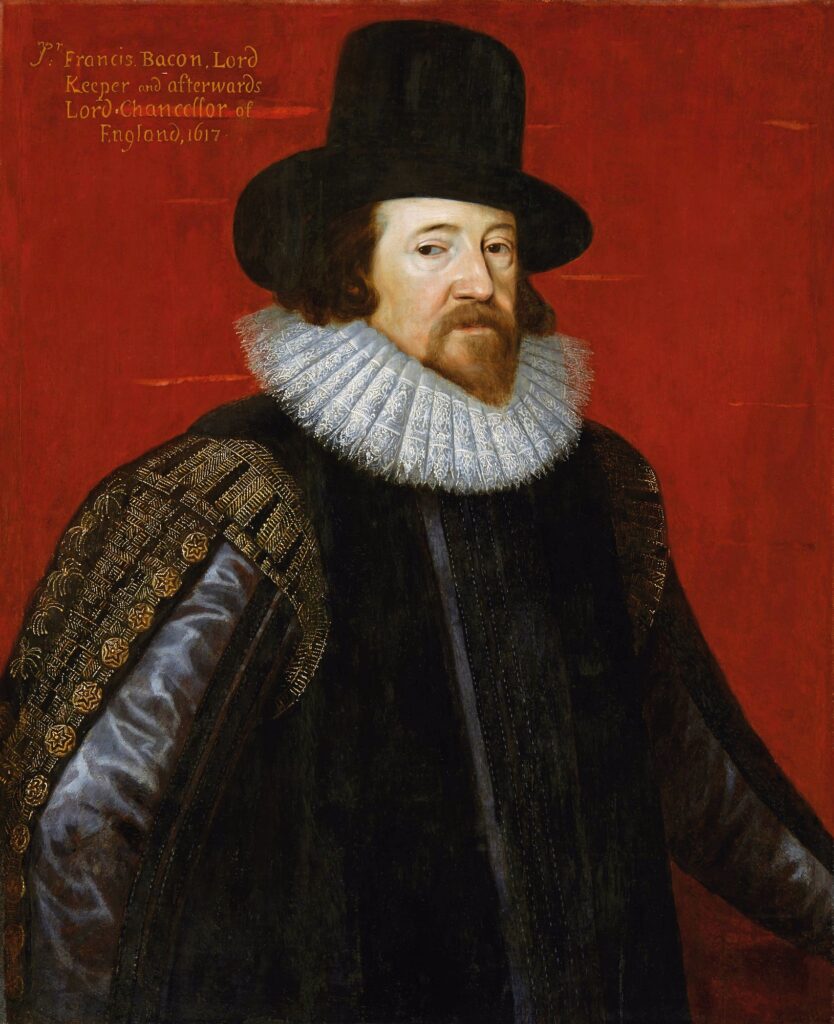
An aside: Bacon might be considered an obscure historic figure. You might barely have heard his mention. But reflect on this: he played a key role in elevating science from mere introspection and theorizing to empiricism basing science on inductive reasoning and observation. He was one of the greatest political figures in English history. Queen Elizabeth I wasn’t initially impressed. But over time he became one of her closest advisors. And under King James, he became attorney general and, ultimately, Lord Chancellor, a position between the prime minister of Parliament and the king.3 (More than a century later, Benjamin Franklin would come close to a similar place in American science and politics; but such successful juxtaposition is rare.)
Bacon said that science should be pursued for the benefit of life. Note that he didn’t say human life; he said life. Prescient in light of our current understanding of our connections to ecosystems.
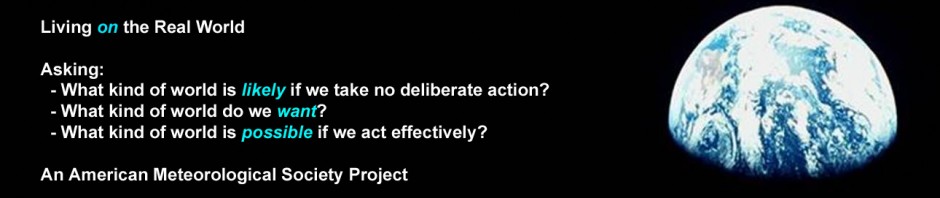
Keeping that in mind, three questions interested me, and I put these on the blog’s masthead. First: What kind of world is likely if we take no action (what are the trends in Earth’s livability); that is, if we continue business-as-usual? Second: what kind of world do we want? To the extent that the answers to those questions coincide, we can kick back and relax. No action is required. But the visible declines we see versus the desires we hold—for sustainable access to natural resources; for resilience in the face of natural hazards; and for a high-quality environment—look worrisome. Hence the third question: what kind of world is possible if we act effectively? We know we can’t get everything we want, but what constitutes doing the best we can?4
These are big questions. They address so-called wicked problems and defy pat answers. Accordingly, the LOTRW approach, and the posts (now numbering over 1,100) have addressed bits and pieces of the larger issues as they’ve become salient and timely—keeping the big picture in mind but doing little more than holding it at bay.
Enough for the moment. The next couple of posts will address more timely topics. But in a future post, I will return to more material on what’s involved in living on the real world. In particular, I’ll review several (overlapping) types of reality: physical/natural realities, social realities, virtual realities, and (sotto voce) spiritual realities. Note (keeping in mind that charity was the Elizabethan word for selfless love) that Bacon’s quote makes reference to this lattermost point…
- Ask search engines today to estimate the number of blogs, and the counts are as high as 600 million. They comprise roughly one-third of all websites. (If I don’t probe too deeply, I can pat myself on the back and say I did my bit to take blogs off the endangered species list.) Of course, the vast majority of these are inactive, or nearly so. The unkind might call them zombie blogs. It’s tougher to run an active blog than it looks. Just saying. ↩︎
- In this (rapidly fading) season of New Year’s resolutions, perhaps you have a procrastination problem. I recommend you watch Tim Urban’s Ted Lecture, “Inside the Mind of a Master Procrastinator.” More procrastination! But you’ll laugh your head off for fifteen minutes, and it just might change your life. It’s changed mine. I watch it a few times a year. ↩︎
- Bacon, like the rest of us, was only human. He was eventually disgraced, accused of corruption. Shades of grey, there, of course—you can read up on all this and reach your own verdict. ↩︎
- Alert readers might notice in these three questions a hint of Lincoln’s observation in his famous 1858 house-divided speech, which begins with these words: If we could first know where we are, and whither we are tending, we could then better judge what to do, and how to do it. ↩︎