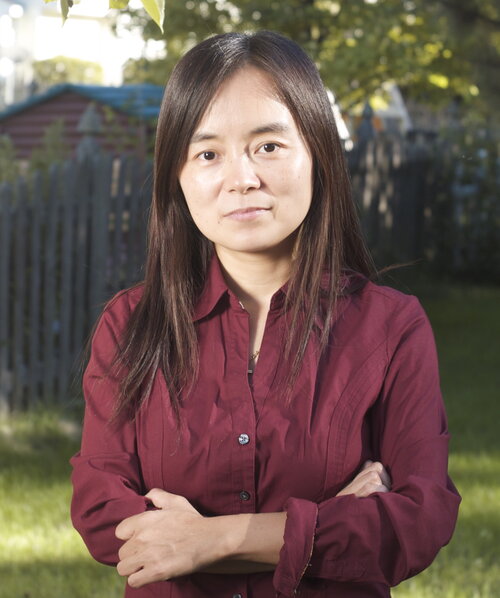
March is Women’s History Month. In this post, we spotlight the exceptional career of one of our female community members: Zhuo Wang.
Zhuo Wang is a professor in the Department of Climate, Meteorology & Atmospheric Sciences (CliMAS) at the University of Illinois at Urbana-Champaign. She is an AMS Fellow and currently serves as the chief editor for the Journal of the Atmospheric Sciences and cochair of the WMO Working Group on Tropical Meteorology Research (TMR). Her research primarily focuses on tropical cyclones, Arctic storms, climate dynamics, and the subseasonal-to-decadal prediction and predictability of extreme weather and climate.
What are a few highlights from your career?
One of the highlights of my career was my PhD qualification exam. During the exam, a professor asked about a seminal paper related to my research that I had never read, and I nearly failed. That experience taught me the importance of reading more broadly. Another important decision was switching to tropical cyclone research during my postdoctoral program. My PhD research focused on atmospheric teleconnections and climate variability. The opportunity to study tropical cyclones substantially expanded my research horizons and allowed me to explore new research topics in both weather and climate dynamics.
What are you most proud of in your professional life?
I am most proud of my students and their professional growth and academic accomplishments. Their success makes my work especially meaningful. As one of my colleagues once said, the focus of our work is not to produce excellent research, but to cultivate excellent researchers—excellent research naturally follows from that process.
Have things changed for female meteorologists or scientists over the years? What still needs to change?
The development of AI and machine learning has created both opportunities and challenges. I encourage young female scientists and students to embrace these tools with passion and confidence. Meanwhile, it remains important to build broad knowledge in Earth sciences and a deep understanding of fundamental dynamics and physics.
Are there other female meteorologists/atmospheric scientists who have particularly influenced or inspired you?
I admire Joanne Simpson. Although I never met her, I deeply respect her contributions to tropical meteorology and her spirit to defy the odds and the gender barriers of her time. I am also inspired by Melinda Peng, who led the Atmospheric Dynamics and Prediction Branch at the Naval Research Laboratory before her retirement. Her meticulous research, strong leadership, and willingness to support and promote junior scientists greatly influenced me.