By Mona Behl (Virginia Sea Grant, Virginia Institute of Marine Science, College of William and Mary), Kandis Boyd (American Military University), Rachel Hauser [Retired (Industry)], Bernadette Woods Placky (Climate Central), and Kristen Averyt (American Geophysical Union)
Scientific and professional societies are at a critical inflection point. Confronted by converging challenges that transcend traditional concerns, these organizations now face existential threats to their sustainability, ability to innovate, and role within the global scientific ecosystem. These pressures emerge from intersecting challenges such as technological disruption (e.g., open access publishing, AI-driven automation, and data security risks), societal inequities (e.g., representation gaps and accessibility barriers), economic instability (including declining membership and financial volatility), and geopolitical tensions (spanning ethics, misinformation and disinformation, and barriers to international collaboration). Yet within these challenges lies a powerful opportunity for transformation. Boards of these societies are uniquely positioned to reimagine their organizations’ futures. Through strategic governance and inclusive leadership, boards can catalyze meaningful change that resonates across their disciplines. This moment calls for more than incremental adjustments—it demands a fundamental shift in how organizations operate and serve their communities. As stewards of scientific advancement, nonprofit boards can lead this evolution by replacing outdated gatekeeping practices with dynamic, gateway-building approaches. Such transformation creates environments where innovation thrives, communities strengthen, and scientific progress actively serves societal needs.
From Gatekeeping to Gateway-Building
Gatekeeping is the process of evaluating and selecting information, ideas, and individuals deemed credible for support and recognition within a specific field. In science, gatekeeping takes the form of evaluating research manuscripts for publication in journals (peer review), selecting research proposals for financial support (grant funding), determining eligibility for professional society membership or leadership, and recognizing and promoting outstanding contributions to the field (awards and honors), among other things. While these processes are essential for maintaining scientific rigor, they can inadvertently create barriers that limit diversity of thought and participation. Regenerative gatekeeping offers a fresh perspective: instead of evaluating and selecting, it focuses on nurturing talent, building bridges, and creating pathways for broader participation in science (Lewis et al. 2022). The Council of the American Meteorological Society (AMS) is one such regenerative gatekeeper. It is the principal governing body responsible for overseeing the Society’s legal, business, and organizational decisions. This includes setting AMS’s strategic direction, overseeing its finances, ensuring ethical and legal compliance, hiring and supervising the executive director, advancing AMS’s mission, serving as ambassadors, promoting professional development, and upholding the highest standards of governance and accountability.
The Council consists of elected officers, the last two past-presidents, and fifteen other voting members who serve a three-year term, with one-third retiring each year. Each year, five new members are elected. Council members deliberate and weigh-in on decisions consequential not only for the future of the Society, but for the professional discipline and the Society’s membership.
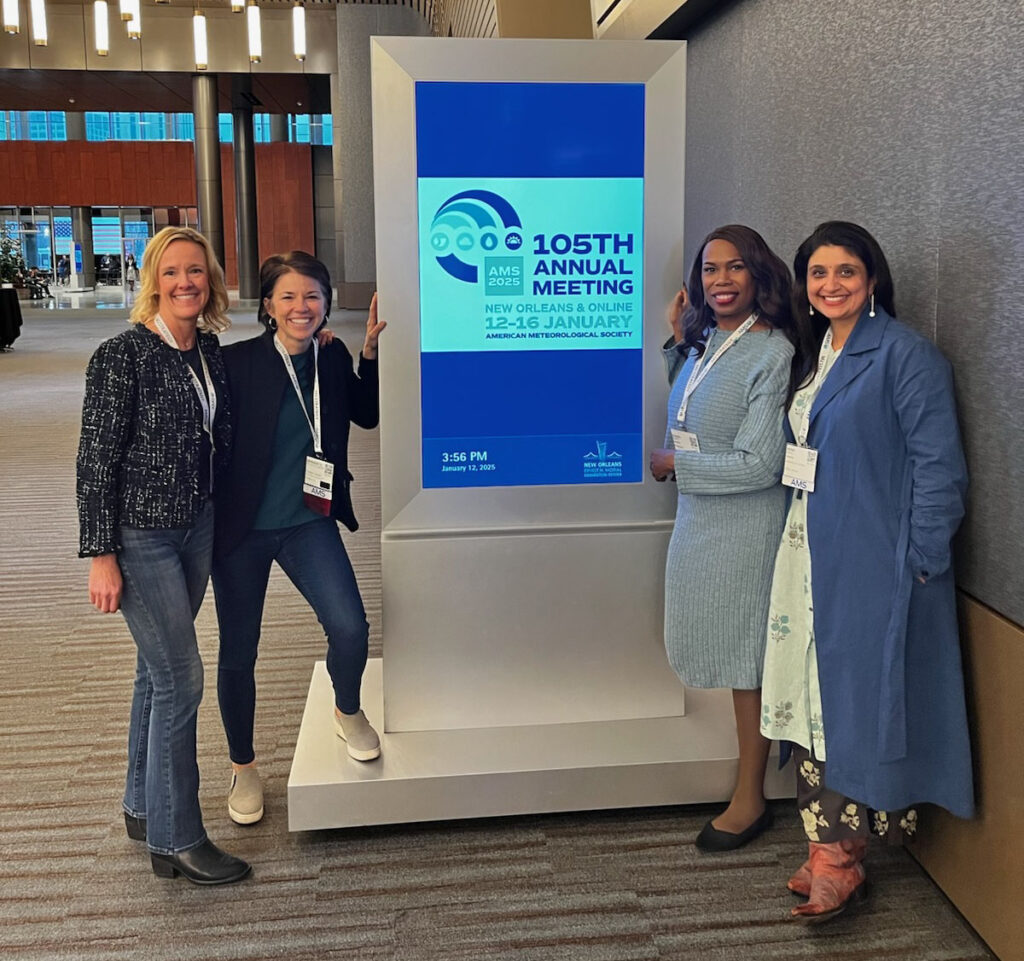
The authors of this article were elected to serve on the AMS Council from 2020 to 2023. Boyd represented the government sector, Averyt and Behl represented the academic sector, and Hauser and Placky represented the private sector. Drawing from collective experience serving on the AMS Council, the authors share several lessons learned that can transform nonprofit boards into a force for positive transformation.
Lessons Learned in Nonprofit Leadership
Leverage Diversity and Data to Improve Decision-Making: Research consistently shows that diverse teams make better decisions, solve problems more creatively, and drive innovation (e.g., Phillips et al., 2010; Rock & Grant, 2016; Lorenzo et al., 2018). During our term, councilors not only represented different sectors of the weather, water, and climate science enterprise, but also varied in socioeconomic and cultural backgrounds, ethnicity, gender, age, skills, education, experience, and perspectives. As such, we brought our full range of lived and learned experiences to the decision-making process. In doing so, we saw firsthand how diverse perspectives fostered richer discussions and led to more comprehensive solutions.
We also recognized that while personal experience and intuition are valuable, the most effective decisions combined these insights with robust data and evidence. This approach helped us identify trends, measure performance, and make strategic decisions grounded in evidence. Such a decision-making process also enhanced the Council’s ability to respond effectively to challenges and attain its goals.
For example, the decision to transition the Bulletin of the American Meteorological Society (BAMS) print copy to a digital only option was not universally popular. BAMS was the Society’s flagship publication, packaging emerging research, community activities, and notable events together. But the rising print publication costs combined with the growing online use—particularly among early-career professionals—made the decision best for the financial health of the organization.
Another example is our work on making improvements on Awards and Honors. The AMS councilors championed a new, data-informed method for reviewing, scoring, and ranking AMS awards. This initiative was essential to fostering a more inclusive atmosphere in the selection process. By moving beyond personal intuition and incorporating robust data, we ensured strategic decisions were grounded in evidence, directly improving the fairness and transparency of our Awards and Honors system.
From the perspectives of the author team, some of the best decisions that we made were those that leveraged diversity and data, deliberately recognizing and addressing biases in our decision-making process. While everyone brings implicit biases to discussions, the act of acknowledging them allowed Councilors to broaden the scope of conversations and gain new perspectives—ultimately leading to more robust and informed decision-making. For example, we shared expertise related to weather, water, and climate, and a common goal of finding solutions that best serve AMS membership. In achieving this end, we acknowledged implicit biases when it came to topics of detailed financial and administrative obligations and decision-making, among others. With differing experience and proficiencies in these areas, we embraced new learning and perspective(s), sometimes setting aside personal preferences to achieve the greatest organizational and membership benefit.
The Power of Active Listening: Perhaps the most powerful tool in our arsenal as councilors was our ability to actively listen—not just to words, but to the underlying needs, concerns, and aspirations they conveyed. Active listening is the intentional practice of fully concentrating, understanding, responding, and remembering what is being said. This skill proved especially valuable when navigating complex issues or bridging differing perspectives. For example, by truly listening to the executive director’s challenges, staff feedback, and partner insights, the Council made strategic decisions that were grounded in reality. When the executive director and staff felt genuinely heard by the Council, it helped in building trust and creating a “psychologically safe” environment where people could voice concerns, admit mistakes, and propose innovative and sometimes risky ideas without fear of reprisal. By elevating active listening from a soft skill to a core governance competency, the AMS Council transformed its role from overseers to true partners in achieving the organization’s mission.
Value and Engage Staff: The AMS Council works closely with the executive leadership, including supporting the executive director and the AMS staff. The members of the AMS staff are professionals and experts in their own right, and bring this expertise to AMS to support the membership. We learned that the voice of the Council supporting the staff among the membership is critical to ensure that staff remain focused on strategic priorities. Also, the understanding by the Council that staff are empowered to make decisions on behalf of the organization, and that Council members support staff decisions, is important to the overall health of the organization and for a strong volunteer and member relationship. When perspectives are actively sought and valued by leadership, investment in the Council’s work deepens. By keeping everyone informed and ensuring meaningful contributions were possible, trust grew—leading to more effective, inclusive, and sustainable outcomes.
Lead through Shared Governance: Council decisions profoundly shape organizational culture. We found that a true sense of belonging and purpose emerged only when we understood each other’s values and interests at a deeper level. In-person retreats and meetings were essential to this process, moving us past surface-level interactions toward genuine connection. The importance of this connection was most evident in our work to develop a robust system for shared governance.
Shared governance forms the bedrock of organizational resilience and impact. Recognizing this, AMS embarked on a deliberate, multiphase journey to enhance its Council’s effectiveness. The initiative began with a working group of the Council to scope governance needs, followed by engagement of an external consultant who conducted an impartial 360-degree review to identify strengths and opportunities for improving the Council’s governance. The critical final step was the formation of dedicated working groups composed of presidents, councilors, and commissioners. This structure allowed us to bridge the gap between different leadership levels, ensuring that those responsible for implementation and those responsible for oversight were co-architects of our future. The process of creating a structured, self-critical approach is what ultimately transformed governance from a static obligation into a dynamic strategic asset. By investing in this process, AMS not only strengthened its fiduciary oversight and operational efficiency but also cultivated a culture of continuous improvement and accountability—essential elements for navigating complexity and fulfilling its mission with greater integrity and trust.
The Need for Continuous Learning: The Council met several times a year. While most meetings were held virtually, there were at least two to three opportunities for in-person exchanges and interactions. Our annual retreat included professional development and training sessions on various topics, such as stakeholder engagement, creating inclusive environments, and board governance, among others. These opportunities not only contributed to our professional growth by equipping us with timely knowledge and skills but helped us stay ahead of emerging trends and best practices, ultimately enhancing the Council’s effectiveness. For example, collaboration with other scientific and professional societies through broader umbrella organizations such as the American Institute of Physics help individual member societies stay abreast of the continuous professional development and learning needs.
Mentorship as a Talent Multiplier: Mentorship transforms individual potential into collective strength—empowering councilors with institutional knowledge while refining seasoned leaders through fresh perspectives. Each year, 4–5 new councilors join the AMS Council, while a similar number rotate off after completing their board service. During our term, we had the opportunity to carry forward the work of previous councilors by collaborating with existing members to advance AMS’s mission. By sharing our experiential paths, we not only guided and inspired one another but also helped new councilors navigate their roles. Such support is essential in building a diverse and capable leadership pool.
Support and Mobilize a Community of Volunteers: The heart of scientific societies beats through its volunteers. From organizing conferences to reviewing papers to serving on boards, volunteers not only bring passion, expertise, and dedication, but they also keep the Society relevant and impactful. This spirit of service creates a virtuous cycle—as volunteers gain experience and skills, they more effectively advocate for the sciences, while mentoring others. The cost-effective nature of volunteerism allows organizations to allocate funds toward advancing research and developing impactful programs rather than operational expenses, ensuring long-term sustainability.
All authors of this article have been AMS members for a substantial part of their professional journeys, and volunteered on different boards and committees before being elected as councilors. Our time on the AMS Council taught us that volunteerism is a self-sustaining resource that must be cultivated. Volunteers don’t just serve the organization, they also strengthen it. With the spirit of service in mind, we call upon our colleagues and students to volunteer for different roles within AMS. Whether you are a seasoned member or a first-time volunteer, your most significant contribution is not your time, it is your ability to lift someone else up as you climb.