A symposium to be held at the 37th Conference on Hurricanes and Tropical Meteorology will honor renowned hurricane researcher Frank D. Marks Jr., former director of the Hurricane Research Division (HRD) at NOAA’s Atlantic Oceanographic and Meteorological Laboratory (AOML). Marks specializes in remote sensing of tropical cyclones and mesoscale convective systems to understand storm structures, and he helped build the infrastructure by which storm research strengthens forecasts and preparedness. He has flown in research and operational missions through more than 100 tropical cyclones (including hurricanes and tropical storms), flown through a hurricane eye more than 500 times, and spearheaded the development and operation of tail Doppler radar (TDR) systems aboard NOAA’s P-3 Orion and Gulfstream G-IV aircrafts, which have significantly enhanced understanding of the structure of storms. Marks is also well-known as a mentor and leader. In addition to leading HRD, a role he served for two decades, and being a key figure in the Hurricane Hunter program, he served as research lead for NOAA’s Hurricane Forecast Improvement Program, mission manager for NOAA’s High Altitude Jet procurement, and cochair of a federal Working Group for Tropical Cyclone Research. A highly engaged member of the AMS community, Marks has received AMS’s Verner E. Suomi Award, Banner I. Miller Award, and the Joanne Simpson Tropical Meteorology Research Award.
The Frank D. Marks Jr. Symposium will be held Tuesday, March 31, 2026 online and in person at the 37th Conference on Hurricanes and Tropical Meteorology. If you haven’t registered yet, you can still join the conference online!
We spoke with Symposium Cochairs Xuejin Zhang and Gus Alaka to learn more.
Why is now an important time to honor Frank Marks’s work? What makes his career so noteworthy?
Frank has been a pioneer in the collection and interpretation of airborne reconnaissance observations into tropical cyclones. Frank retired in 2024 after more than 40 years of federal service, yet he continues to fly into hurricanes and provide support whenever the Hurricane Field Program needs him. He also remains dedicated to mentoring young scientists and students. This is a critical time to honor his contributions as NOAA looks to recruit a new generation of scientists; Frank has set a remarkably high standard for them to follow.
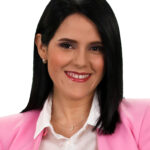
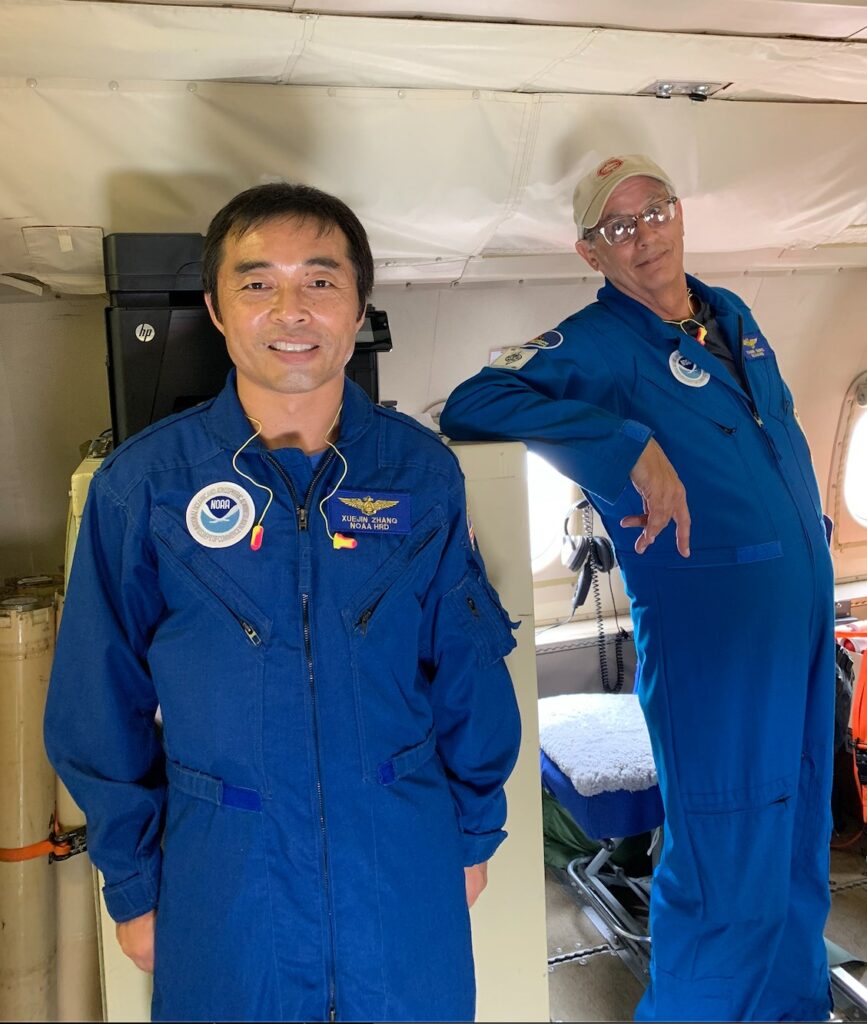
Photo: Xuejin Zhang (left) and Frank Marks (right). [Photo courtesy of Xuejin Zhang]
What can attendees expect to take away from the Symposium?
The Symposium features professors and scientists presenting their latest research and career milestones. Attendees will remember (or learn!) that Frank Marks has led and guided critical research endeavors that have significantly advanced our understanding of how hurricanes intensify with direct impacts on operations. We hope the experiences and results shared by these noteworthy presenters will inspire students and stimulate new research collaborations between NOAA and academia.

“I feel I accomplished something in my career that I think is useful and beneficial to the country and the society. To go from plotting circuit A and circuit C on the little maps in our high school classroom to where I am today, it blows my mind to look back at the arc of it all. It’s certainly been enjoyable most of the time. Certainly, I’ve forgotten all the bad stuff.”
–Frank D. Marks Jr.
What issues will be discussed?
We will cover a broad range of topics, including radar observations, hurricane field campaigns, weather and hurricane forecasts, model physics and dynamics, and advances in operational hurricane models. The lunch session will feature notable presentations from Robert Houze Jr. (University of Washington), Michael Montgomery (NPS), and Frank Marks himself.
“The thing about flying into a hurricane is you go from the most wonderful weather into the worst weather you can imagine in a very short time, and you do that repeatedly. People ask me, isn’t it dangerous? I describe a hurricane flight much like Winston Churchill’s quote about war, it’s 95% boredom and 5% sheer terror.”
–Frank D. Marks Jr.
Why are these topics so important right now?
Hurricane forecasting improvements leave a measurable impact on society, including higher accuracy and longer lead times that save lives, increase preparation, and reduce costs. The work of Frank Marks and many others has led to a steady stream of forecast improvements over the years. However, the devastation that hurricanes are capable of — Hurricanes Ian, Helene, Milton, and Melissa in recent years — reminds us that continuing to reduce hurricane forecast errors through new products, tools, and services; by maximizing data impacts; and by improving our understanding of challenging problems (e.g., rapid intensification) is still a high priority. Furthermore, as we enter the era of artificial intelligence (AI), applying emerging AI technologies to hurricane research and forecasting presents both significant opportunities and new challenges for the next generation of scientists.
Learn more about the Marks Symposium and read the symposium booklet.