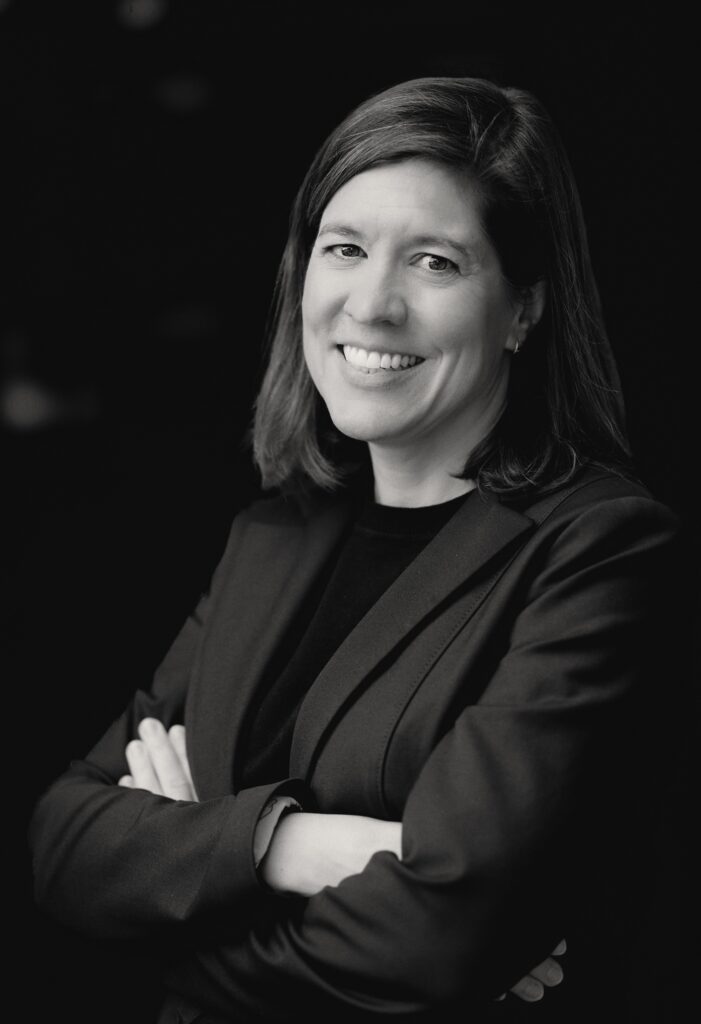
Amanda Staudt joined the American Meteorological Society staff in March 2026. Previously, she was a senior director at the National Academies of Sciences, Engineering, and Medicine, where she launched Climate Crossroads, a major initiative designed to bring together expertise from across the organization to provide decision-makers and the public with the scientific information needed to tackle the climate crisis. Prior to that, she directed the Board on Atmospheric Sciences and Climate and Polar Research Board, leading a team that provided scientific insights and advice to the U.S. government and the nation on issues related to climate change, weather, air pollution, and the polar regions. Earlier in her career, Staudt was at the National Wildlife Federation, where she focused on communicating climate science and impacts, supporting climate-informed ecosystem conservation, and advancing climate science education. She began her career in public service at the National Academies, where she directed the Climate Research Committee and staffed several high-profile studies related to atmospheric sciences, weather, climate, and air quality. She earned her B.A. in environmental science and engineering and her Ph.D. in atmospheric science from Harvard University.
What first sparked your interest in climate and atmospheric science?
Growing up in Chicago, I experienced a wide range of weather extremes, alongside the stark contrasts between urban pollution and nearby natural ecosystems. My family also spent a great deal of time outdoors, which deepened my appreciation for the environment. These experiences drew me to a career that combined service to society, a connection between science and decision-making, and a commitment to protecting the natural environment.
Atmospheric science appealed to me because it is inherently cross-disciplinary and societally relevant. It requires understanding the physics and chemistry of the atmosphere, while also considering how it interacts with oceans, land, freshwater systems, and people. I was also excited by the opportunity to integrate different scientific approaches—observations in the field and from satellites, computational modeling and theory. Those intersections felt full of possibility, offering countless opportunities for discovery and deeper understanding in ways that could provide tangible benefits for people and nature.
How did that passion lead you to your new role as executive director of the American Meteorological Society?
AMS has been a constant throughout my career. My first professional conference was the 1996 AMS Annual Meeting in Atlanta, where I presented undergraduate research, and I have been involved in many facets of AMS ever since.
At the same time, my professional experiences have been closely aligned with AMS’s mission. I have worked at the interface of science and policy, bringing together researchers, government, and other stakeholders to develop research agendas, assess emerging science, and advance societal applications to advance the weather, water, and climate enterprise. Stepping into this role at the AMS feels like a natural continuation of that journey.
You’ve worked at the intersection of science, policy, and nonprofit leadership. How have those experiences shaped your approach to leading a scientific society?
Each stage of my career has shaped what I hope to bring into this new role. From my time in academia, I learned the importance of rigorous, evidence-based problem-solving. From my work in policy, I saw how science can inform decision-making across different levels of government and how impactful that connection can be. In the nonprofit space, I learned about building mission-driven programs that deliver real-world impact. Bringing those perspectives together, I aim to lead in a way that is analytically grounded, collaborative, and focused on tangible benefits for society.
As you step into this role, what excites you most about leading AMS?
The work of the AMS community has never been more important. As the climate changes, our insights are essential to ensuring public safety, economic vitality, and national security. At the same time, we are entering an era of remarkable scientific advancement, with breakthroughs that will make weather, water, and climate information even more actionable and relevant.
I’m excited to support this community in continuing to do work that truly matters. I’m also eager to help broaden understanding of how critical these capabilities are and to advocate for sustained investment in research and education. Finally, I see tremendous opportunity to build stronger connections across governments, industry, academia, and nonprofit organizations that contribute to advancing our enterprise, as well as to the wide range of economic sectors that increasingly rely on our science, so we can innovate together to meet emerging challenges.
What are some of your top priorities for AMS in the coming years?
We are navigating a period of significant change. Extreme weather events are becoming more frequent and severe, public trust in science has been challenged, and emerging technologies like artificial intelligence are reshaping the field and workforce. At the same time, there are shifts in federal funding and staffing and evolving pressures on how organizations like AMS sustain themselves.
Navigating these challenges is a critical priority for AMS and our community. Fortunately, AMS is well positioned to meet these challenges. Our membership spans academia, government, and the private sector. Weather is inherently nonpartisan and relevant to everyone, and AMS has a broad portfolio of excellent programs and strong engagement capacity. Looking ahead, I see AMS as a beacon for the weather, water, and climate enterprise—supporting informed decision-making, strengthening partnerships across sectors, and preparing a nimble and inclusive workforce.
AMS is a broad and diverse community of members. How do you hope to support the membership in navigating future challenges?
Preparing the workforce to meet tomorrow’s challenges is central to AMS’s mission. We need to ensure that students and early-career professionals see a clear pathway into the field and feel supported at every stage of their careers. Continuing to build on AMS’s strong commitment to providing an inclusive and welcoming environment for all is critical to building the workforce we need for the future. That means continuing to invest in education, certification, and professional development, while also fostering a sense of community where all of our members feel like they belong and can find opportunities to connect, collaborate, and thrive.
What role should AMS play in connecting atmospheric science with public understanding and decision-making?
The credibility of science has never been more important. AMS is a nonpartisan organization, but we are not neutral about science. We will continue to be a trusted, accessible voice for journalists, for policymakers, for educators, and for the public. That is what our community and our mission demand.
In today’s complex information environment, we need to find new ways to connect with people, delivering information that is accessible, relevant, and timely. That includes strengthening connections between researchers and practitioners, engaging policymakers, and ensuring that communities understand how weather, water, and climate science impacts their daily lives.
We also have an opportunity to amplify our impact by sharing our story more broadly. The AMS community is full of dedicated professionals whose work helps keep people safe and informed every day. Building broader public appreciation and support for that work is essential to sustaining progress.
What emerging scientific or technological developments are you most excited about?
It’s hard to pick just a few! Artificial intelligence is opening new doors, particularly in improving the timeliness, resolution, and usability of forecasts. We’re moving toward more precise, tailored information, with longer lead times–advances that will provide even better support for decision-making. I’m also excited about the growing integration of social and behavioral sciences into our field. Understanding how people interpret and act on information is just as important as understanding the physical, chemical, and ecological dimensions of the environment, and that integration will make our work more impactful.
What message would you most like to share with AMS members as you begin your tenure?
The weather, water, and climate community is more critical than ever before—governments, businesses, and communities are depending on us to deliver useful, reliable information to inform all sorts of decisions. The information we’re able to provide is getting better all the time, which is a tremendous credit to this community.
At the same time, we are facing new challenges. Climate change is pushing us into unfamiliar territory, requiring new tools, new approaches, and continued innovation. We need to continue improving our capacities and ensuring that we are meeting the full spectrum of needs, including for those who have been historically marginalized and underserved.
We are also in a period of broad institutional change, which brings uncertainties for our community. But change also presents opportunities. AMS is committed to walking alongside our members through this moment—supporting your work, strengthening our community, and ensuring that together we continue to advance science in service to society.