by Sean Potter, CCM, CBM
Every year on February 5, not long after the jokes and memes surrounding Groundhog Day have been set aside for another year, I find myself at odds regarding another day devoted to weather. Every year on that date, I see friends and colleagues in the meteorology community posting or sharing messages celebrating “National Weatherperson’s Day.” Although any day that brings attention to the field of meteorology and those who practice it deserves some credit, there has always been something that doesn’t seem quite right about this day—starting with the name. What, exactly, is a “weatherperson”? It’s not a term I’ve ever known anyone to use professionally—certainly not anyone with a meteorology degree.
And then there’s the date, February 5, which commemorates the birthday of John Jeffries (1745–1819), a Boston physician and surgeon who is often cited as one of America’s first weather observers, although there were others who took systematic observations predating those of Jeffries by decades, most notably the Rev. John Campanius of the colony of New Sweden, in present-day Delaware, and Dr. John Lining of Charleston, South Carolina. It’s also worth noting that Jeffries was a British Loyalist, which raises the question: Do we really want a national day that celebrates someone who sided with the enemy during the American Revolution?
So how did this day come about? I decided to do some investigating. The observance of National Weatherperson’s Day dates back to the late 1970s, when it began appearing in Chase’s Calendar of Annual Events, a volume published yearly since brothers William and Harrison Chase started it in 1957. For decades, this publication of holidays, famous birthdays, events, and festivals has been within arm’s reach of reference librarians and newspaper almanac editors and considered the authoritative source on special days, weeks, and months. In its pages you’ll find listings for such observances as National Foster a Pet Month, Farm Safety and Health Week, and Wildfire Community Preparedness Day (new to the 2026 edition).
“Weatherperson’s Day” first appeared in Chase’s in the 1977 edition, although at that time it was known as “Weatherman’s Day.” The publication began listing it as “Weatherman’s Day (Weatherperson’s Day)” in 1996 and, in 2016, dropped “Weatherman’s” altogether, listing the day as simply “Weatherperson’s Day.” It was also in 1977 that newspapers across the country began promoting the day, often with sarcastic commentary added. “Although today is National Weatherman’s Day, few suffering the sub-zero temperatures in Southern Illinois are in the mood for celebration,” the Southern Illinoisan wrote in 1979. Nearly two decades later, the jokes continued. “Today is National Weatherperson’s Day,” the Los Angeles Times reported in 1997. “There’s a 20% chance no one will care.”
In a field that traditionally has been on the receiving end of jokes and ridicule, I believe meteorologists deserve better. We deserve a day grounded in science—not tradition by default. After all, the field of meteorology requires rigorous education in physics, mathematics, and atmospheric dynamics—far beyond simply “reading the weather” or presenting forecasts.
We also deserve a day that counters persistent misconceptions, like that forecasts are “guesses,” that meteorologists are “wrong half the time,” or that fringe ideas like “chemtrails” have scientific merit. In an era of growing skepticism, contrarianism, and misinformation (including climate change denialism), elevating meteorologists reinforces evidence-based understanding of weather and climate.
That’s why I’m proposing a new day—National Meteorologists Day—to be celebrated on May 9 in honor of all meteorologists across the country. It’s a day that centers the science behind the forecast and recognizes meteorologists for providing critical forecasts, warnings, and decision support that protect lives, property, infrastructure, and entire sectors of the national economy every single day.
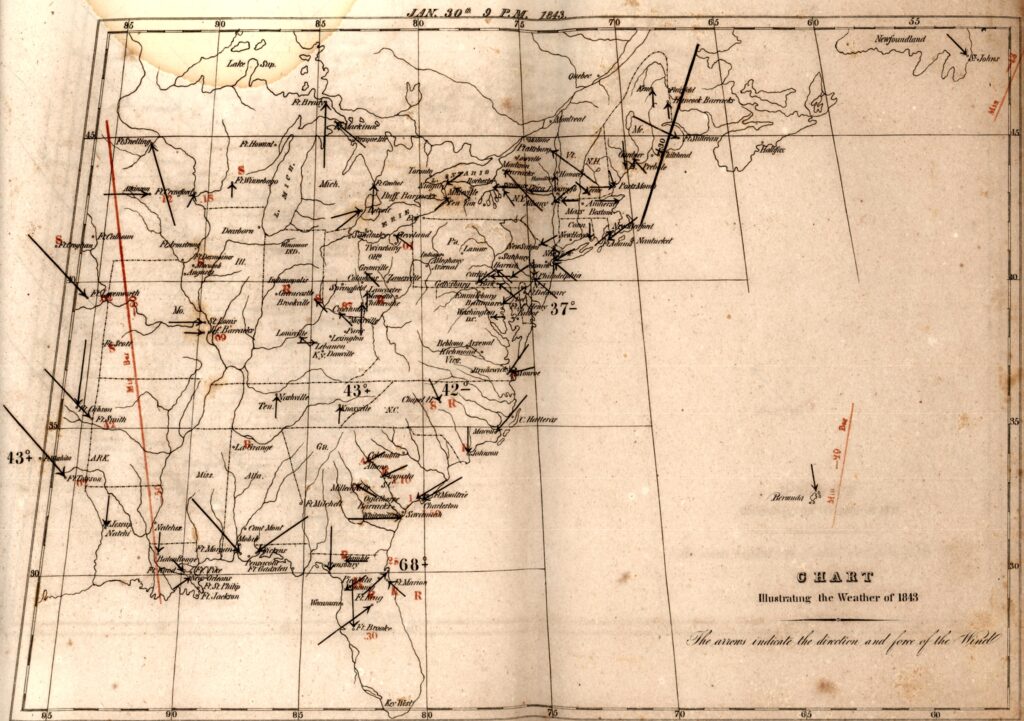
Why May 9? It marks the birthday of James Pollard Espy (1785–1860), who was the first American to officially hold the title of “meteorologist,” having been appointed “meteorologist to the U.S. Government” by Congress in 1842. His theoretical insights, observational systems, and persistent advocacy made him a foundational architect of modern American meteorology and helped lay the scientific foundation for modern forecasting. Tying the day to him provides a historically and professionally relevant foundation for the observance.
To be clear, this isn’t about criticizing or replacing past traditions; it’s about evolving toward language and a foundation that better reflect who we are as scientists and the role we play in society. If you agree, I hope you’ll join me on May 9—this year and in years to come—in celebrating National Meteorologists Day, because meteorology matters—and so do the people who practice it.