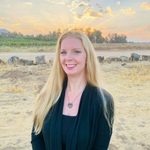
Jamese Sims has spent more than two decades helping people better understand the science behind the weather and how that knowledge can save lives. An atmospheric scientist, meteorologist, educator, and assistant professor of meteorology at Jackson State University, Sims has built a career at the intersection of weather prediction, satellite technology, artificial intelligence, and public communication, translating complex science into practical information that strengthens preparedness and resilience.
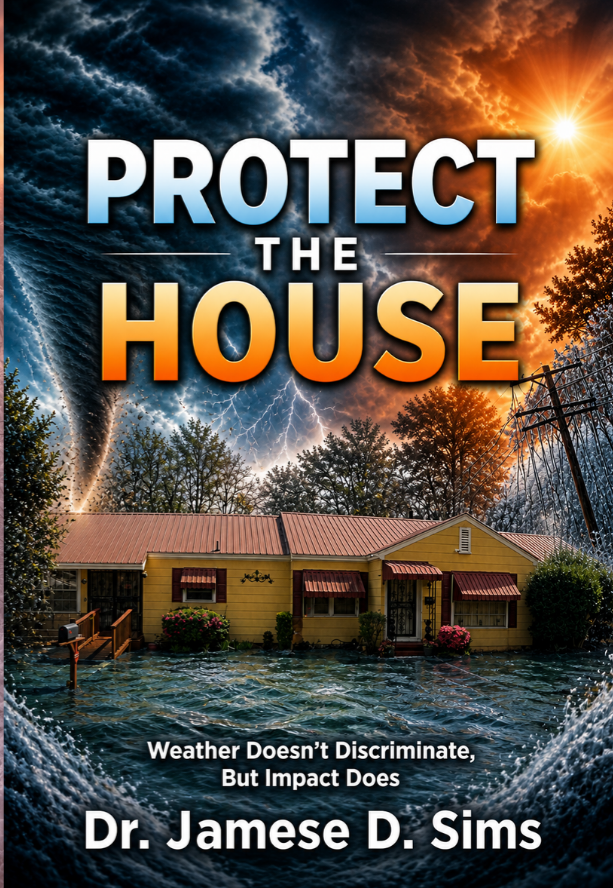
In her new book, Protect the House: Weather Doesn’t Discriminate, But Impact Does, Sims explores why the same weather event can have dramatically different consequences from one community to another. Blending atmospheric science, historical context, and real-world experience, she examines how preparedness, infrastructure, and access to resources shape disaster outcomes, and offers practical strategies to help individuals, organizations, and leaders better prepare for the challenges of extreme weather.
Sims spoke to AMS Headlines about what inspired the book, the lessons she hopes readers take away, and why building resilience begins long before the forecast turns severe.

Why did you write this book?
After more than two decades in meteorology—working in research, satellite algorithm development, numerical weather prediction, artificial intelligence, and community engagement—I kept coming back to one question: If our forecasts continue to improve, why do so many communities continue to experience disproportionate impacts? That question became the foundation for Protect the House: Weather Doesn’t Discriminate, But Impact Does.
Science has advanced tremendously. We have better observations, more sophisticated models, and increasingly accurate forecasts. Yet many vulnerable communities still struggle to receive, interpret, or act on that information in ways that reduce risk. Additionally, some community vulnerabilities extend the recovery timeline following severe weather events.
Therefore, I wanted to write a book bridging the gap between atmospheric science and everyday decision-making. It combines the meteorology behind extreme weather with the social realities that influence preparedness and recovery. My hope is that readers come away understanding not only what the atmosphere is doing but also why impacts differ from one community to another. Forecasts save lives only when people understand them, trust them, and have the resources to act on them. That’s the space this book was written to address.
Weather doesn’t discriminate. Impact does. My goal was to write the book that lives in the space between those two truths.
Who is it for?
Although the book is written for the general public, I intentionally designed it to speak to multiple audiences. The book also intentionally centers the experiences of Black and Brown communities, whose stories and perspectives have too often been absent from conversations about weather preparedness despite frequently experiencing disproportionate impacts. My hope is that readers from these communities see themselves reflected in the science, the stories, and the solutions, while readers from all backgrounds gain a deeper understanding of why resilience looks different from one community to another.
Families can use it to better understand weather hazards and preparedness. Emergency managers, educators, faith leaders, and community leaders can use it as a resource for resilience planning and community engagement. I also hope fellow meteorologists and atmospheric scientists see it as a reminder that effective forecasting extends beyond numerical accuracy. Our work has its greatest impact when scientific information is communicated in ways that are accessible, culturally relevant, and actionable.
Ultimately, the book connects atmospheric science to people.
What obstacles did you face?
One of the greatest outcomes for me was accepting and overcoming grief. I speak about how my father was foundational to my writing this book, and I realized that I needed to address certain personal issues. Additionally, researching the severe weather impacts on Black and Brown communities often required me to take breaks to process the emotions that arose from acknowledging the history behind why weather affects various communities differently. I already knew this information, but to make the weather real to everyone, I had to dig deeply into the thought processes that have shaped our understanding and decision-making over the years.
Another focus for me was translating complex atmospheric science into language anyone could understand without sacrificing scientific integrity. As scientists, we’re trained to communicate with precision. Writing for a public audience required me to think differently. Every chapter forced me to ask whether a concept could be explained more clearly while remaining scientifically accurate.
Another challenge was balancing data with lived experience. Statistics explain hazard frequency and intensity, but stories help readers understand why those numbers matter. Finding that balance ultimately became one of the most rewarding parts of the writing process.
What did you learn?
I learned the importance of trusting myself and my unique perspective. It’s one thing to share information that I worked on or developed with a full team, but this work is my baby. I received a great push from my publisher, but at the end of the day, I own this project. I’m beyond thankful for its current and future success.
Writing this book also reinforced something I’ve observed throughout my career: Scientific knowledge alone doesn’t change outcomes.
People make decisions based on trust, relationships, personal experience, available resources, and how information is communicated. That realization strengthened my belief that communication is an essential component of atmospheric science, not an afterthought. Whether we’re developing satellite algorithms, improving forecast models, or issuing warnings, our work ultimately succeeds only if people understand and act on the information we provide.
What are the implications of this work?
I hope this book contributes to a broader conversation within families and within the weather enterprise. Forecast skill will continue to improve, but resilience depends on much more than forecast accuracy.
As our profession continues advancing Earth system prediction, artificial intelligence, and impact-based decision support, we also have an opportunity to better integrate social science, community engagement, and equity into our work. Protecting lives requires understanding both the atmosphere and the communities beneath it.
Where do you go from here?
This book is the foundation for a much greater effort.
I’m expanding Protect the House into workshops, leadership training, companion workbooks, educational resources, and community resilience initiatives designed to help people translate weather information into meaningful action.
As both a scientist and educator, I also hope to continue building stronger connections between research, operational forecasting, emergency management, and public engagement.
If this work encourages even a few more families and scientists to think differently about how we communicate weather risk, or inspires someone to pursue meteorology with service at its center, then I’ll consider it a success.
Ways to purchase Protect the House: Weather Doesn’t Discriminate, But Impact Does
Amazon: https://www.amazon.com/PROTECT-HOUSE-Weather-Doesnt-Discriminate/dp/B0GZQ7T245/ref=tmm_pap_swatch_0
Signed Copies: Payhip.com/ProtecttheHouse