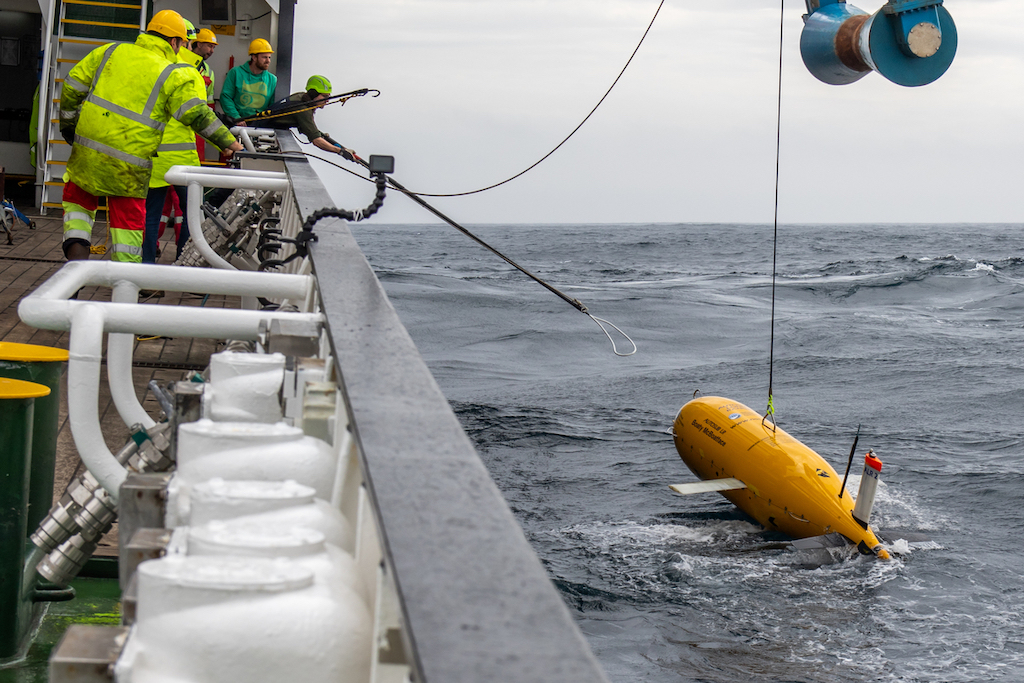
WHO: Scientists from the University of East Anglia (UEA) and the British Antarctic Survey, and Boaty McBoatface, an autonomous underwater vehicle (AUV)
WHERE: Underneath the Dotson Ice Shelf in the Amundsen Sea, just west of Antarctica—an area where ocean-driven melting is contributing to rapid glacial mass loss. Little is known about how warm water circulates and heat is transported in the cavities under Dotson and other shelves in the region.
WHEN: Over four missions in 2022, during which Boaty spent more than 70 hours within the Dotson cavity
WHY: The researchers made the first-ever survey of the underside of the Dotson Ice Shelf using an AUV
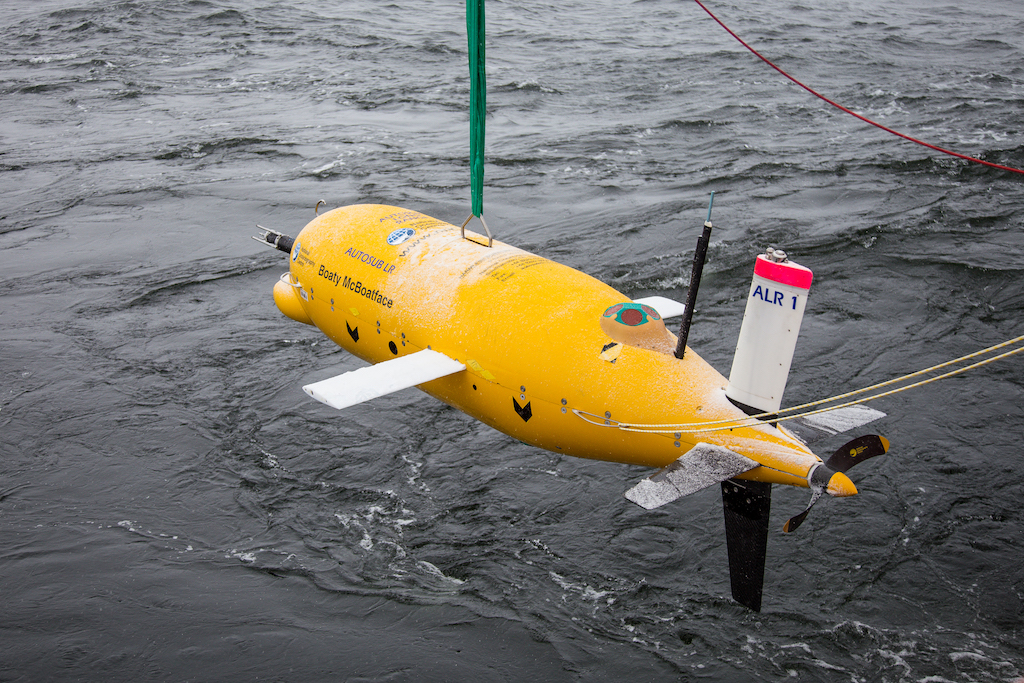
WHAT: The expedition provided new insight into how the topography of the seabed and the speed of currents in the region influence the mixing and transport of warm water up to the bottom of the shelf, which drives melting of the shelf. Traveling about 100 meters (328 feet) above the seabed, Boaty McBoatface collected data from more than 100 kilometers (62 miles) of dive tracks on various properties, including the water’s temperature, current, turbulence, and oxygen. The AUV measured the strongest mixing of warm and cool water at inflow areas east of the ice shelf. While the currents are fast in that region, the study showed that the gradient of the seabed—around 45° in the steepest areas—had the greatest impact on mixing. “We were expecting the influence of current speed on the mixing to be much higher than what we found,” says lead author Maren Richter of UEA. “Instead, the shape of the seabed seems to be really important.” Richter and colleagues also found that the mixing under the shelf mostly results from warm water flowing not necessarily upward into the underside of the ice, but rather more horizontally along the seabed to the grounding line, where the glacier loses contact with the seabed and begins to float. “This means that the water stays warm all the way to the grounding line, where it can melt the glacier directly,” Richter explains. “This can cause the glacier to retreat, speed up, and lose more ice into the ocean. Together, the retreat, increased speed, and increased melt contribute to sea level rise globally.” According to Richter, the measurements taken during the mission “can now be compared to assumptions about mixing in regional and global models of ice shelf–ocean interactions, and to measurements under other ice shelf cavities, helping us understand how these cavities are similar or different from each other.” The research was published in Ocean Science. [SOURCE: University of East Anglia]