The work of the American Meteorological Society — to advance the atmospheric and related sciences, technologies, applications, and services for the benefit of society — happens in large part through more than 1,200 volunteer leaders working on our boards, commissions, and committees, plus hundreds of associate editors and thousands of peer-reviewers for our journals.
As April is Volunteer Month, we spoke with the heads of two major AMS commissions, which oversee many volunteer boards and committees. Here’s an inside scoop on what some of those volunteers do, and the rewards that come from volunteering.
Scientific and Technological Activities Commission (STAC)
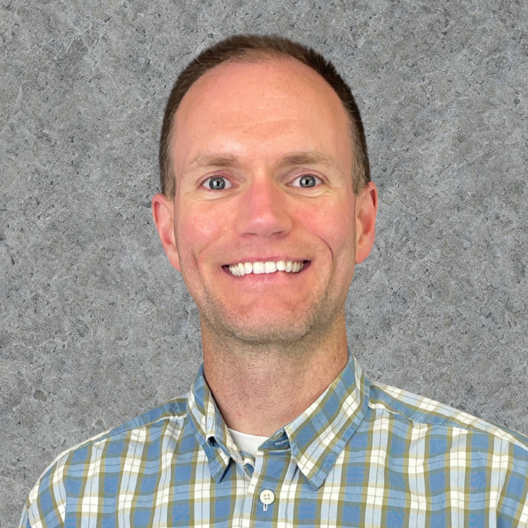
Clark Evans, Commissioner
The Scientific and Technological Activities Commission (STAC) is responsible for advancing science and technology by promoting the open exchange of ideas, strengthening disciplinary communities, enhancing collaboration and dialogue among these communities, embracing diversity, celebrating and fostering excellence, and cultivating the next generation of scientists and leaders. It has many boards and committees working in different scientific areas, from Agricultural and Forest Meteorology to Weather Analysis and Forecasting. Read more about STAC.
What do volunteers on your commission do?
Volunteers with STAC play many roles! They help organize many of the AMS’s conferences and symposia. They review nominations for Society- and commission-level awards. They contribute to preparing AMS statements and reviewing submissions for the AMS Glossary of Meteorology. Between these and other activities, STAC volunteers help the AMS to advance science and build community.
Why volunteer with AMS?
While everyone has their own intrinsic motivations for volunteering, I think volunteering is important to help repay the investments others have collectively made in me, to strengthen our profession and its associated communities, and to grow one’s abilities and connections.
What has your volunteer experience been like?
I’ve found my volunteer experience to be very rewarding. Though expansive, I’ve found the AMS’s volunteer structure to be one in which good ideas can bubble up from individual volunteers at the board and committee level to have a meaningful impact across the Society.
What would you say to volunteers on your commission?
To all of STAC’s volunteers, I say: thank you. So much of what you do requires a ton of behind-the-scenes work that doesn’t get the notice it deserves. Thank you for all of the work you do to advance our science, grow our community, and represent our profession and the AMS.
Commission on the Weather, Water, and Climate Enterprise (CWWCE)
Tanja Fransen, Commissioner
The CWWCE is charged with developing and implementing programs to address the needs and concerns of all sectors of the weather, water, and climate enterprise, and with promoting synergy, community, and engagement among different sectors, from government entities to private sector organizations and universities. The commission’s boards and committees address key strategic topics across weather, water, and climate, from climate services and community modeling to water resources. Learn more about the CWWCE here.
What do volunteers on your commission do?
Within the Commission for the Weather, Water and Climate Enterprise, we have a steering committee, 4 boards, and 22 full and ad-hoc committees. Our volunteers reach out across aisles to other organizations to collaborate on similar efforts. They host numerous conferences, from the Annual Meeting and the main Symposium on the Weather, Water, and Climate Enterprise to specialty topic conferences and sessions covering energy, transportation, oceans and the Blue Economy, wildfire weather, environmental security, emergency management, ecological forecasting, open information systems, etc. Each year, the Commission also hosts the AMS Summer Community Meeting, and the AMS Washington Forum that focuses on emerging topics of the day.
The members work with other organizations to integrate relevant topics across boundaries. For example, the Engineering Resilient Communities group has collaborated with IBHS [the Insurance Institute for Business & Home Safety] and NWA [the National Weather Association] to bring short courses to meetings on how you can more easily make your home more resilient to disasters. The Water Resources Committee has worked with the American Society of Civil Engineers. These volunteers also help draft some of the many important statements that the AMS has related to topics such as weather safety and preparedness (sheltering during the COVID pandemic, extreme cold preparedness, large venue safety, lightning safety), climate services, and ecological forecasting, and they are working on future topics such as ethics in AI within our enterprise.
Why volunteer with AMS?
AMS is foundationally built on its contributing volunteers. We can’t manage the many ongoing projects and efforts without the volunteers. From those who volunteer to review papers to those who plan conferences, sessions, and meetings, it takes a village of experienced people who want to learn more to all come together and make it work. The people you meet are those you looked up to when you began your education and career, and they become your colleagues and even better, your friends.
What has your volunteer experience been like?
From my first proverbial “hand raising,” I was immediately brought in to help plan the Major Weather Impacts Conference. That led to other opportunities. A conversation in the hallway between sessions led me to join the AMS Committee on Emergency Management, which I later chaired. Then I chaired the board it was under. I ended up on the AMS Council, cochairing the first AMS Annual Virtual Meeting in 2021, and now serve as a commissioner of the Weather, Water, and Climate Enterprise. The hardest thing is knowing when your limits are met, and saying no. There’s so many fun things happening within AMS, and it’s ok to leave one “home” to find another. Each one teaches you something new and introduces you to people you will love meeting and working with.
What would you say to volunteers on your commission?
We use terms like “rock star” and “hero” pretty loosely these days, but the work I see coming from our volunteer chairpersons is incredible. The passion for our Society and our enterprise is out there, and they are trying new things, moving the needle, and developing the next generation of enterprise leaders by mentoring our students and early-career professionals. Thank you, thank you, thank you to all who volunteer!! You are much appreciated.
Interested in volunteering? Learn more about volunteer opportunities with AMS.