A Conversation with Haley Staudmyer, Inaugural Recipient of the Richard Grotjahn Research Fellowship in Extremes
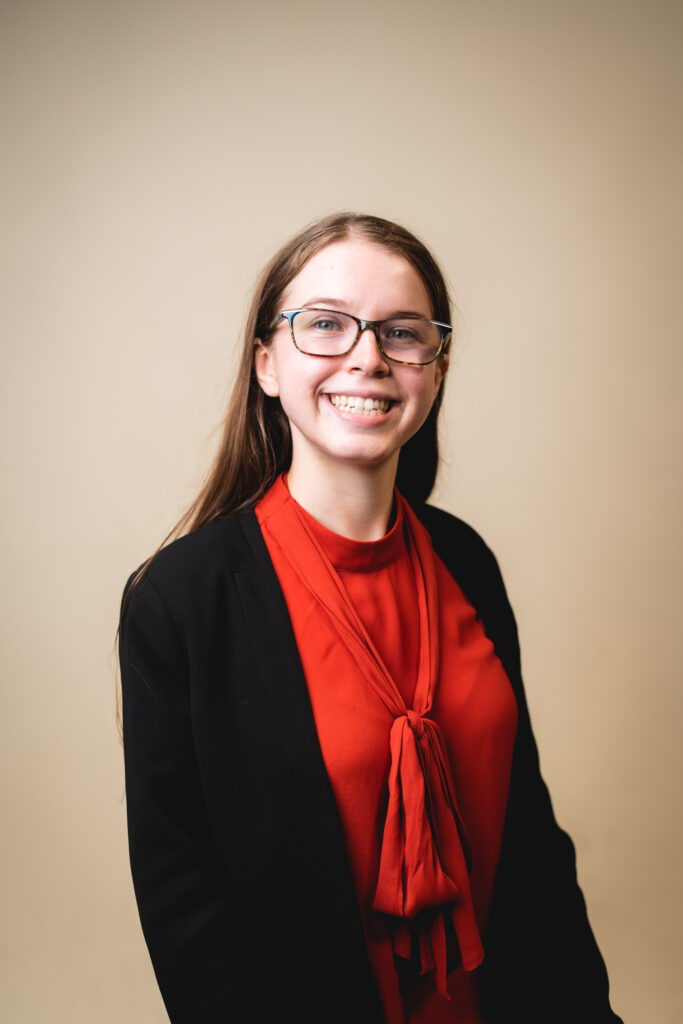
For Haley Staudmyer, understanding extreme heat means looking beyond temperature alone. Her research examines how heat risk differs across age, occupation, and lived experience, and how climate science can better inform policies that protect vulnerable communities.
As the inaugural recipient of the Richard Grotjahn Research Fellowship in Extremes (RGRFE), the University of California, Irvine, PhD candidate will study whether California’s heat protections adequately safeguard outdoor workers, combining advanced heat modeling with interviews conducted alongside farmworker community partners.
Can you share a bit about your academic and research background?
I earned my BS in atmospheric sciences with a concentration in climate from the University of Washington in 2021, along with a minor in applied mathematics and interdisciplinary honors. As an undergraduate, I worked with Tom Ackerman through the Cooperative Institute for Climate, Ocean, and Ecosystem Studies (CICOES), using ground-based cloud observations to validate cloud-resolving models.
After graduating, I spent a gap year at the Office of the Washington State Climatologist at CICOES, working with Nick Bond and Karin Bumbaco on heat wave trends in the Pacific Northwest. During my first weeks there, the historic 2021 Pacific Northwest “Heat Dome” occurred. Watching its impacts unfold firsthand—from overwhelmed public services to searching for cool spaces in my own un-air-conditioned apartment—fundamentally shifted my research interests toward extreme heat and human impacts.
That experience led me to pursue a PhD at the University of California, Irvine, under the mentorship of Jane Baldwin. My dissertation focuses on extreme heat and human health impacts across scales, from global to hyperlocal. Along the way, I’ve been mentored by experts in climatology, biometeorology, epidemiology, physiology, sociology, and anthropology, all of whom have shaped my interdisciplinary approach to science.
Richard Grotjahn spoke about the importance of interdisciplinary approaches and diverse skillsets. How has versatility shaped your own path in atmospheric science so far?
Growing up in a small Ohio suburb, I was struck by how little people understood about climate change, despite how important the issue is. Even as a teenager, I wanted to become a bridge between scientists, policymakers, and the public. That meant learning how to communicate science clearly and accessibly.
At the University of Washington, the Interdisciplinary Honors program encouraged me to explore beyond atmospheric science. I took courses in climate communication, policy, and Earth system science, learning how the cryosphere, biosphere, hydrosphere, and atmosphere all interact.
That interdisciplinary foundation led me to UC Irvine’s Earth System Science department and later to the UCI Community Geoscience Initiative, where graduate students partner with environmental justice organizations on community-driven research. That experience taught me one of the most important lessons of my career so far: lived experience and personal testimony deserve the same respect as any model output.
For my dissertation and this fellowship project, I wanted to apply technical climate expertise directly to a problem vulnerable communities are already facing every day.
How does your project connect to broader societal concerns surrounding extreme weather and climate events? Can you describe the project you’ll be pursuing through the fellowship?
In the United States, extreme heat kills more people annually than any other weather-related disaster, and some populations face far greater risks than others. Construction workers, for example, are 13 times more likely to die from heat-related causes, while agricultural workers are 35 times more likely.
Heat impacts also vary dramatically by age, health, occupation, and environmental conditions. A weather app’s “feels like” temperature cannot capture those differences. That’s why my mentors helped develop HEAT-Lim, a physiologic “human heat balance” model that combines environmental conditions with personal characteristics such as clothing, body size, and ability to sweat. The model estimates what level of physical activity is safe for a specific type of person under specific conditions.
Earlier in my PhD, I used HEAT-Lim to study how climate change could reduce humanity’s ability to safely perform physical activity globally. Through this fellowship, I’ll apply the model at much higher spatial resolution using downscaled climate projections to better understand localized heat risks and policy implications.
What research question or challenge are you most excited to explore through this work?
I want to understand whether California’s current heat regulations adequately protect outdoor workers from extreme heat. California is often considered a leader in heat policy, so if its protections fall short, that has major implications elsewhere.
Right now, enhanced heat protections for outdoor workers activate at 90°F in California. Using HEAT-Lim, I’ll examine whether dangerous conditions occur outside that threshold when humidity, sun exposure, age, and other physiological factors are considered, both now and under future climate change.
But models alone can’t tell the full story. In partnership with PhD candidate Juan Carlos Ruiz Malagon and Ayudando Latinos A Soñar (ALAS), a farmworker-led nonprofit in Half Moon Bay, California, we’ll also interview agricultural workers about their lived experiences with heat regulations and workplace safety practices.
By combining climate modeling, human heat balance modeling, and worker testimony, I hope to better quantify the gap between current protections and future needs.
The fellowship encourages projects across a broad range of “extremes.” Where does your work fit within that landscape?
People often think of extreme heat as occurring in short-term heat “waves,” but climate change is making dangerous heat more frequent, prolonged, and routine. Many vulnerable communities are already experiencing this “new normal.”
Because HEAT-Lim focuses on human heat stress rather than fixed environmental thresholds, it can better capture how heat affects different populations outside of typical heat “wave” definitions. Conditions that may be manageable for one person may be dangerous for another.
How do you hope your research will contribute to advancing understanding or preparedness related to extreme events?
Heat-related illness and death are preventable. By identifying shortcomings in current heat regulations, we can improve protections and save lives.
More broadly, I hope the community-based aspects of this project help demonstrate the value of connecting atmospheric science with the lived experiences of impacted communities. We cannot fully understand extreme events without listening to the people most affected by them.
What does being selected as the inaugural recipient of the Richard Grotjahn Research Fellowship in Extremes mean to you personally and professionally?
Being selected as the inaugural recipient means the world to me. Interdisciplinary, policy-relevant work like this can be difficult to fund because it sits between traditional disciplinary boundaries. This fellowship validates the importance of research that connects rigorous climate science with actionable societal impacts.
I still vividly remember attending my first AMS Student Conference in 2019 as a brand-new undergraduate. I wandered through the poster hall feeling completely overwhelmed and convinced I’d never belong in this field. I wish I could go back and show my younger self where I am now!
This is the first time I’ve independently conceptualized and secured funding for an entire project, which feels incredibly meaningful. I still have over a year left in my PhD, though, so I’m not getting ahead of myself just yet!
How do opportunities like this fellowship impact early-career scientists?
Early-career scientists need time, mentorship, and opportunity to grow. Research is inherently uncertain, and navigating that uncertainty without support can be incredibly difficult.
Funding opportunities like the RGRFE allow students to pursue ambitious interdisciplinary projects that might otherwise never happen. They also create opportunities for collaboration and mentorship at a time when research funding is increasingly competitive.
The fellowship’s emphasis on mentorship is especially meaningful because strong support networks can make all the difference early in a scientific career.
One unique aspect of this fellowship is its emphasis on collaboration and mentorship. How did you identify your mentor and collaborators for this project?
Jenni Vanos at Arizona State University (ASU) has mentored me since the start of my PhD in 2022. She played a major role in developing HEAT-Lim and has guided me in using the model for years. Beyond that, she’s an outstanding interdisciplinary scholar with deep experience working alongside communities impacted by extreme heat.
I’ll also collaborate with PhD candidate Juan Carlos Ruiz Malagon, whose expertise in climate and public health impacts within farmworker communities makes him an ideal partner for this project. We met through the UCI Community Geoscience Initiative, and I’ve wanted to work with him ever since.
What are you hoping to gain from working closely with your mentor through this fellowship?
I’m especially excited to spend time with Vanos and her research group at ASU. One highlight will be learning more about their heat chamber experiments, where volunteers are monitored under controlled extreme heat conditions to improve understanding of human heat stress and validate models like HEAT-Lim.
I’m looking forward to seeing that work up close, and, as I like to joke, putting some real sweat and tears into this PhD.
What skills or experiences do you hope to develop during the fellowship?
More than anything, I hope to learn from our community partner, ALAS, and from the agricultural workers participating in this project. Their experiences with heat exposure and workplace safety should help shape not only this research, but my future work as a scientist.
I also hope to continue learning how to conduct community-engaged research responsibly and ethically. Science has a long history of “helicopter research,” where researchers collect data from communities without meaningful collaboration or follow-through. It’s extremely important to me that this work builds genuine, respectful partnerships and sets a precedent for others hoping to engage communities in their work.
What makes research on extremes particularly urgent right now?
The climate is changing, and human-caused greenhouse gas emissions are driving more frequent and severe extreme weather events. Agricultural workers are already 35 times more likely to die from extreme heat than the average person. We are not adequately prepared for what lies ahead.
At the same time, there are still many practical, affordable ways to reduce heat risk and improve adaptation. Better understanding and communicating the impacts of extremes can help policymakers implement solutions that save lives.
The faster we act, the more tragedy we can prevent.
What are you most looking forward to about presenting this work at an AMS meeting?
AMS meetings have been incredibly important to my growth as a scientist. In addition to attending multiple conferences, I’ve served as a student representative on the AMS Board on Environment and Health and have helped organize and chair sessions.
The best part of AMS is the opportunity to connect with people doing innovative and impactful work. We’re stronger as a community when we collaborate and learn from one another.
And on a personal note, I’ve never been to Denver, so I’m excited about that too!
After learning more about Richard Grotjahn’s career and philosophy, what resonates most with you?
Richard Grotjahn’s emphasis on diversifying your skillset resonates deeply with me. I’m an interdisciplinary scientist through and through. My expertise spans science communication, human heat physiology, and community-based research, areas that aren’t traditionally central in atmospheric science.
That sometimes means I spend less time than my peers immersed in the equations and coding behind climate models. But I’ve learned not to see that as a weakness. Interdisciplinary research requires its own kind of depth.
I’ve become comfortable asking questions, learning from experts in other fields, and embracing collaboration. I don’t need to be the deepest expert in every niche to contribute meaningfully to solving complex problems.