“What does not kill me makes me stronger.”—Friedrich Nietzsche
“Plan your work and work your plan.”—my ninth-grade woodshop teacher (Oops—maybe he got it from Napoleon Hill.)
We’re in the middle of a series of LOTRW perspectives on the current political threats to science, and how science and scientists might respond. We’ll return to that in the next post, looking at that topic in light of the rise of artificial intelligence. But for the moment we’re going to hit the PAUSE button to share a few impressions and takeaways from the 2026 Joint AMS Washington Forum and Summer Community Meeting. (They’re relevant.)
The main takeaway? You had to be there! Turns out that’s doubly true of this event, because of its invocation of the Chatham House Rule.
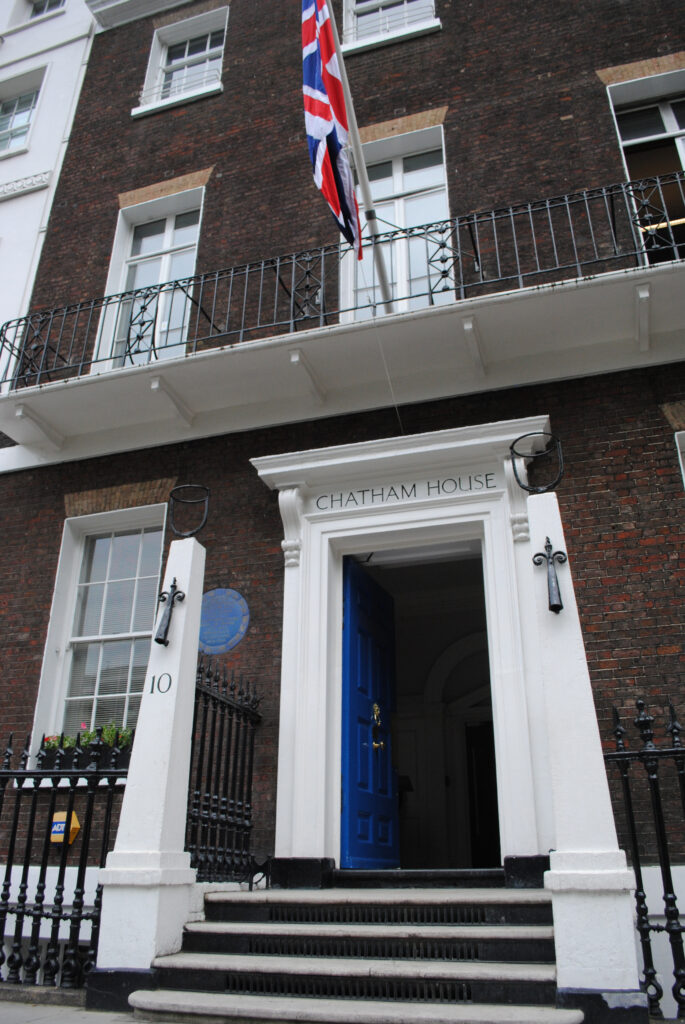
A bit of background. From Wikipedia we learn “Chatham House” is a shorthand for “the Royal Institute of International Affairs… a British think tank based in London, England. Its stated mission is ‘to help governments and societies build a sustainably secure, prosperous, and just world.‘” Headquartered in an historic eighteenth-century home occupied over time by three British prime ministers, including William Pitt, the first Earl of Chatham, the Chatham House has encouraged openness by providing a safe space for speakers. At the same time it has drawn criticism for its “perceived elitism, limited funding transparency, alignment with interventionist foreign policy positions, and its early links to British imperialism.” At the heart of this love-hate relationship is the Chatham House Rule: “a participant in a meeting may discuss the content of this meeting in the outside world, but may not discuss who attended nor identify what a specific individual said.” (In reality, only a minority of Royal Institute sessions operate under this protection; most meetings are held on the record.) The rule provides safety for meeting participants, but at the same time kills transparency.
The focus here is on the meeting’s vibe, which was noteworthy. To start, participants almost universally contrasted this year’s upbeat mood with that of last year’s more somber tone. 2025 had seen the beginning of ham-fisted, swingeing cuts in science agency budgets and staff, based not on scientific realities or logic or fiscal necessity so much as a narrowly held, politically based sense of grievance and desire for revenge.
Those circumstances have continued into 2026—witness the threats to NCAR and the National Academies of Science, Engineering, and Medicine, upheaval at the National Science Foundation, and the OMB circular.
Why then the change in attitude? One explanation might be the signs of political pushback, which have been forceful and bipartisan. Another might be this: At the beginning of 2025, U.S. science was without equal anywhere in the world. Political support for science was strong. American scientists realized that they had it good, and that they pretty much always had, for the prior half-century or more. They’d never been tested by adversity. When catastrophe hit, scientists wondered whether they were up to the challenge. A year on, scientists have discovered hidden inner strengths, both individually and institutionally.
This is where Nietzsche’s quote comes in. It’s a clever thought, but merely that. People who use it often convey an accompanying sense of irony. The reality is a lot of things that don’t kill us do indeed make us weaker. But at the same time they do help us discover what we were always made of—and more often than not that turns out to include reserves of integrity and courage and stamina. We’re more in touch with a soft strength—a strength that isn’t physical so much as mental or spiritual. We’re not stronger so much as tougher.
A second dimension to the meeting vibe was a focus on the future—not merely forecasting that future, but considering how the AMS community could be agents of change rather than mere observers or bystanders.
Several arenas for change were considered, in turn: a means to reduce the toll of weather-related disasters versus cope with repetitive loss (the National Weather Safety Board Act). The state of fire (treated elsewhere in AMS Headlines): the rising importance of heat-related disasters for agriculture, water supplies, human health, and wildfire. Seeing the need to tackle future problems not with yesterday’s tools but the tools of tomorrow—in particular, to consider the potential of AI and provide equal attention to harnessing it ethically and safely. Participants contemplated a future where social media might not just operate alongside broadcast media to disseminate weather information but largely replace it. A future where the private sector is no longer a junior partner with the federal government in the provision of weather, water, and climate services, and in supporting research. Recognizing that AMS can play a valuable, essential role in such a future, but only if guided by a strategy.
One last purely personal observation. I came away from the meeting with a sense that the most important thing our community might have to offer the world is not better forecasts, not necessarily better application of these forecasts—though these are vitally important—but rather how to build and maintain community in a world focused on tearing down a sense of community, becoming more siloed, more polarized and adversarial.
We have a model, a metaphor for our goal here, from the world of cloud microphysics. Worldwide, each raindrop, each ice crystal coalesces around a tiny cloud nucleus. In the case of that warm raindrop, the cloud nuclei work their magic by dissolving in the water as it accumulates. When it comes to the colder temperatures at higher altitudes, cloud nuclei are particles whose surfaces mimic the crystalline structure of ice. These nuclei don’t dissolve; they discipline the water molecules to line up with a particular crystalline structure. Our community should make as its highest priority the maintenance and exercise of community. Indestructible, so that the world can’t destroy or dissolve it, but rather it restructures the world—does its bit to make that future world less divisive, polarized.
We should see our AMS tent as a big one. Big enough to include users of weather, water, and climate information and services as well as scientists and service providers.
The 2026 Joint AMS Washington Forum and Summer Community Meeting. You had to be there!
Hope you can make the next one.